Choosing the right plants isn’t just about color or curb appeal. It’s about how those plants behave over time.
Some popular ornamentals spread aggressively, outcompete local vegetation, alter soil chemistry, and reduce biodiversity.
Others – especially native plants – quietly strengthen ecosystems, support pollinators, improve soil health, and require less maintenance once established.
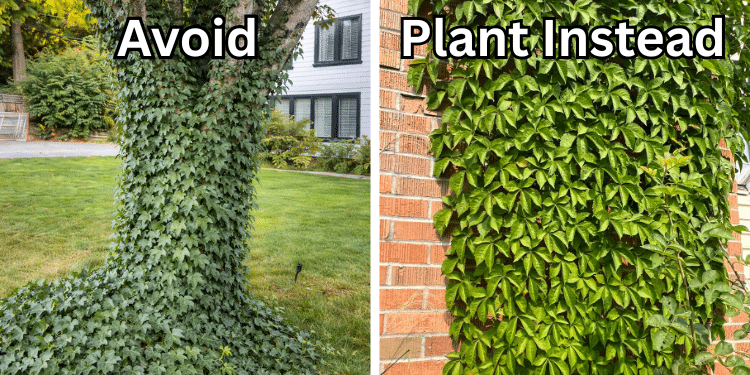
1. Avoid: English ivy
Plant Instead: Virginia creeper
Why English Ivy Is Problematic
English ivy is often sold as a fast-growing evergreen groundcover or climbing vine. While it creates lush coverage quickly, it spreads aggressively through runners and seeds dispersed by birds.
In forests, it climbs trees, blocking sunlight from leaves and increasing wind resistance, which can make trees more vulnerable to storm damage.
Its dense mats also smother native understory plants, reducing biodiversity and eliminating food sources for insects and wildlife.
Why Virginia Creeper Is Better
Virginia creeper is a native climbing vine that provides similar coverage without the same destructive tendencies. It climbs using adhesive pads rather than penetrating roots, which reduces structural damage.
In fall, its foliage turns brilliant red, offering seasonal interest.
Its berries feed birds, and its leaves support native insects. Unlike English ivy, it coexists more naturally within woodland ecosystems.
2. Avoid: Japanese barberry
Plant Instead: Ninebark
Why Japanese Barberry Is Harmful
Japanese barberry spreads rapidly through seeds dispersed by birds. It forms dense, thorny thickets that crowd out native plants. Studies have shown that barberry infestations can create humid microclimates favorable to ticks.
Its adaptability allows it to thrive in both sun and shade, making it difficult to control once established.
Why Ninebark Is a Native Powerhouse
Ninebark is a resilient native shrub with exfoliating bark that adds winter interest. It blooms in late spring, attracting pollinators, and offers colorful foliage varieties ranging from green to deep burgundy.
It tolerates drought, poor soil, and cold winters without becoming invasive. Its open branching structure supports birds and insects without overwhelming surrounding plants.
3. Avoid: Purple loosestrife
Plant Instead: Blazing star
The Wetland Threat
Purple loosestrife invades wetlands, riverbanks, and ditches, forming dense monocultures that crowd out native aquatic plants. This reduces habitat for birds, amphibians, and insects that rely on diverse plant communities.
It spreads both by seed and root fragments, making eradication extremely difficult.
The Native Alternative
Blazing star, or liatris, produces tall purple flower spikes that resemble loosestrife but support native bees and butterflies.
It thrives in sunny gardens and well-drained soil and adds vertical structure without disrupting wetland ecosystems.
4. Avoid: Butterfly bush
Plant Instead: New England aster
Why Butterfly Bush Isn’t Ideal
Butterfly bush attracts adult butterflies but does not serve as a host plant for caterpillars. In some regions, it spreads aggressively along riverbanks and disturbed land.
It may provide nectar, but it does little to support the full butterfly lifecycle.
Why New England Aster Is Superior
New England aster blooms in late summer and fall when nectar sources are scarce. It supports migrating butterflies and provides pollen for bees preparing for winter.
It integrates into native ecosystems rather than displacing them.
5. Avoid: Burning bush
Plant Instead: Red chokeberry
The Hidden Spread of Burning Bush
Burning bush is admired for its fiery fall color, but birds spread its seeds into forests, where it forms dense thickets. These thickets shade out native seedlings and reduce plant diversity.
The Native Replacement
Red chokeberry offers brilliant red fall foliage and produces berries that persist into winter, feeding birds. It adapts to wet or dry soil and supports local wildlife without spreading uncontrollably.
6. Avoid: Norway maple
Plant Instead: Sugar maple
The Issue with Norway Maple
Norway maple creates dense shade that prevents understory growth. Its shallow roots compete aggressively for nutrients and water. Over time, it reduces biodiversity in forests and neighborhoods.
Why Sugar Maple Is Better
Sugar maple supports native insects, provides food for wildlife, and produces iconic fall color. Its ecological role is deeply integrated into North American forests.
Unlike Norway maple, it allows understory plants to thrive.
7. Avoid: Japanese honeysuckle
Plant Instead: Coral honeysuckle
The Problem with Japanese Honeysuckle
Japanese honeysuckle spreads aggressively through vines and seed dispersal. It smothers shrubs and trees, blocking sunlight and reducing plant diversity.
The Native Choice
Coral honeysuckle offers trumpet-shaped red or orange flowers that attract hummingbirds. It grows vigorously but remains manageable and beneficial.
8. Avoid: Russian olive
Plant Instead: Serviceberry
Russian Olive Concerns
Russian olive spreads along waterways and in dry regions. It displaces native vegetation and alters soil nitrogen levels.
Serviceberry Advantages
Serviceberry produces spring blossoms, edible berries, and vibrant fall color. It supports birds and pollinators and integrates seamlessly into native landscapes.
9. Avoid: Lantana camara
Plant Instead: Blanket flower
Lantana’s Spread
In warm climates, lantana can escape cultivation and dominate natural areas.
Blanket Flower Benefits
Blanket flower is drought-tolerant, colorful, and supports pollinators without invasive behavior.
10. Avoid: Tree of heaven
Plant Instead: Eastern redbud
Tree of Heaven’s Aggression
Tree of heaven spreads rapidly and releases chemicals that inhibit nearby plant growth. It’s also associated with hosting invasive insect species.
Eastern Redbud Strength
Eastern redbud blooms in early spring, providing nectar for pollinators. It remains manageable and enhances biodiversity.
Why Native Plants Are “Powerhouses”
Native plants evolved alongside local insects, birds, and soil microbes. They:
- Require less water once established
- Support pollinators
- Improve soil health
- Reduce maintenance
- Increase biodiversity
Unlike invasive species, natives strengthen ecosystems rather than weaken them.
How to Transition Away from Invasive Plants
If invasive plants are already established:
- Remove gradually
- Avoid spreading seeds
- Monitor regrowth
- Replace with native alternatives immediately
Mulching and replanting with natives prevents new invasions.
Supporting Local Wildlife Through Smarter Choices
Native plants provide food and habitat throughout the year:
- Spring nectar for pollinators
- Summer berries for birds
- Fall seeds for wildlife
- Winter shelter
Replacing invasive plants is one of the most impactful changes gardeners can make.
Choosing what not to plant is just as important as choosing what to grow. Invasive plants may look appealing at first, but they often come with long-term ecological costs.
By replacing them with native “powerhouse” plants, you create a garden that supports pollinators, protects soil, and strengthens your local ecosystem.