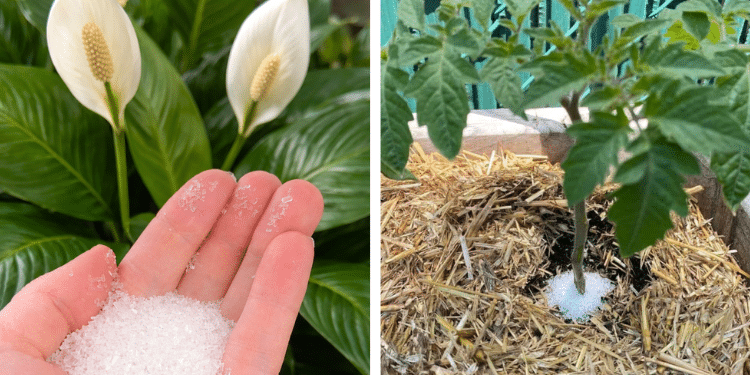
Epsom salt – chemically known as Magnesium sulfate – has long been used in gardening as a supplemental source of magnesium and sulfur.
While it is not a complete fertilizer and should never replace balanced soil nutrition, it can be helpful when specific deficiencies are present.
Magnesium plays a central role in chlorophyll production, enzyme activation, and nutrient transport inside plants. Without enough magnesium, plants struggle to photosynthesize efficiently and may show visible stress.
1. Interveinal Yellowing (Magnesium Deficiency)
One of the clearest signs of magnesium deficiency is yellowing between leaf veins while the veins themselves remain green.
This is called interveinal chlorosis and typically appears on older leaves first because magnesium is mobile within plants – it moves to new growth when levels are low.
When magnesium is deficient, chlorophyll production declines, and leaves lose their deep green color.
How Epsom Salt May Help
Mix 1 tablespoon of Epsom salt per gallon of water and apply directly to the soil around the plant’s base. This allows roots to absorb magnesium gradually.
For faster correction, a foliar spray (1 tablespoon per gallon) can be applied early in the morning, allowing magnesium to absorb through leaves.
Improvement often appears within 1–2 weeks if magnesium deficiency is truly the cause.
2. Weak or Sparse Flowering
Magnesium supports phosphorus uptake, which plays a major role in flower production.
If flowering plants struggle to produce buds or blooms appear smaller than usual, magnesium deficiency could be a contributing factor.
Plants commonly associated with magnesium supplementation include:
- Rose
- Geranium
- Petunia
Application
Sprinkle 1 tablespoon around the base of established plants and water thoroughly. Repeat every 4–6 weeks during active bloom season if deficiency is confirmed.
Avoid heavy applications, as excess magnesium can interfere with calcium absorption.
3. Pale or Washed-Out Foliage
If plants appear pale despite receiving nitrogen fertilizer, magnesium deficiency may be preventing proper chlorophyll formation.
Magnesium is literally at the center of the chlorophyll molecule. Without it, leaves cannot maintain rich green coloration.
A diluted Epsom salt drench may help restore healthy color over time if magnesium is lacking in soil.
4. Stunted Growth Despite Fertilizing
Sometimes plants grow slowly even when fertilized. This may happen if magnesium levels are insufficient, limiting nutrient transport and enzyme activation inside the plant.
Magnesium helps regulate the movement of phosphorus and nitrogen. Without it, plants cannot efficiently use the nutrients already present in soil.
A light soil drench may improve overall vigor in deficient soils.
5. Tomato Leaf Yellowing and General Stress
Tomato plants are frequently mentioned in connection with Epsom salt. While blossom end rot is caused by calcium deficiency (not magnesium), magnesium still plays an important supporting role in overall tomato health.
Magnesium deficiency in tomatoes often appears as yellowing on lower leaves during fruit development.
Recommended Use
Apply 1 tablespoon per gallon of water as a soil drench once per month during growing season.
Avoid combining heavy magnesium supplementation with calcium-based fertilizers at the same time.
6. Pepper Plant Nutrient Imbalance
Pepper plants can also show yellowing leaves or slow development if magnesium levels are low.
Magnesium supports chlorophyll production and helps maintain strong leaf structure.
A monthly diluted soil drench during active growth may help when deficiency is suspected.
7. Houseplant Yellowing in Containers
Container plants often experience nutrient depletion more quickly than garden plants. Magnesium can be leached from potting soil over time due to frequent watering.
Plants such as:
- Peace lily
- Spider plant
- Fiddle-leaf fig
may show interveinal yellowing in older leaves.
A very light Epsom salt solution (½ tablespoon per gallon) applied once every 6–8 weeks may help restore balance if magnesium deficiency is present.
Avoid overuse, as container soils are sensitive to salt buildup.
8. Poor Nutrient Uptake Due to Soil Imbalance
Magnesium deficiency can disrupt overall nutrient balance. When magnesium is low, phosphorus and nitrogen uptake may be reduced.
In such cases, plants may appear nutrient-starved even when fertilized.
A targeted magnesium supplement may help improve nutrient utilization efficiency – but only when deficiency is confirmed through soil testing.
How to Apply Epsom Salt Correctly
Soil Drench
- 1 tablespoon per gallon of water.
- Apply directly to soil around plant roots.
- Repeat monthly if needed.
Foliar Spray
- 1 tablespoon per gallon of water.
- Spray leaves early morning or late evening.
- Avoid spraying during intense sun.
Dry Application
Lightly sprinkle around plant base and water thoroughly.
Always apply moderately. More is not better.
When Epsom Salt Should NOT Be Used
Do not use Epsom salt:
- Without signs of magnesium deficiency
- If soil already contains adequate magnesium
- On saline soils
- In excessive amounts
- To correct calcium deficiency
Overapplication can:
- Raise soil salinity
- Disrupt calcium uptake
- Cause leaf burn
- Harm soil microbial balance
Important Soil Balance Consideration
Magnesium and calcium compete for uptake. If you add too much magnesium, plants may struggle to absorb calcium.
That is why soil testing is strongly recommended before regular use.
How to Know If Magnesium Is Truly Deficient
Look for:
- Yellowing between veins on older leaves
- Pale coloration despite fertilization
- Slow flowering
- Soil test showing low magnesium
If symptoms appear on new leaves first, the issue is likely iron deficiency – not magnesium.
Correct diagnosis matters.
Epsom salt can be helpful in specific plant problems related to magnesium deficiency.
From yellowing leaves and weak flowering to slow growth and nutrient imbalance, magnesium plays an essential but often overlooked role in plant health.