Pruning is one of the most important tasks in gardening. Done right, it encourages stronger growth, more flowers, and healthier plants.
But done at the wrong time – especially in fall – pruning can actually do more harm than good.
Many gardeners mistakenly believe that fall is the best time to cut everything back before winter. The truth? Some plants should never be pruned in fall.
Cutting them at this time of year can rob them of next season’s blooms, expose them to winter damage, and even kill young or tender plants.
Why Pruning Timing Matters
Plants follow natural growth and dormancy cycles. When you prune, you essentially send a signal to the plant: “Grow!”
- In spring and summer, pruning encourages vigorous new growth because plants have abundant energy, warmth, and sunlight.
- In fall, however, pruning disrupts dormancy. The plant should be storing sugars and nutrients in its roots, not trying to push out new growth that frost will kill.
The result of fall pruning? Fewer flowers, weaker plants, and higher risk of winter injury.
The Problems With Fall Pruning
- Loss of flower buds: Many spring bloomers form buds in summer. Cut them now, and you cut off next year’s flowers.
- Stimulated tender growth: This late-season growth won’t harden before frost and usually dies back.
- Energy drain: Instead of storing energy in roots, the plant uses it to heal wounds and grow at the wrong time.
- Disease risk: Cuts made in cold, damp conditions are slow to heal and can become entry points for fungi and rot.
Plants You Should Never Prune in Fall (With Detailed Reasons)
1. Spring-Blooming Shrubs
Examples:
- Lilacs (Syringa vulgaris)
- Forsythia (Forsythia spp.)
- Azaleas & Rhododendrons (Rhododendron spp.)
- Viburnums (Viburnum spp.)
- Mock Orange (Philadelphus coronarius)
Why not prune in fall?
These shrubs bloom on old wood – branches formed during the previous growing season. By summer, they’ve already set the buds for next year. If you cut them in fall, you’re literally throwing away next season’s flowers.
Lilacs, for example, set their buds by July. Fall pruning means you’ll have lush green foliage but no blooms come spring. Forsythia and mock orange work the same way – their flowering spurs are already formed and waiting out winter.
When to prune instead: Prune immediately after they finish blooming in spring. This gives them the rest of the growing season to develop new stems and buds for the following year.
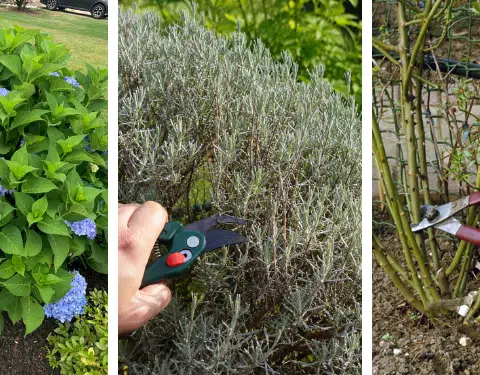
2. Hydrangeas (Certain Varieties)
Do not prune in fall:
- Bigleaf Hydrangea (Hydrangea macrophylla)
- Oakleaf Hydrangea (Hydrangea quercifolia)
- Mountain Hydrangea (Hydrangea serrata)
Why not prune in fall?
These hydrangeas bloom on old wood, meaning their flower buds are set by late summer. Prune in fall, and you’ll cut off every potential blossom for the following year.
For example, a healthy bigleaf hydrangea in July already carries the flower embryos for next June. Cut them back in October, and all those hidden blooms are lost.
When to prune instead: Right after flowering in summer. Limit cuts to dead or crossing branches.
Note: Smooth hydrangea (H. arborescens) and panicle hydrangea (H. paniculata) bloom on new wood, so they can be pruned in late winter or early spring. Never in fall.
3. Spring-Flowering Trees
Examples:
- Redbuds (Cercis canadensis)
- Dogwoods (Cornus florida)
- Crabapples (Malus spp.)
- Magnolias (Magnolia spp.)
- Cherries, Plums, Apricots (ornamental fruit trees)
Why not prune in fall?
These trees form buds in the previous season. Cutting in fall removes them, but the damage doesn’t stop there. Cool, damp weather slows healing and opens the door for cankers, fire blight, and fungal infections.
Magnolias, for instance, are notorious for suffering from dieback if cut too late. Ornamental cherries and plums are especially vulnerable to silver leaf disease in wet fall conditions.
When to prune instead:
- Right after flowering in spring if shaping is needed.
- Structural pruning in late winter while dormant.
4. Roses
Why not prune in fall?
Roses are tender and reactive to cuts. When pruned in fall:
- They push out soft new shoots that frost kills.
- Open cuts invite disease during cold, wet months.
- Plants waste stored energy they should be conserving in roots.
When to prune instead:
- In cold regions: prune in late winter/early spring when buds swell.
- In warm regions: prune lightly after the main bloom flush.
Fall alternative: Remove only dead, diseased, or crossing canes. Leave shaping until spring.
5. Fruit Trees
Examples:
- Apples
- Pears
- Peaches
- Plums
- Cherries
- Apricots
Why not prune in fall?
Pruning fruit trees in fall encourages a late flush of growth that won’t harden before frost. Worse, open wounds expose trees to fungal diseases such as:
- Fire blight (in apples/pears)
- Silver leaf disease (in plums/cherries)
- Peach leaf curl (in peaches/apricots)
These infections enter through fresh cuts, spreading rapidly in cool, wet fall conditions.
When to prune instead:
- Late winter/early spring during dormancy, but past the coldest freezes.
- Light summer pruning for size control, but avoid fall cuts.
6. Evergreens
Examples:
- Boxwood (Buxus spp.)
- Yew (Taxus spp.)
- Arborvitae (Thuja spp.)
- Juniper (Juniperus spp.)
Why not prune in fall?
- Cuts encourage tender new growth that won’t survive frost.
- Healing is slow, leaving wounds prone to winter burn.
- Removing foliage reduces the plant’s ability to photosynthesize before dormancy.
Evergreens rely on stored carbohydrates to make it through winter. Cutting in fall reduces reserves, leaving them weak and vulnerable to dieback.
When to prune instead:
- Major shaping: late winter to early spring.
- Light touch-ups: midsummer.
7. Perennials That Bloom in Spring
Examples:
- Peonies (Paeonia spp.)
- Irises (Iris spp.)
- Hellebores (Helleborus spp.)
- Bleeding Hearts (Dicentra spp.)
Why not prune in fall?
These perennials need their foliage as a natural blanket:
- Peonies: Foliage collects energy until frost. Cutting too early weakens roots and reduces blooms.
- Irises: Leaves continue photosynthesis and help rhizomes bulk up.
- Hellebores: Evergreen leaves protect crowns through snow.
- Bleeding hearts: Foliage insulates roots; fall cuts expose crowns to frost heave.
When to prune instead:
- Wait until after the first hard frost or until foliage yellows naturally.
- Clean up in late winter or early spring before new shoots emerge.
What You Can Prune in Fall
While many plants should be left alone, fall is fine for:
- Removing dead, diseased, or damaged branches on any plant.
- Cutting back herbaceous perennials that collapse after frost (e.g., hostas, daylilies).
- Removing annual vegetables, invasive weeds, and spent stems that harbor pests.
Alternatives to Fall Pruning
If you’re itching to garden in fall, try these instead of cutting:
- Deadhead flowers to tidy plants without removing stems.
- Mulch around the base of shrubs and perennials to insulate roots.
- Stake tall plants to protect from snow and wind.
- Rake leaves around perennials to prevent pests.

Pruning at the wrong time is one of the easiest mistakes to make in gardening. In fall, resist the urge to “clean up” by cutting everything down.
Spring bloomers, fruit trees, roses, hydrangeas, evergreens, and many perennials depend on their existing wood or foliage to survive winter and bloom next year.