From towering oaks in ancient forests to fruit trees in suburban yards, trees are living chronicles of time.
Knowing how to determine the age of a tree is not only fascinating for nature enthusiasts and gardeners but crucial for arborists, foresters, and environmental scientists studying ecosystems and forest health.
Estimating a tree’s age helps reveal:
- Ecological history of an area
- Growth conditions and past climate patterns
- Structural stability of urban trees
- Timber value in forestry
Whether you’re a casual nature lover or a forestry professional, this comprehensive guide explains multiple methods to estimate tree age – without necessarily cutting the tree down.
Why Tree Age Matters
Before diving into how to measure age, it’s important to understand why tree age is significant:
- Ecological insight: Trees reveal information about local climate, rainfall, and environmental changes over decades or centuries.
- Safety concerns: Old trees can become structurally unsound, posing hazards in urban areas.
- Historical context: Certain trees are markers of historical events, indigenous cultural sites, or ancient landscapes.
- Forest management: Sustainable timber harvesting requires knowledge of tree age for proper rotation cycles.
The Most Accurate Method: Counting Growth Rings (Dendrochronology)
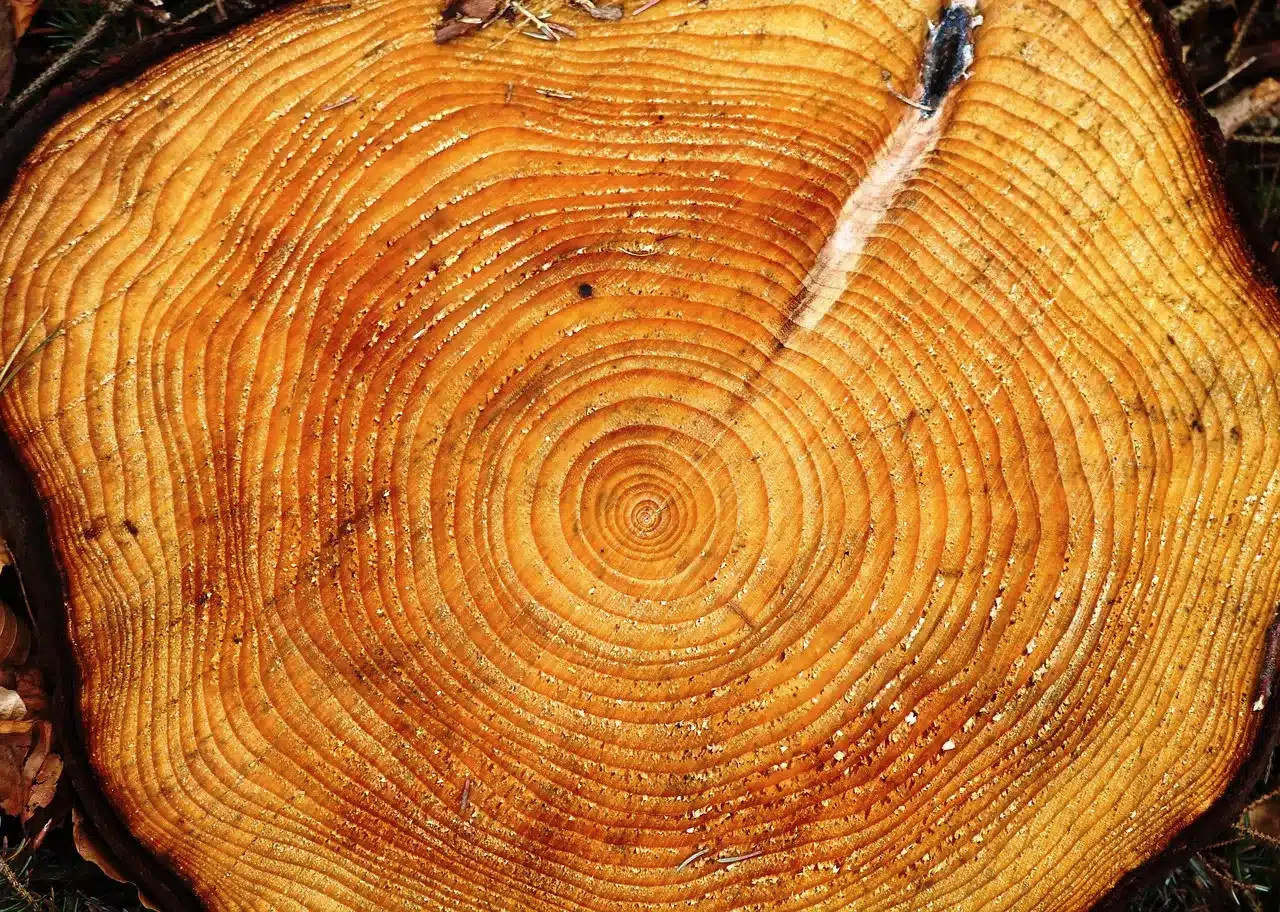
The gold standard for determining a tree’s exact age is dendrochronology – the science of counting growth rings.
How Growth Rings Form
- Each year, trees in temperate climates form a layer of new wood under their bark.
- Spring growth is fast, producing lighter-colored, wider cells called earlywood.
- Summer growth slows, forming darker, denser cells known as latewood.
- One light band plus one dark band equals one year of growth.
By counting these rings, you can determine a tree’s exact age.
How to Count Rings
There are two main ways to see growth rings:
1. Cutting Down the Tree
- Method: Cut the tree and count rings on the stump.
- Accuracy: Extremely precise.
- Drawback: Kills the tree – unsuitable for valuable or protected trees.
2. Using an Increment Borer
An increment borer is a specialized tool that removes a slender core of wood from the trunk without seriously harming the tree.
Steps:
- Choose a spot ~4.5 feet (1.37 meters) above ground.
- Drill the borer into the trunk toward the center.
- Extract the core sample.
- Count rings visible on the core.
Benefits:
- Accurate without felling the tree.
- Widely used in forestry and research.
Limitations:
- Requires expertise and the right tools.
- Not always feasible for very hard or small trees.
Estimating Tree Age Without Cutting
Cutting down a tree or boring into it isn’t always practical—or legal. Fortunately, there are non-invasive ways to estimate tree age.
While these methods won’t be exact, they’re often surprisingly accurate for common tree species.
1. Measure Tree Circumference and Use Growth Factors
One widely used method is calculating age based on trunk circumference and a species-specific growth factor.
How It Works:
- Measure circumference at breast height (about 4.5 feet from the ground).
- Divide circumference by pi (3.14) to find diameter.
- Multiply diameter by the species’ average growth factor.
Example Calculation:
- Circumference = 50 inches
- Diameter = 50 ÷ 3.14 ≈ 15.9 inches
- Growth factor for Red Maple ≈ 4.5
- Estimated Age = 15.9 × 4.5 = ~72 years
Growth Factor Estimates
| Species | Growth Factor |
|---|---|
| Red Maple | 4.5 |
| Silver Maple | 3.0 |
| Sugar Maple | 5.0 |
| White Oak | 5.0 |
| Red Oak | 4.0 |
| American Elm | 4.0 |
| Black Walnut | 4.5 |
| Tulip Poplar | 3.0 |
| White Pine | 5.0 |
| Norway Spruce | 4.5 |
These are rough averages, as growth rates vary based on soil, water, light, and competition.
2. Visual Clues and Tree Size
Experienced arborists often estimate age based on:
- Tree size: Older trees generally have thicker trunks and taller stature.
- Bark texture: Young trees have smoother bark; mature trees show deeply fissured, rough bark.
- Branch architecture: Mature trees often have thicker, gnarled branches.
For example:
- A mature oak over 30 inches in diameter is likely well over 100 years old.
- A slender maple trunk under 10 inches in diameter is likely under 30 years old.
Visual estimates alone aren’t precise but can provide helpful ballpark figures.
3. Using Historic Records
For ornamental or urban trees:
- Planting records from municipalities, botanical gardens, or universities.
- Historical photographs or maps.
- Property deeds or landscaping records.
Old estates and public parks often keep detailed records of tree plantings that can pinpoint age precisely.
Factors Affecting Tree Growth Rates
No two trees – even of the same species – grow identically. Several factors influence growth:
Climate
- Trees in warm, wet climates grow faster than those in cold, dry regions.
- Drought slows growth, resulting in narrow rings.
Soil Quality
- Fertile, well-drained soils support rapid growth.
- Poor or rocky soils stunt growth, leading to slower diameter expansion.
Competition
Trees growing in dense forests may have:
- Taller, thinner trunks as they reach for sunlight.
- Slower diameter growth compared to open-grown trees.
Water Availability
- Trees near water sources often grow faster.
- Seasonal flooding or waterlogging can stunt growth.
Estimating Age for Specific Tree Types
Different trees grow at dramatically different rates. Here are some general guidelines for a few common species:
Oak Trees
- Slow growers.
- A 20-inch diameter White Oak could be 80–100 years old.
- Some species, like Bur Oak, can live 200–300+ years.
Maple Trees
- Moderate growth rate.
- A 15-inch diameter Sugar Maple might be 50–70 years old.
Pine Trees
- Faster growers.
- A 10-inch diameter Eastern White Pine might be 30–40 years old.
Birch Trees
- Fast-growing, shorter lifespan.
- A 12-inch diameter Paper Birch is often 30–50 years old.
How to Measure Tree Diameter
If you’re estimating age, accurate measurement is crucial.
Steps:
- Wrap a measuring tape around the trunk at 4.5 feet above ground to get circumference.
- Divide circumference by 3.14 to get diameter.
Estimating Age in Tropical Trees
Tropical trees often lack distinct growth rings due to consistent climate conditions year-round.
Methods to estimate age include:
- Radiocarbon dating of wood samples.
- Measuring trunk diameter and using known growth rates.
- Historic planting records in plantations or urban areas.
World’s Oldest Trees: An Awe-Inspiring Perspective
Curious how long trees can live? Consider these ancient marvels:
- Bristlecone Pines (Pinus longaeva): The oldest known tree “Methuselah” is over 4,800 years old in California’s White Mountains.
- Old Tjikko (Spruce): A clonal Norway spruce in Sweden estimated at 9,560 years old through genetic analysis.
- Llangernyw Yew (Taxus baccata): In Wales, estimated between 4,000 and 5,000 years old.
These trees are living time capsules spanning human history and environmental changes.
Ethical Considerations
Before trying to determine a tree’s age:
- Check local laws regarding protected or heritage trees.
- Avoid harming a tree unnecessarily for curiosity’s sake.
- Use non-invasive methods whenever possible.
Practical Tools for Tree Age Estimation
Increment Borer
- Best for professionals.
- Provides accurate core samples.
Diameter Tape
- Quickly measures circumference for age calculations.
- Available at forestry supply stores.
Smartphone Apps
Some apps can estimate tree age based on photos and measurements.
Fun Fact: Counting Rings on Fallen Branches
If you find a recently broken branch, count its rings to estimate how long it’s been growing. It won’t tell the tree’s entire age but can hint at how long that section of growth took.
Trees are living witnesses to centuries of history. Whether you’re a gardener, hiker, or scientist, learning how to determine the age of a tree opens a fascinating window into nature’s timeline.
From counting growth rings to using simple tape measurements, there’s a method for every skill level and situation.
Remember, trees are precious resources, so always use the least invasive method possible.