Bees are one of the most important creatures in our ecosystem, playing a vital role in pollinating nearly 75% of the food crops we rely on.
A garden buzzing with bees is a sign of a healthy, balanced environment, full of blooming flowers, fruits, and vegetables.
However, many people don’t realize that there are over 4,000 species of native bees in North America alone, and most of them are not the honeybee—they’re solitary bees like mason bees, leafcutter bees, and carpenter bees.
These native bees are actually far more efficient pollinators than the familiar European honeybee. But their numbers are in decline, largely due to habitat loss, pesticide use, and disease.
One of the simplest and most effective ways to support native pollinators is to create a bee hotel, also known as a bee house or bee shelter.
These small structures offer safe nesting spaces for solitary bees, especially cavity-nesting species that lay their eggs in hollow stems or holes in wood.
In this article, you’ll learn why bee hotels matter, how to build one the right way, and creative, eco-friendly designs you can try at home.
Why Solitary Bees Need Our Help
Unlike honeybees, solitary bees do not live in hives. Each female bee builds her own nest, often in narrow holes, tubes, or cracks in wood or soil.
Despite their solitary nature, they often nest near each other, creating small communities.
Unfortunately, the natural habitats these bees depend on—rotting logs, hollow stems, dead trees—are disappearing from urban and suburban landscapes. Without safe places to reproduce, their populations continue to decline.
By building a bee hotel, you can:
-
Provide essential nesting space
-
Support biodiversity in your local ecosystem
-
Increase pollination in your vegetable and flower gardens
-
Help combat the decline of native bee populations
What Is a Bee Hotel?
A bee hotel is an artificial nesting site designed for solitary, cavity-nesting bees. It usually consists of a box or frame filled with natural materials like bamboo canes, drilled wood blocks, paper tubes, or hollow stems. These holes mimic the crevices bees would normally find in nature.
A well-designed bee hotel provides:
-
Protection from wind, rain, and predators
-
A variety of hole diameters to suit different bee species
-
Easy-to-clean or replaceable nesting tubes
-
A safe place for larvae to develop into healthy bees
Common Mistakes to Avoid
While many commercially made bee hotels are available, not all are designed with bee health in mind. Poor construction can actually increase the risk of disease, parasites, and mold.
Design flaws to watch out for:
-
Plastic or glass tubes: Trap moisture and promote mold or bacterial growth
-
Inappropriate hole sizes: Can attract predators or exclude local species
-
No cleaning access: Increases parasite build-up and disease risk
-
Exposed or unstable placement: Makes nests vulnerable to weather and predators
Tip: Always aim for natural materials, proper drainage, and removable or replaceable tubes for cleaning or seasonal maintenance.
How to Build a DIY Bee Hotel
You don’t need fancy tools or expensive supplies to make a functional and attractive bee hotel.
Here are 5 creative and simple DIY bee hotel ideas using upcycled materials and natural elements:
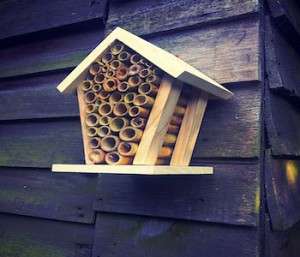
1. Repurposed Birdhouse Bee Hotel
Turn an old birdhouse into a bee haven:
-
Remove the walls, keeping the frame and roof intact.
-
Fill the interior with bamboo stalks, wooden blocks with holes, or rolled-up paper tubes.
-
Use a bent license plate or small piece of metal as a weatherproof roof.
-
Mount on a south- or southeast-facing wall, ideally 3–5 feet off the ground.
2. Clay Pot Bee Shelter
Create a small hibernation area using a terra cotta clay pot:
-
Turn the pot on its side and fill it with sticks, pinecones, bark, and rolled cardboard.
-
This provides a cozy, sheltered place for overwintering bees and other beneficial insects.
-
Place in a quiet, shady part of the garden, slightly buried for stability.
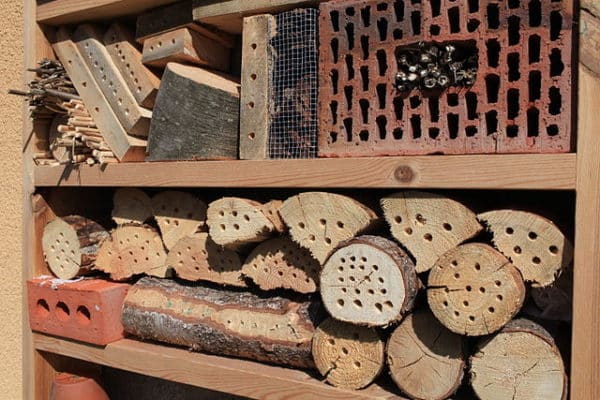
3. Cinderblock High-Rise Hotel
Stack cinderblocks to create a multi-level bee hotel:
-
Insert bamboo stalks or drilled logs into the square holes of the cinderblocks.
-
Place wood disks, dried stems, or bundles of reeds in the gaps.
-
Paint or decorate the outside to add charm to your garden space.
-
Add a roof or cover with slate tiles to protect from rain.
4. Mason Jar Bee Habitat
Reuse a mason jar for a compact bee nest:
-
Cut bamboo canes or paper tubes to fit snugly inside the jar.
-
Place upright, with the openings facing outward.
-
Mount it securely in a dry area, out of direct rain.
Important: Make sure the jar is angled downward slightly to allow moisture to drain.
5. Upcycled Wine Box Bee Lodge
Give an old wooden wine box a new purpose:
-
Fill it with bamboo canes, drilled wood, and small logs.
-
Mix textures and lengths for visual interest and variety.
-
Mount the box securely on a wall or fence.
-
Decorate the exterior to blend with your garden theme.
Best Materials for a Bee Hotel
Choose materials that are breathable, non-toxic, and weather-resistant.
Great nesting materials:
-
Bamboo stalks or reeds
-
Hollow stems (raspberry canes, sunflower stalks)
-
Untreated wood blocks (drilled with 3–8 mm holes)
-
Cardboard tubes
-
Bundles of dried grass or straw
Avoid:
-
Pressure-treated wood
-
Plastic or PVC
-
Glass
-
Paints or finishes that release fumes
Tips for Placement and Maintenance
-
Mount your bee hotel 3–5 feet above ground in a sunny, sheltered location.
-
Face it toward the south or southeast to get early morning sun.
-
Keep the hotel dry and away from the soil to prevent mold.
-
Clean or replace the nesting materials every season to prevent disease.
-
Provide a mud source nearby—many solitary bees use mud to seal their nests.
-
Avoid using pesticides in or near your bee-friendly garden.
By creating a bee hotel, you’re doing more than just helping bees—you’re supporting the future of pollination, food security, and biodiversity.
These simple shelters are a beautiful way to connect with nature, reuse everyday items, and foster a thriving garden ecosystem.
Whether you build a rustic bee lodge from logs and bamboo or a stylish high-rise from cinderblocks, your garden will benefit from the presence of these quiet, hardworking pollinators.
So roll up your sleeves, gather some natural materials, and start building your very own bee haven. The bees—and your blooming garden—will thank you.