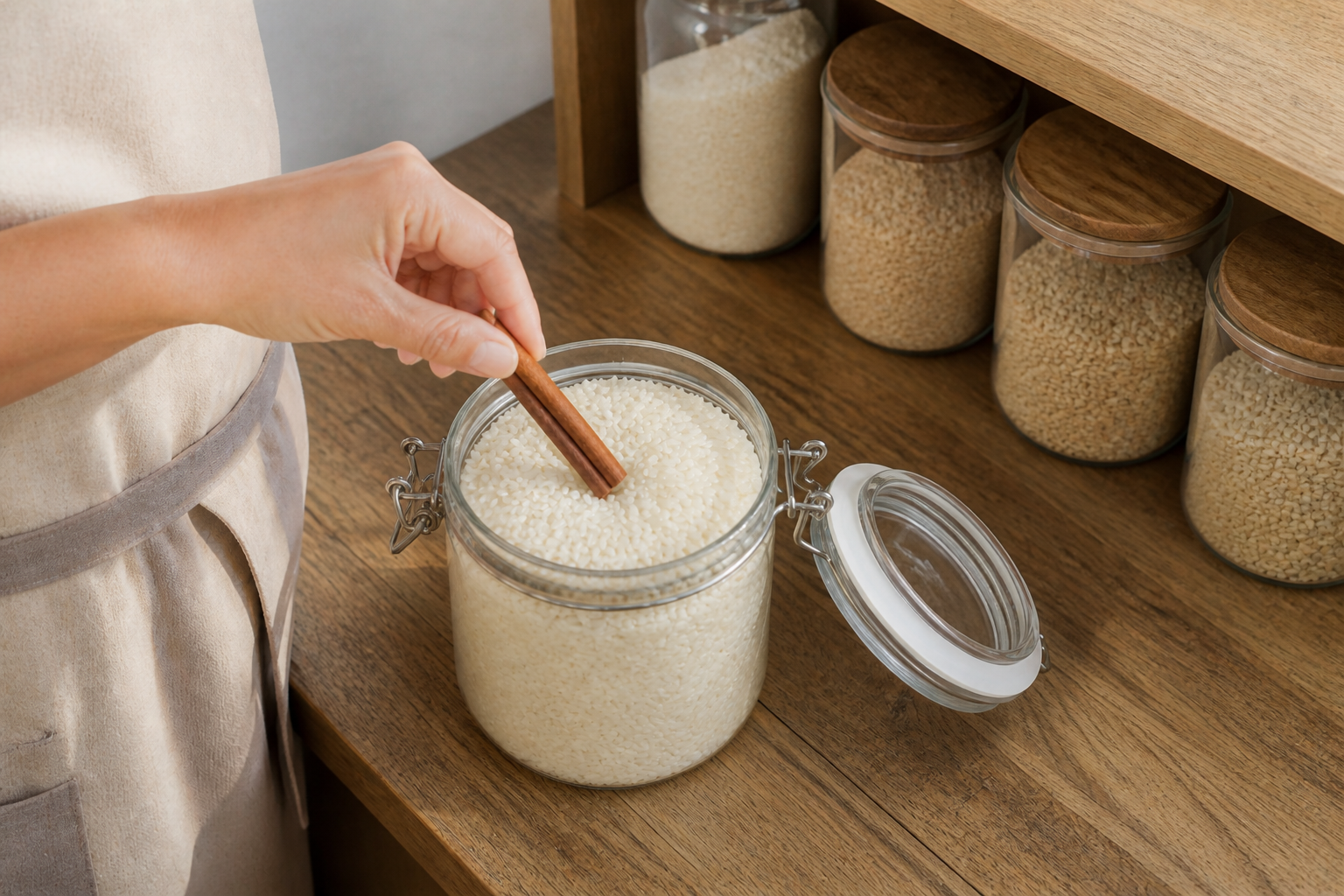
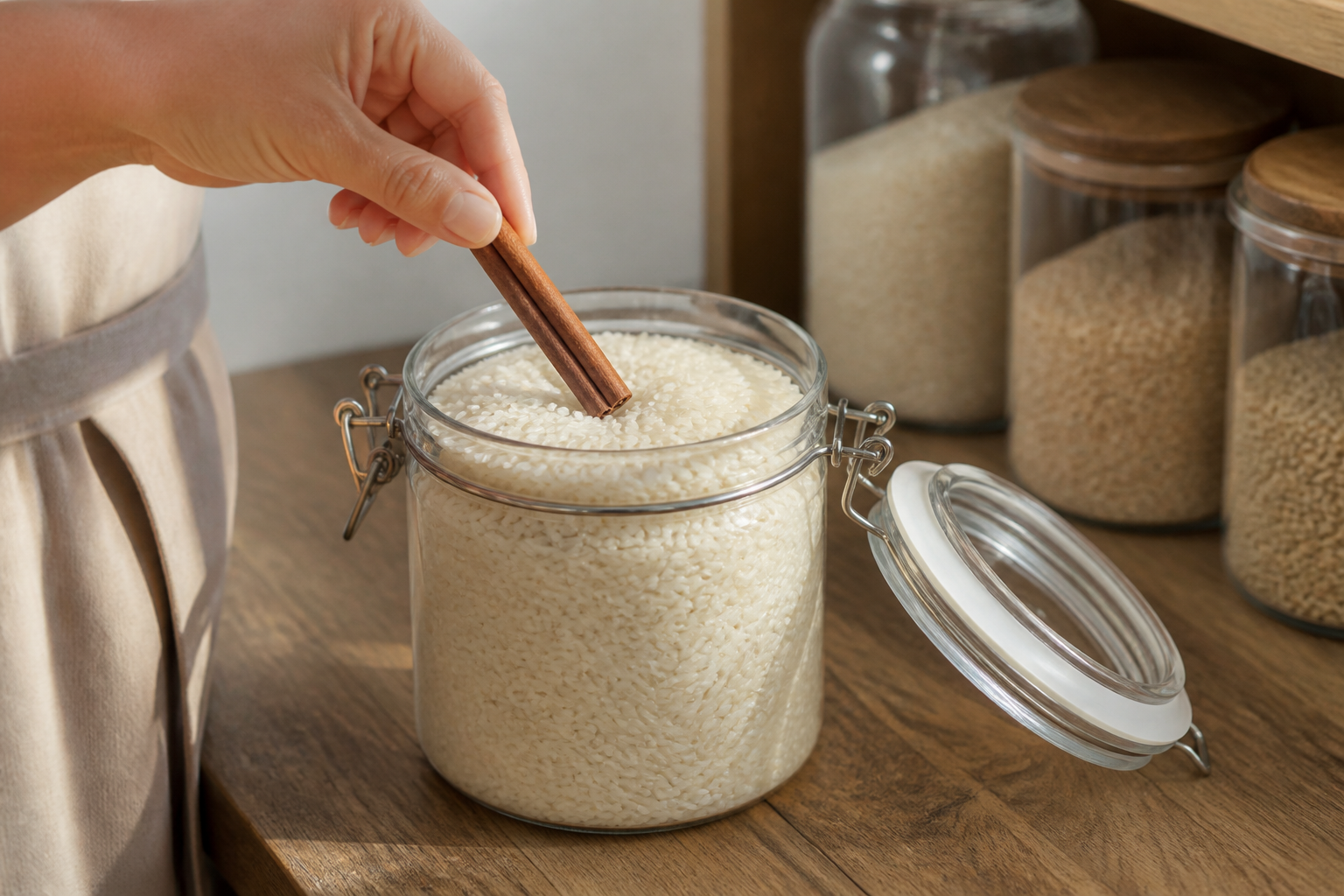
If you look inside the pantries of experienced home cooks, traditional homemakers, and culinary enthusiasts around the world, you might notice an intriguing detail: tucked right inside glass canisters or storage bins of raw rice sits a whole, dry cinnamon stick (Cinnamomum verum or Cinnamomum cassia).
While it looks like a decorative flourish or an accidental spice drop, placing a whole cinnamon stick inside a jar of uncooked rice is a time-tested, centuries-old pantry preservation hack.
By leveraging the natural essential oils and volatile compounds trapped inside cinnamon bark, this simple tradition serves as an organic, chemical-free insect deterrent, anti-humidity safeguard, and aromatic protector.
It keeps your staple grains fresh, dry, and completely pest-free without introducing toxic synthetic sprays near your food.
The Chemistry: How Cinnamon Bark Protects Stored Grains
To understand why this traditional method works so effectively, it helps to examine the active botanical chemistry locked within cinnamon bark.
1. Cinnamaldehyde as a Powerful Natural Insecticide
Cinnamon bark contains a remarkably high concentration of cinnamaldehyde (up to 90% of the bark’s essential oil content). Cinnamaldehyde is a potent organic compound known in agricultural science for its strong insecticidal, repellent, and antifeedant properties.
To common grain pests – such as rice weevils (Sitophilus oryzae), flour beetles, and pantry moths – cinnamaldehyde is an intense olfactory irritant. It overwhelms their sensitive chemical receptors, masking the scent of starches and preventing adult insects from burrowing into the rice to lay eggs.
2. Eugenol and Antimicrobial Action
Along with cinnamaldehyde, cinnamon contains trace amounts of eugenol and linalool. These secondary terpenes possess natural antifungal and antibacterial characteristics, inhibiting microscopic mold spores from germinating if ambient room moisture enters the storage container.
3. Wood Fiber Moisture Regulation
True cinnamon sticks consist of dried, rolled layers of inner tree bark. This porous wood structure acts as a minor secondary desiccant, assisting the rice in absorbing small traces of ambient humidity that might otherwise cause clumping or premature spoilage.
4 Reasons People Keep Cinnamon Sticks in Rice Jars
1. Deterring Rice Weevils and Grain Beetles
The most frustrating issue when storing bulk rice is the unexpected appearance of rice weevils—tiny dark beetles whose larvae feed inside individual grain husks. Microscopic weevil eggs often enter homes undetected inside paper grain packaging.
Dropping a cinnamon stick directly into the rice jar creates an environment weevils avoid. The slow, continuous release of cinnamaldehyde vapors forces adult weevils to vacate the jar and stops dormant eggs from developing into an infestation.
2. Absorbing Moisture and Preventing Mold Growth
Rice is naturally hygroscopic, meaning it constantly pulls moisture out of the surrounding air. In warm or humid kitchens, trapped air inside an airtight storage bin can build up micro-condensation, leading to musty odors or mold spores.
A dry cinnamon stick helps absorb residual air humidity while its antifungal compounds prevent mold from colonizing the surface of the grains.
3. Neutralizing Stale Pantry Odors
Grains stored over long periods in plastic bins or humid pantries can absorb surrounding kitchen odors, tasting stale when boiled.
The sweet, warm aroma of cinnamon continuously neutralizes ambient cupboard odors without altering the flavor profile of the cooked rice.
4. Eco-Friendly, Non-Toxic Food Preservation
Synthetic pest control strips and chemical fumigants should never be placed near edible food products. Cinnamon is 100% edible, natural, biodegradable, and completely safe for food contact, making it an ideal solution for homes with children and pets.
Pantry Grain Protectors Compared
| Botanical / Method | Primary Active Chemical | Target Pests Prevented | Flavor Impact on Cooked Rice | Lifespan |
| Cinnamon Stick | Cinnamaldehyde & Eugenol | Rice weevils, moths, flour beetles | None (smell dissipates when rinsed/boiled) | 3 – 6 Months |
| Bay Leaf | Eucalyptol (1,8-Cineole) | Pantry moths, grain beetles, ants | None | 3 – 6 Months |
| Whole Cloves | Eugenol | Ants, weevils, silverfish | Mild warm aroma if heavily used | 2 – 4 Months |
| Airtight Glass Jar | Physical Barrier | External insects & moisture | None | Indefinite |
Step-by-Step: How to Prepare Your Rice Storage Jar
Setting up a cinnamon-protected grain container takes less than two minutes:
Does Cinnamon Change the Taste of Your Rice?
A common concern is whether storing rice with a cinnamon stick will make cooked savory meals taste like cinnamon dessert.
Because whole cinnamon sticks release their essential oils slowly as volatile airborne vapors, the raw rice grains absorb only a faint aroma.
When you rinse the rice before cooking and boil it in water, the subtle surface scent evaporates completely, leaving your cooked rice tasting clean, neutral, and fresh.
Tucking a cinnamon stick into your rice jar is a simple, effective, and time-tested tradition that keeps your kitchen staples dry, protected, and completely pest-free naturally.