
Walking into a clean bathroom often means smelling the sharp, lingering sting of chlorine bleach or synthetic pine disinfectants.
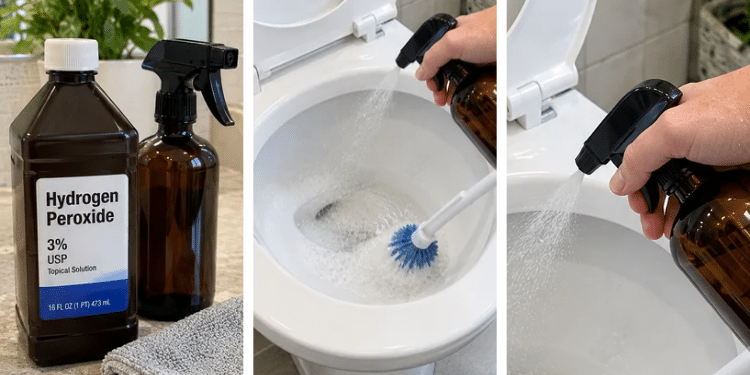
Yet among eco-conscious homeowners, green cleaning enthusiasts, and facility hygiene specialists, a simpler, odorless alternative has quietly taken over bathroom cabinets: a standard dark brown spray bottle filled with 3% hydrogen peroxide.
Spraying hydrogen peroxide inside and around the toilet bowl is a practical, science-backed cleaning habit used to disinfect high-touch bathroom surfaces, oxidize organic urine and mold stains, neutralize persistent restroom odors, and sanitize porcelain without toxic fumes.
Here is a comprehensive look at the chemistry behind using hydrogen peroxide in the toilet, why people recommend it over conventional harsh chemicals, and a step-by-step protocol for applying it safely and effectively.
The Chemistry: How Hydrogen Peroxide Cleans and Disinfects
Standard household hydrogen peroxide is an aqueous solution containing 3% hydrogen peroxide and 97% water. While chemically similar to water, that single extra oxygen atom makes hydrogen peroxide an unstable, highly reactive oxidizing agent.
When sprayed onto porcelain, plastic toilet seats, or mineral deposits inside a toilet bowl, several distinct biochemical reactions occur:
1. Free-Radical Oxidation of Pathogens
When hydrogen peroxide comes into contact with bacteria, viruses, fungi, or organic matter, cellular enzymes (such as catalase and peroxidase) rapidly break down the H2O2 molecules, releasing reactive hydroxyl free radicals (OH) and pure oxygen gas.
These free radicals attack the outer lipid membranes, structural proteins, and internal DNA of bathroom microorganisms – such as Escherichia coli, Salmonella, Staphylococcus, and bathroom mold spores (Aspergillus and Cladosporium).
Because oxidation physically destroys cellular walls rather than targeting a single metabolic pathway, bacteria cannot develop resistance to hydrogen peroxide.
2. Bleaching Organic Stains Without Chlorine
Yellowish discoloration around the toilet rim, under the seat hinges, and along the waterline is frequently caused by organic pigments from human waste, bacterial biofilms, and fungal growth.
Hydrogen peroxide acts as a natural oxygen bleach, breaking the chemical double bonds in organic chromophores (color-causing molecules) and lifting stubborn stains from porous grout and porcelain without yellowing plastic toilet seats the way chlorine bleach often does.
3. Complete Decomposition into Water and Oxygen
One of the primary environmental advantages of hydrogen peroxide is its breakdown profile.
Once it reacts with organic matter and light, H2O2 decomposes completely into harmless water and oxygen gas.
It leaves zero toxic film on toilet seats, introduces no volatile organic compounds (VOCs) into poorly ventilated bathrooms, and will not harm septic tank bacterial ecosystems when flushed in normal household quantities.
4 Main Reasons People Spray Hydrogen Peroxide in the Toilet
1. Eliminating Lingering Urine Odors Around the Toilet Base
Even after mopping bathroom floors, persistent ammonia-like odors often linger around the base of the toilet, floor bolts, and grout lines. Microscopic urine splatter settles into porous floor grout, where bacteria break down urea into pungent ammonia gas.
Spraying 3% hydrogen peroxide directly around the base of the toilet and letting it fizz for 10 minutes oxidizes both the odor-causing bacteria and the organic uric acid residues—neutralizing the smell at its molecular source rather than masking it with heavy perfumes.
2. Sanitizing Toilet Seats, Flush Handles, and Hinges Safely
High-touch surfaces like the flush lever, lid, and seat hinges harbor significant microbial loads. Spraying these surfaces with 3% hydrogen peroxide provides hospital-grade broad-spectrum disinfection without leaving behind irritating chemical residues that can cause contact dermatitis on sensitive skin.
3. Preventing Pink Slime (Serratia marcescens) and Mold Rings
The familiar pinkish-orange ring that forms along the toilet waterline is caused by an airborne bacterium called Serratia marcescens, which thrives in damp, mineral-rich bathroom environments.
Misting the inside bowl and under-rim jets with hydrogen peroxide twice a week inhibits bacterial biofilm formation, keeping the waterline clear between deep scrubbings.
4. Safer Chemistry Around Ammonia and Urine
Many homeowners inadvertently create dangerous indoor air hazards by pouring chlorine bleach into a toilet bowl containing residual urine or ammonia-based glass cleaners.
Chlorine reacts with ammonia to produce toxic chloramine gas, which irritates lungs and eyes.
Hydrogen peroxide does not generate toxic chloramine fumes when contacting urine, making it a significantly safer choice for routine toilet maintenance.
Toilet Disinfectants and Cleaners Compared
| Cleaner Type | Antimicrobial Efficacy | Fumes & Respiratory Safety | Septic Tank Safety | Hard Water / Limescale Removal |
| 3% Hydrogen Peroxide | High (Oxidizes bacteria, viruses & mold) | Excellent (Odorless; breaks into H2O2) | Safe (Decomposes rapidly) | Low (Neutral pH; does not dissolve calcium) |
| Chlorine Bleach | Very High (Broad-spectrum germicide) | Poor (Harsh fumes; toxic if mixed with ammonia/acid) | Poor (Kills beneficial septic bacteria) | None (Bleaches color, leaves mineral crust) |
| Distilled White Vinegar | Moderate (Inhibits mild bacteria & mold) | Moderate (Sharp acetic acid odor) | Safe (Biodegradable) | High (Acetic acid dissolves calcium & rust) |
| Quaternary Ammonium Sprays | High | Moderate (Leaves chemical surfactant film) | Moderate | Low |
Step-by-Step: How to Clean and Disinfect Your Toilet with Hydrogen Peroxide
To get maximum sanitizing power from 3% hydrogen peroxide, contact time is critical. Follow this structured protocol:
Important Limitations and Safety Precautions
While hydrogen peroxide is a remarkably safe and versatile bathroom sanitizer, understanding its chemical boundaries ensures optimal results:
-
Never Mix Hydrogen Peroxide with Vinegar in the Same Bottle: Mixing hydrogen peroxide and acetic acid (vinegar) creates peracetic acid, a corrosive chemical irritant that damages eyes, skin, and respiratory tracts. If you want to use vinegar to dissolve hard-water limescale rings (which peroxide cannot dissolve), apply vinegar first, scrub and flush completely, and apply hydrogen peroxide separately afterward.
-
Stick to 3% Household Strength: Avoid industrial 12% or 35% food-grade hydrogen peroxide for routine bathroom spraying, as high concentrations can cause chemical skin burns and bleach fabrics on contact.
-
Check Expiration Dates: If you spray hydrogen peroxide onto organic grime and see zero bubbling or fizzing, the solution has likely degraded into plain water and should be replaced.
Spraying 3% hydrogen peroxide in and around the toilet is an effective, low-cost, and fume-free sanitation habit—harnessing clean oxidation chemistry to eliminate bathroom odors, prevent microbial biofilms, and keep porcelain fixtures hygienically clean.