
Anyone who buys fresh bananas knows the frustrating race against time: one day they are bright yellow and firm, and seemingly overnight, their peels turn heavily speckled with brown spots while the fruit inside turns mushy.
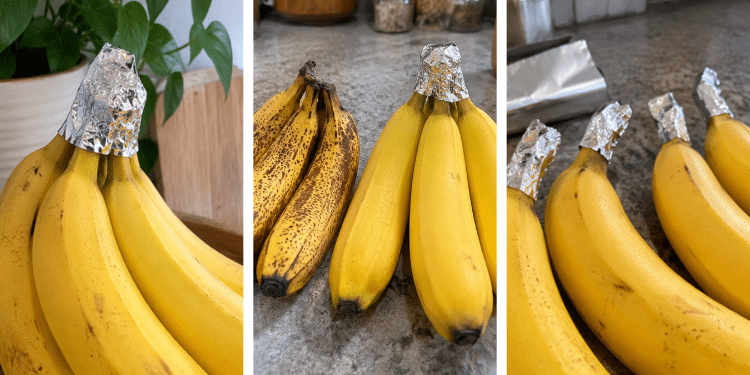
To slow down this rapid ripening process, zero-waste kitchen enthusiasts, produce handlers, and frugal homemakers frequently rely on a simple counterintuitive trick: wrapping the crown (stem) of a banana bunch tightly in aluminum foil.
While wrapping a piece of kitchen foil around banana stems looks like an odd kitchen quirk, this practice is grounded directly in plant physiology and post-harvest biochemistry.
By creating a physical vapor barrier over the primary site of hormone release, aluminum foil alters the micro-environment around the fruit, buying you an extra 3 to 5 days of peak freshness.
Here is an evidence-based breakdown of why wrapping banana stems in aluminum foil works, the biochemical mechanism driving banana ripening, how foil compares to plastic wrap, and how to use this technique properly for maximum shelf life.
The Plant Biochemistry: Why Bananas Ripen So Fast
To understand why wrapping the stem makes a measurable difference, it helps to examine how bananas ripen after being harvested from the plant.
1. Climacteric Ripening and Ethylene Gas
Bananas are climacteric fruits, meaning they continue to ripen—and actually experience a sharp spike in cellular respiration—after they are picked.
This process is triggered and accelerated by a naturally occurring gaseous plant hormone called ethylene.
As a banana matures, it releases ethylene gas into the surrounding air. When that airborne ethylene binds to specialized receptor proteins on the fruit’s skin, it triggers a cascade of enzymatic changes:
-
Amylase Activation: Enzymes break down complex, firm starches into simple sugars (sucrose, glucose, and fructose), making the fruit sweeter and softer.
-
Pectinase Activity: Enzymes degrade pectin fibers in the cell walls, transforming crisp fruit flesh into a soft, mushy texture.
-
Chlorophyll Breakdown: Green chlorophyll pigments degrade rapidly, revealing yellow carotenoids and eventually triggering polyphenol oxidase enzymes that cause brown spotting.
2. Why the Crown (Stem) Is the Control Center
While ethylene gas escapes through microscopic pores across the entire banana peel, the highest concentration of ethylene is emitted directly from the cut crown (stem) where the bunch was severed from the banana plant.
Because the stem is an open, vascular wound tissue, it acts like a chimney, venting ethylene gas into the air surrounding the bunch.
When bananas sit clustered together on a countertop, the ethylene released from the stems bathes the neighboring bananas, triggering a self-amplifying feedback loop that accelerates ripening across the entire bunch simultaneously.
3. How Aluminum Foil Disrupts the Feedback Loop
Standard household aluminum foil is an impermeable metallic barrier. Unlike paper or thin porous plastics, solid aluminum alloy completely blocks gas diffusion.
When you wrap aluminum foil tightly around the cut stem of a banana, you trap the emitted ethylene gas directly at the vascular wound site.
By preventing that concentrated plume of ethylene from dispersing outward over the yellow skins of the fruit, you significantly slow down the hormonal signal telling the rest of the banana to soften and brown.
4 Main Reasons People Wrap Banana Stems in Aluminum Foil
1. Extending Peak Yellow Ripeness by 3 to 5 Days
For households that buy a full bunch of bananas once a week, wrapping the stems prevents the entire bunch from turning overripe on the exact same day.
Instead of rushing to bake banana bread by Thursday, you keep firm, bright yellow bananas ready for snacks and smoothies well into the weekend.
2. Protecting Nearby Countertop Produce from Premature Spoilage
Ethylene does not just affect bananas—it acts as a universal ripening accelerator for other ethylene-sensitive fruits stored nearby, including avocados, apples, tomatoes, peaches, and pears.
Containing ethylene emission at the banana stem helps prevent a single bunch of bananas from inadvertently spoiling the rest of your fruit bowl.
3. Superior Seal Compared to Plastic Cling Wrap
While plastic cling wrap is sometimes used for the same purpose, thin polyethylene film stretches, loosens easily as the stem shrinks, and remains slightly permeable to gases over several days.
Aluminum foil holds its crimped shape tightly against irregular stem ridges without adhesives or rubber bands, creating a superior mechanical seal.
4. Reusable and Zero-Waste Kitchen Habit
Unlike disposable plastic wrap—which tears easily and gets thrown away after one use—a small 4 x 4 inch square of aluminum foil can be unwrapped, smoothed flat, and reused across multiple bunches of bananas for months before being recycled.
Banana Ripening Control Methods Compared
| Storage Method | Ethylene Containment | Ease of Application | Reusability & Waste | Best Use Case |
| Foil Wrapped on Individual Stems | Very High (Isolates each fruit’s gas) | Moderate (Takes 30 seconds) | High (Foil squares easily reused) | Staggering ripeness across a large bunch |
| Foil Wrapped on Whole Bunch Crown | High (Blocks main crown venting) | Very Easy (Takes 10 seconds) | High (Reusable single piece) | Keeping a standard bunch fresh 3–4 extra days |
| Plastic Cling Wrap on Crown | Moderate (Loosens as stem dries) | Moderate (Requires tight wrapping) | Low (Single-use plastic waste) | Quick temporary alternative if out of foil |
| Hanging on a Banana Hook | Low (Allows air circulation to disperse gas) | Very Easy | Permanent fixture | Preventing bottom bruising on soft fruit |
| Refrigeration (Once Ripe) | Very High (Cold halts enzyme activity) | Very Easy | Zero waste | Preserving ripe fruit interior (skin turns dark) |
Step-by-Step: How to Wrap Bananas in Aluminum Foil for Maximum Freshness
To get the best results from this technique, follow these simple steps as soon as you bring your bananas home from the grocery store:
-
Separate Individual Bananas (Optional for Maximum Results): While wrapping the entire intact crown of a bunch works well, separating the bananas from the main cluster and wrapping each individual stem tip delivers superior results. Separating them prevents a single faster-ripening banana from triggering its neighbors.
-
Cut Small Squares of Aluminum Foil: Tear a sheet of standard household aluminum foil into 3 x 3 inch or 4 x 4 inch squares.
-
Wrap Tightly Around the Stem: Place a foil square over the cut top stem of each banana (or over the whole bunch crown) and crimp it firmly around the neck of the stem. Squeeze gently so the foil conforms tightly to the stem with no air gaps, extending about 1 inch down from the tip.
-
Store at Room Temperature Away from Direct Sunlight: Keep the foil-wrapped bananas on your countertop away from warm appliances (like stoves or toasters) and direct window sunlight, as heat accelerates cellular respiration regardless of ethylene containment.
-
Re-Wrap After Removing a Banana: If you keep the bunch intact and snap off one banana to eat, immediately re-crimp the foil tightly over the newly exposed stem surface of the remaining bunch.
Important Limitations and Practical Tips
-
Do Not Wrap Unripe Green Bananas If You Want Them to Ripen Quickly: Because aluminum foil traps ethylene and slows ripening, avoid wrapping rock-hard, bright green bananas until they reach your preferred shade of yellow. To speed up green bananas, place them inside a folded brown paper bag for 24 hours to concentrate ambient ethylene around the fruit, then remove them and wrap the stems in foil once ripe.
-
Don’t Worry About Dark Skins in the Fridge: Once your foil-wrapped bananas reach ideal sweetness, you can transfer them into the refrigerator.
-
Pair with a Banana Hanger: Combining foil-wrapped stems with a countertop banana hanger eliminates both chemical ethylene acceleration and mechanical bruising where heavy bananas rest against hard countertops.
Wrapping banana stems in aluminum foil is a simple, scientifically sound kitchen habit—leveraging basic plant hormone biology to reduce food waste, save grocery money, and keep your fruit fresh longer.