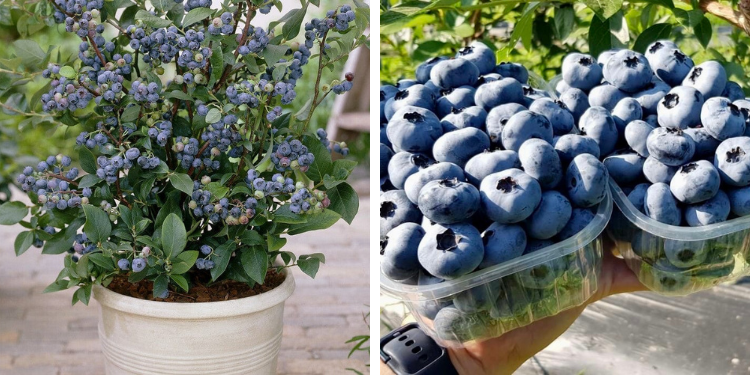
If you walk into the produce section of almost any supermarket, you will notice a consistent trend: fresh blueberries are sold in small plastic clamshells at premium prices.
Because they are delicate to ship and have a notoriously short shelf life once harvested, blueberries remain one of the most expensive fruits per ounce on the market.
Yet, there is a secret that commercial growers don’t advertise: the blueberry bush (Vaccinium) is a long-lived, remarkably resilient perennial.
A single well-chosen, properly planted blueberry bush can yield continuous summer harvests for 20 to 30 years, or even longer under ideal conditions.
By taking control of your backyard, patio, or raised bed setup, you can stop paying grocery store prices and build a reliable, low-maintenance berry source that produces pounds of sweet, antioxidant-rich fruit year after year.
4 Essential Pillars of Long-Term Blueberry Success
Blueberries are not difficult to grow, but they have a distinct set of biological requirements. Unlike standard garden vegetables that adapt to average soils, blueberries require specific conditions to thrive.
Master these four pillars, and your bushes will reward you for decades.
1. Cracking the Code on Acidic Soil (pH 4.5 to 5.2)
This is the single most important factor in growing blueberries, and it is where most first-time growers fail. Blueberries belong to the Ericaceae (heath) family, which includes azaleas and rhododendrons.
Their shallow, fibrous root systems lack root hairs, making it difficult for them to absorb water and vital nutrients unless the soil is highly acidic.
If you plant a blueberry bush in standard garden soil with a neutral pH of 6.5 or 7.0, it will slowly starve. The leaves will turn a pale yellow with bright green veins – a condition known as iron chlorosis – and the plant will eventually die.
The Soil Fix: Before planting, test your soil. Amend your planting zone heavily with organic matter like sphagnum peat moss, composted pine bark, or elemental sulfur to drive the pH down into the ideal 4.5 to 5.2 range. If your native soil is highly alkaline limestone clay, avoid planting directly in the ground; opt for raised beds or large patio containers where you can completely control the soil mix.
2. The Power of Cross-Pollination
Many blueberry varieties are classified as self-fertile, meaning a single bush can produce fruit on its own. However, commercial growers rely on a simple strategy to boost their yields: cross-pollination.
When you plant two or more different varieties that bloom at the same time, bumblebees and honeybees cross-pollinate the blossoms.
This cooperative process results in significantly larger berry yields, bigger fruit size, and a more robust, complex flavor profile.
3. Choosing the Right Variety for Your Climate Zone
Blueberry bushes are grouped into distinct categories based on their winter chilling requirements (the number of hours below 45°F needed to break dormancy and trigger spring flowers):
-
Northern Highbush (Vaccinium corymbosum): The gold standard for cold winter regions (Zones 4 to 7). These varieties require 800 to 1,000 chill hours and produce exceptional, large-scale midsummer crops.
-
Southern Highbush: Bred specifically for mild-winter areas (Zones 7 to 10), requiring only 150 to 500 chill hours. They combine the heat tolerance of native southern species with the high fruit quality of northern varieties.
-
Rabbiteye (Vaccinium virgatum): Incredibly vigorous, pest-resistant bushes native to the southeastern United States (Zones 7 to 9). They thrive in long, hot summers and require minimal maintenance, making them an excellent choice for southern homesteads.
4. Continuous Organic Mulching and Moisture Management
Because blueberries have a shallow, delicate root architecture that sits primarily in the top 8 to 12 inches of soil, they have zero tolerance for drought.
If the root zone dries out completely during the hot summer fruit-setting window, the berries will shrivel, drop off, and the plant’s structural wood will suffer long-term stress.
To counter this, maintain a continuous 3-inch layer of organic mulch over the root zone. Composted pine needles, pine bark nuggets, or aged sawdust are ideal options because they preserve vital soil moisture, suppress competitive weeds, and slowly break down over time to help maintain the soil’s acidity.
Step-by-Step Planting Guide for Decades of Berries
To get your blueberry bush off to the absolute best start, follow this precise installation method during late winter or early spring when the plant is dormant.
Pruning for Long-Term Yields: The Annual Reset
During the first two years after planting, you should actually pinch off any spring blossoms that appear.
While it feels counterintuitive to sacrifice your first crops, preventing the plant from setting fruit forces it to channel all its energy into establishing a robust, resilient root network and thick structural scaffolding.
Once your bush reaches its third or fourth year, an annual winter pruning routine is essential to keep the harvest heavy and accessible:
-
Remove the Three D’s: Cut away any branches that are Dead, Damaged, or Diseased.
-
Clear the Base: Prune away low-growing, spindly twigs that droop toward the ground under the weight of fruit. This keeps the berries clean and prevents soil-borne pests from reaching them.
-
Manage Cane Age: The most productive canes are between two and five years old. Canes older than six years become woody, gray, and produce fewer, smaller berries. Every winter, remove the oldest, thickest gray canes down to the base of the plant to encourage the growth of fresh, vibrant red-brown fruiting shoots.
The Permaculture Shift: Planting a blueberry bush is a long-term investment in your home’s food security. It shifts you from being a consumer dependent on fragile supply chains and costly packaging to an active producer.
With a bit of initial care to establish the right acidic foundation, your backyard berry patch will quietly produce bounties of fresh, sweet fruit every single summer for a generation.