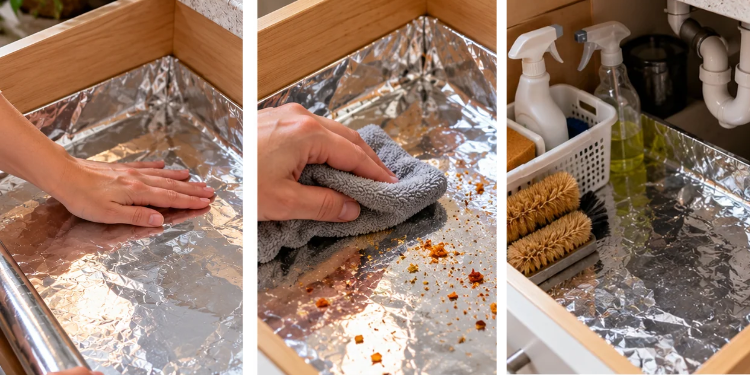
If you open the kitchen drawers of experienced home cooks, professional chefs, or meticulously organized homemakers, you might notice an unexpected lining along the bottom surfaces: a shiny, smooth sheet of standard aluminum foil.
While decorative contact paper, scented drawer liners, and rubberized mesh mats dominate retail store shelves, lining kitchen drawers with aluminum foil is a classic, budget-friendly household hack.
By taking advantage of the non-porous, reflective, heat-resistant, and moisture-proof physical properties of aluminum, this simple trick protects wooden drawer interiors, deters kitchen pests, speeds up cabinet cleaning, and keeps utensil organizers looking brand new for years.
Here is a comprehensive breakdown of why people line their kitchen drawers with aluminum foil, the science behind its effectiveness, and how you can implement this practical habit in your own home.
The Physical Properties: Why Aluminum Foil Works as a Liner
Standard household aluminum foil is crafted from an alloy containing over 98% pure aluminum, cold-rolled into thin, flexible metallic sheets.
This unique manufacturing process gives foil several physical characteristics that make it uniquely suited for protecting cabinet wood and laminate:
1. Completely Non-Porous Liquid and Oil Barrier
Unlike shelf liners made of woven fabric, felt, or perforated rubber, aluminum foil is 100% impermeable to liquids, oils, and moisture.
When cooking oil bottles, damp utensil handles, or leaked spice jars rest inside a drawer, foil prevents liquids from seeping into raw or finished wood, eliminating permanent oil stains and wood warping.
2. Smooth, Low-Friction Metallic Surface
Aluminum foil features a smooth surface that reduces sliding friction. When opening and closing heavy drawers containing metal cutlery, heavy wooden spoons, or sharp kitchen knives, the foil absorbs surface abrasion.
Instead of metal blades gouging or scratching expensive cabinetry wood, the metallic barrier takes the brunt of daily wear and tear.
3. Light Reflection in Dark Drawer Corners
Deep kitchen cabinets and under-sink drawers are notoriously dark, making it difficult to spot small items tucked into far back corners.
Aluminum foil has high light reflectivity, bouncing ambient kitchen light deep into dark drawer recesses so you can find utensils instantly.
4 Reasons People Line Kitchen Drawers with Aluminum Foil
1. Easy Cleaning for Spice and Oil Drawers
Sticky spills are common in drawers where cooking oils, honey jars, soy sauce, and ground spices are stored. Cleaning wood or sticky contact paper requires aggressive scrubbing that can ruin cabinet finishes.
When a drawer is lined with aluminum foil, cleaning takes seconds: simply lift out the soiled foil sheet, wipe down any dry debris, toss the foil into the recycling bin, and lay down a fresh sheet.
2. Deterring Pests in Dry Food and Cutlery Bins
Pantry drawers containing grain bags, baking powders, or loose snacks can attract unwanted kitchen pests like ants, flour beetles, and mice.
-
Ants and Crawling Bugs: Ants rely on pheromone trails left on porous wooden surfaces to navigate to food sources. Aluminum foil creates a smooth, non-porous barrier that prevents pheromone absorption, disrupting insect pathways.
-
Rodent Deterrence: Mice dislike chewing through metal foils because the sharp metallic edges irritate their teeth and oral tissues. Lining rear drawer joints with heavy-duty foil helps block minor gnawing entry points.
3. Moisture Protection Under Kitchen Sinks
The drawer or sliding pull-out shelf located directly underneath the kitchen sink is constantly exposed to ambient plumbing moisture, damp sponges, and chemical cleaner condensation.
Lining this lower compartment with aluminum foil prevents micro-dampness from causing fungal mold growth, wood rot, or unsightly water rings on underlying surfaces.
4. Heat and Flame Resistance Near the Stove
Drawers located directly next to or beneath built-in stovetops and ovens absorb ambient radiant heat. Plastic or vinyl drawer liners can warp, melt, or release synthetic fumes when exposed to high heat over time.
Aluminum foil is heat-tolerant, making it completely safe for high-heat cooking zones.
Kitchen Drawer Liner Materials Compared
| Liner Material | Water & Oil Proof | Heat Tolerance | Ease of Replacement | Cost per Drawer |
| Aluminum Foil | 100% Impermeable | Extremely High | Instant (Recyclable) | 0.25$ |
| Adhesive Contact Paper | Moderate (Seams can leak) | Low to Moderate | Difficult (Leaves sticky residue) | 2.00 – 4.00$ |
| Rubber Mesh Mats | Low (Perforated gaps) | Low (Can warp with heat) | Moderate (Requires washing) | 1.50 – 3.00$ |
| Fabric / Felt Liners | Very Low (Absorbs spills) | Low | Moderate | 3.00 – 5.00$ |
Step-by-Step: How to Line Your Drawers with Foil
Lining your kitchen drawers with aluminum foil takes under two minutes per drawer:
Pro-Tips for an Ultra-Neat Look
-
Shiny vs. Dull Side: Both sides of aluminum foil provide equal protection, but placing the dull side facing up creates a softer, matte appearance that minimizes glare when opening brightly lit drawers.
-
Combine with Organizers: Place clear acrylic or bamboo drawer dividers directly on top of the foil sheet. The dividers keep small items organized while the foil layer beneath guards against hidden scratches and dust accumulation.
Lining your kitchen drawers with aluminum foil is an affordable, eco-friendly, and ultra-practical habit that keeps your cabinetry protected, pest-free, and effortless to clean.