Successful gardening is about more than simply planting seeds, watering, and waiting for the harvest.
The real secret to abundant yields and healthy plants lies beneath the surface – in the complex relationships plants form with one another.
Some crops thrive side by side, sharing nutrients, repelling pests, and even improving each other’s flavor.
Others, however, compete fiercely for resources, inhibit growth, or attract the same diseases and pests.
Why Plant Compatibility Matters
Plants are not passive life forms – they actively interact with their environment and neighbors.
Some send out chemical signals through their roots, some excrete compounds that suppress competitors, and others simply grow aggressively and rob nearby plants of sunlight, water, and nutrients.
There are three main ways incompatible plants harm each other:
1. Nutrient Competition
Some plants have very similar nutrient requirements. When planted too close together, they compete for the same resources, leaving both undernourished.
This often results in:
- Stunted growth
- Yellowing leaves (a sign of nutrient deficiency)
- Delayed or reduced harvests
- Poor root development
Heavy feeders – crops that demand lots of nitrogen, potassium, or phosphorus – should rarely share space with other heavy feeders.
2. Allelopathy (Chemical Warfare)
Certain plants release allelochemicals – natural compounds that inhibit the germination or growth of neighboring plants.
This strategy helps them outcompete rivals in the wild, but in the garden, it can stunt or even kill nearby crops.
A classic example is walnut trees, which release juglone, a compound toxic to many vegetables. But even common crops like beans, onions, and sunflowers use chemical signals that can suppress neighbors.
3. Pest and Disease Amplification
Some plants attract the same pests or are vulnerable to the same diseases. When grown together, they amplify pest populations and increase disease risk.
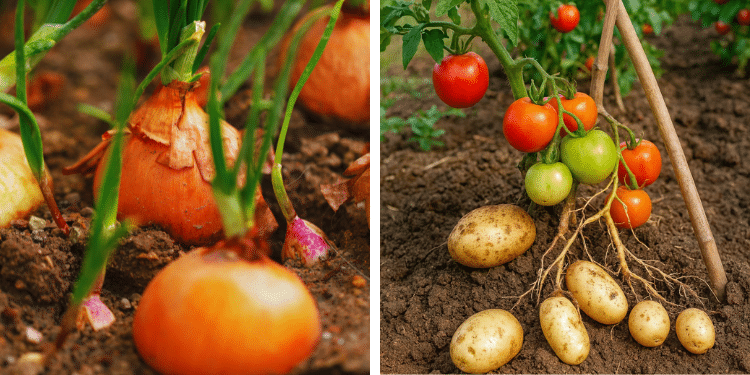
For example, tomatoes and potatoes belong to the nightshade family and are susceptible to similar fungal infections. Planting them side by side can spread blight quickly through your garden.
Crops You Should Never Grow Side by Side
Let’s explore the most common incompatible pairings – and why they spell trouble for your garden.
1. Tomatoes and Potatoes
Why They’re Incompatible: Both belong to the Solanaceae (nightshade) family, meaning they share similar nutrient needs and are vulnerable to the same pests and diseases.
Planting them together can lead to:
- Rapid spread of blight (especially late blight)
- Colorado potato beetle infestations
- Nutrient depletion, especially potassium and phosphorus
Better Alternatives:
- Plant tomatoes near basil, carrots, or onions.
- Grow potatoes near beans, cabbage, or corn – but well away from other nightshades.
2. Onions and Beans (or Peas)
Why They’re Incompatible: Onions and other alliums (like garlic, leeks, and shallots) release sulfur compounds into the soil that inhibit the growth of legumes.
Beans and peas, in turn, fix nitrogen into the soil – but onions don’t benefit from this and instead compete for space and resources.
Problems Caused:
- Stunted bean growth
- Reduced nitrogen fixation
- Lower onion bulb development
Better Alternatives:
- Pair onions with carrots, beets, or lettuce.
- Plant beans with corn, cucumbers, or strawberries.
3. Carrots and Dill
Why They’re Incompatible: Although both are from the Apiaceae family, dill exudes allelochemicals that stunt carrot growth and alter root formation. Additionally, mature dill can cross-pollinate and affect carrot seed quality.
What Happens:
- Misshapen or stunted carrot roots
- Poor germination and uneven growth
Better Alternatives:
- Grow carrots with onions, leeks, or chives.
- Pair dill with cabbage, cucumbers, or lettuce.
4. Corn and Tomatoes
Why They’re Incompatible: While this combination might seem harmless, both are heavy feeders and will compete aggressively for nitrogen and phosphorus.
Worse, they attract the same pests – particularly corn earworms and tomato fruitworms – which can devastate both crops simultaneously.
Consequences:
- Reduced yields and nutrient deficiencies
- Increased pest pressure and damage
Better Alternatives:
- Pair corn with beans and squash (the classic “Three Sisters”).
- Grow tomatoes near basil, parsley, or garlic.
5. Cucumbers and Potatoes
Why They’re Incompatible: Potatoes are aggressive feeders that strip the soil of nutrients cucumbers also need. They also share vulnerability to late blight, which spreads easily between the two.
Problems:
- Stunted cucumber vines
- Increased risk of fungal disease
- Lower potato yields
Better Alternatives:
- Grow cucumbers with radishes, beans, or dill.
- Keep potatoes near corn or cabbage.
6. Brassicas (Cabbage, Kale, Broccoli) and Strawberries
Why They’re Incompatible: Brassicas and strawberries have conflicting nutrient needs and root structures. Brassicas also release natural chemicals that slow strawberry growth, while strawberries can harbor fungal diseases that harm brassicas.
What Happens:
- Reduced yields for both crops
- Slow growth and fewer fruits
- Greater risk of soilborne disease
Better Alternatives:
- Grow brassicas with onions, dill, or beets.
- Pair strawberries with spinach or beans.
7. Peppers and Beans
Why They’re Incompatible: Peppers are heavy feeders and need nutrient-rich soil. Beans fix nitrogen but may not release it quickly enough for peppers. Moreover, beans can outcompete peppers for sunlight and space.
Problems:
- Smaller pepper plants with fewer fruits
- Reduced bean yield
- Increased susceptibility to aphids and spider mites
Better Alternatives:
- Grow peppers with basil, carrots, or onions.
- Pair beans with corn, cucumbers, or beets.
8. Sunflowers and Potatoes
Why They’re Incompatible: Sunflowers release allelopathic chemicals that inhibit root growth and nutrient absorption in many crops, especially potatoes. Both are also highly water-demanding, increasing competition.
Consequences:
- Poor tuber formation
- Delayed growth and smaller plants
- Reduced yield potential
Better Alternatives:
- Plant sunflowers along garden edges as pollinator attractors.
- Grow potatoes with beans or corn.
9. Fennel and Just About Everything
Why They’re Incompatible: Fennel is notorious for being a poor companion. It releases potent allelochemicals that stunt or kill nearby plants. Most vegetables – including tomatoes, beans, and cucumbers – suffer in its presence.
What Happens:
- Poor germination of nearby seeds
- Stunted growth and reduced yields
- Soil toxicity if planted in the same spot repeatedly
Better Alternatives:
- Grow fennel in its own dedicated bed or container.
- Plant pollinator-friendly flowers near it to attract beneficial insects.
10. Beans and Garlic (or Onions)
Why They’re Incompatible: Garlic and onions release compounds that inhibit nitrogen-fixing bacteria, making it harder for beans to convert atmospheric nitrogen into a usable form.
Consequences:
- Nitrogen deficiency in legumes
- Yellowing leaves and reduced pod development
- Lower yields overall
Better Alternatives:
- Grow garlic and onions near carrots or lettuce.
- Plant beans with corn, squash, or cucumbers.
More Subtle Pairings to Avoid
Some combinations aren’t outright destructive but still lead to poor results. These include:
- Lettuce and broccoli: Broccoli’s dense canopy shades lettuce, slowing its growth.
- Cabbage and grapes: Cabbage can release compounds that inhibit grape root growth.
- Radishes and hyssop: Hyssop suppresses radish germination.
- Turnips and potatoes: Both compete heavily for potassium.
Designing a Healthy Garden Layout
Avoiding bad pairings is just one part of successful garden planning. Here’s how to design a layout that maximizes plant health and yield:
1. Group Plants by Nutrient Needs
- Heavy feeders: Tomatoes, corn, cabbage, peppers – plant these far apart and enrich soil with compost.
- Light feeders: Carrots, beets, onions – these can be grown closer together.
- Nitrogen fixers: Beans, peas – rotate these through the garden to enrich the soil.
2. Rotate Crops Annually
Avoid planting the same family of crops in the same bed year after year. Rotation breaks pest and disease cycles and prevents soil depletion.
3. Use Companion Planting Strategies
Some plants are natural allies:
- Carrots + onions: Carrots repel onion flies; onions deter carrot root flies.
- Tomatoes + basil: Basil improves tomato growth and flavor while repelling pests.
- Corn + beans + squash: Beans fix nitrogen, corn provides support, and squash shades weeds.
4. Space Plants Properly
Even compatible plants need room. Overcrowding intensifies competition for water, nutrients, and light – even among friendly neighbors.
Signs Your Plants Are Competing
If you’ve accidentally paired incompatible plants, you’ll likely see one or more of these signs:
- Stunted or uneven growth
- Yellowing leaves despite adequate nutrients
- Small fruits or delayed flowering
- Increased pest infestations
- Root crowding and poor soil structure
If these symptoms appear, consider transplanting one of the crops or using organic amendments to rebalance the soil.
The difference between a thriving garden and a disappointing one often comes down to which plants you choose to grow side by side.
While companion planting can unlock healthier soil, natural pest control, and bigger harvests, incompatible pairings can sabotage all your hard work.