As the intense midsummer heat peaks, late-summer gardens can easily begin to look a bit leggy, exhausted, or overgrown.
Plants that burst into bloom back in June or July may now show fading petals, dry seed pods, and straggly growth habits.
However, August is far from the end of the flowering season – it is actually the critical pivot point that determines how colorful your borders remain through autumn.
The secret to extending your garden’s floral display well into October comes down to deadheading: removing spent, wilted, or fading flowers before the plant shifts its energy into setting seeds.
The Botanical Science of Deadheading
To understand why deadheading works so dramatically in August, look at the biological goals of flowering plants:
-
Hormonal Reprogramming: When a flower is fertilized and petals fade, the plant produces auxins and gibberellins – plant growth hormones that signaling the plant to direct carbohydrates and sugars toward seed production.
-
Redirecting Energy Reserves: Developing seeds requires immense metabolic energy. Snapping or trimming off spent flowers halts seed formation immediately, redirecting stored nitrogen and carbohydrates back into root health, lush foliage, and new lateral flower buds.
-
Disease Prevention: Late summer brings humid nights and warm days – the perfect environment for fungal spores like powdery mildew and Botrytis (gray mold). Fading petals trap moisture against healthy leaves as they rot. Removing spent blossoms increases airflow and clears away decaying plant tissue before fungal diseases take hold.
The 15 Flowers to Deadhead in August
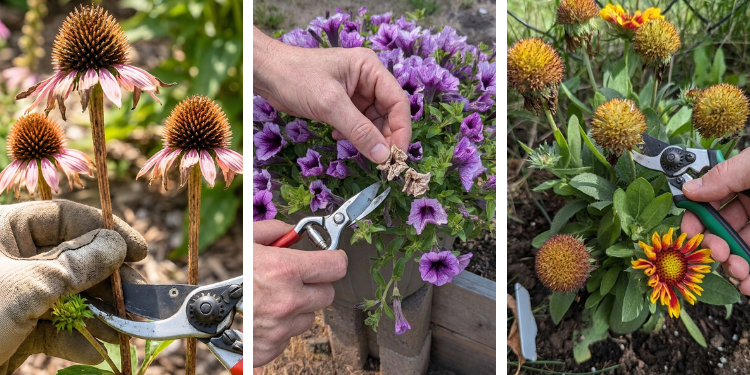
1. Purple Coneflower (Echinacea purpurea)
-
Why Deadhead in August: While gardeners often leave seed heads on coneflowers in late autumn to feed winter goldfinches, deadheading early-to-mid August spent blooms encourages a strong second flush of bright purple petals for September.
-
How to Cut: Follow the fading flower stem down to where it meets a lower set of healthy leaves or an emerging side bud, then make a clean, angled cut 1/4 inch above the node.
2. Garden Dahlias (Dahlia spp.)
-
Why Deadhead in August: Dahlias reach their absolute peak between August and October. Removing spent blooms ensures that massive tuber energy goes toward opening new display blooms rather than heavy seed heads.
-
How to Cut: Distinguish spent dahlias from unopened buds – spent flower heads are pointed and cone-shaped, whereas fresh unopened buds are firm and rounded like marbles. Snip the stem back to the main branch junction.
3. Garden Marigolds (Tagetes spp.)
-
-
Why Deadhead in August: Marigolds are heavy summer performers, but spent flower heads easily rot in humid late-summer rain, attracting slugs and gray mold.
-
How to Cut: Pinch off the spent bloom along with its green base casing (calyx) right down to the nearest branch joint using your thumb and forefinger.
-
4. Cosmos (Cosmos bipinnatus)
-
Why Deadhead in August: Cosmos are prolific self-seeders. If left unchecked in August, they stop setting new flowers and focus entirely on making long, brown needle-like seeds.
-
How to Cut: Snip spent flower stems back to a leaflet node where new green buds are forming. Regular trimming keeps tall varieties bushy instead of floppy and bare at the base.
5. Zinnias (Zinnia elegans)
-
Why Deadhead in August: Zinnias are prone to powdery mildew in late summer. Deadheading opening up the plant canopy improves air circulation while stimulating long, sturdy stems for fresh cut-flower arrangements.
-
How to Cut: Don’t just pop off the flower head – cut the stem deep down into the plant canopy, just above a set of leaf joints, to encourage thick, branching stems.
6. Black-Eyed Susans (Rudbeckia fulgida)
-
Why Deadhead in August: Rudbeckias bloom intensely through late summer, but central seed discs quickly turn dark brown and dry. Snapping off faded heads keeps yellow petals popping against dark foliage.
-
How to Cut: Cut the spent flower stem down to the base basal leaves or to an active lower bud node.
7. Hybrid Tea and Shrub Roses (Rosa spp.)
-
Why Deadhead in August: August is your last chance to deadhead repeat-blooming roses for a final early-autumn flush before winter dormancy sets in.
-
How to Cut: Cut the stem back to an outward-facing leaf set with 5 leaflets. Making the cut at an angle above an outward-facing bud forces new growth outward, keeping the interior of the rose bush open to sunlight and airflow.
8. Garden Salvia (Salvia nemorosa)
-
Why Deadhead in August: Perennial salvias develop tall, spiky flower spikes that turn brown and woody by mid-August.
-
How to Cut: Shear the entire plant back by one-third using clean garden shears. This aggressive “haircut” cleans up ragged foliage and triggers a brand-new mound of green leaves topped with fresh purple spires within 2 to 3 weeks.
9. Sweet Alyssum (Lobularia maritima)
-
Why Deadhead in August: Hot August temperatures cause alyssum ground cover to stretch, turn yellow, and go sparse in the center.
-
How to Cut: Use grass shears or sharp scissors to trim the top 1/2 inch of the entire mat. Water thoroughly and add a mild organic fertilizer to trigger a carpet of honey-scented white blooms for autumn.
10. Blanket Flower (Gaillardia x grandiflora)
-
Why Deadhead in August: Gaillardia thrives in summer heat, but forming seed spheres quickly signals the short-lived perennial to wrap up its life cycle.
-
How to Cut: Snip individual spiky seed balls right at the base of their stems to keep bright orange and red daisy-like petals opening non-stop.
11. Daylilies (Hemerocallis spp.)
-
Why Deadhead in August: Individual daylily blossoms last just 24 hours. By August, daylily clumps are often cluttered with soggy, wilted flower heads and brown seed pods.
-
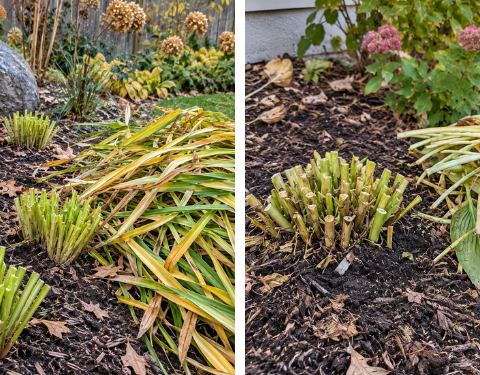
How to Cut: Snap off spent individual flowers daily. Once an entire central stalk (scape) has finished opening all its buds, cut the thick scape off right at ground level.
12. Petunias (Petunia x hybrida)
-
Why Deadhead in August: Late-summer petunias tend to develop long, straggly stems with flowers only at the very tips.
-
How to Cut: Don’t just pull off the sticky petals; remove the small green seed capsule directly behind the flower base. Cut leggy stems back by half to force new branching near the center of hanging baskets.
13. Snapdragons (Antirrhinum majus)
-
Why Deadhead in August: Snapdragons bloom from the bottom of their central spike upward. Once the top buds fade, energy goes into forming seed pods that resemble tiny skulls.
-
How to Cut: Cut the main central spike down to where lower side shoots are emerging to encourage bushy, multi-stemmed autumn blooming.
14. Verbena (Verbena bonariensis & V. hybrida)
-
Why Deadhead in August: Sprawling verbenas form brown, seed clusters in August that block lower sunlight and reduce flower production.
-
How to Cut: Snip spent flower clusters back to the nearest leaf junction.
15. Shasta Daisy (Leucanthemum x superbum)
-
Why Deadhead in August: Fading Shasta daisies develop drooping, yellowed petals and dark brown centers that look untidy in summer borders.
-
How to Cut: Trace the flower stem down to the foliage mound at the base of the plant and cut cleanly to keep flower borders neat.
Summary Matrix: August Deadheading Quick Reference
| Flower Species | Pruning Technique | Best Tool | Expected Autumn Result |
| Purple Coneflower | Stem trim above leaf node | Micro-snips / Pruners | Second flush of September blooms |
| Dahlia | Cut at main stem junction | Bypass pruners | Large, continuous cut flowers |
| Cosmos | Selective stem cutting | Micro-snips | Bushy habit; prevents seed needle formation |
| Zinnia | Deep stem cut above leaf joint | Hand pruners | Sturdier stems; mildew reduction |
| Perennial Salvia | Shear top 1/3 of entire plant | Hedge shears / Grass scissors | Full fresh leaf mound and autumn spires |
| Petunia | Pinch flower + seed capsule base | Finger pinch or scissors | Compact, fuller hanging baskets |
| Daylily | Remove individual blooms & cut old scapes | Hand snips | Clean foliage clump; no seed pods |
Best Practices & Equipment for August Deadheading
To avoid spreading plant diseases during humid August weather, follow these foundational maintenance steps:
Late-Season Tip: By mid-to-late September, stop deadheading cold-hardy perennials like Coneflowers, Black-Eyed Susans, and Sedum. Leaving late-season seed heads intact provides natural food for overwintering birds and adds attractive structural interest to frost-covered winter landscapes.
The best gardens don’t just brighten your yard – they become something you can enjoy season after season.
If you’re ready to grow your own backyard pharmacy, the Medicinal Garden Kit is a wonderful place to begin.
Inside you’ll find 2,409 non-GMO seeds, a detailed Herbal Medicinal Guide, and 2 FREE bonuses to help you grow a wide variety of traditional medicinal herbs with confidence.
Take a look at the Medicinal Garden Kit and start growing something truly rewarding.