
If you take a peak into the pantries of seasoned home cooks and eco-friendly household enthusiasts, you might find a simple glass jar filled with a vibrant yellow mixture: coarse salt infused with freshly grated lemon zest.
While lemon-infused salt is widely celebrated in culinary arts as a gourmet finishing seasoning, its utility extends far beyond food preparation.
By combining the natural abrasive, dehydrating, and deodorizing properties of salt with the degreasing, antimicrobial, and aromatic power of lemon peel essential oils, this simple combination forms an indispensable, non-toxic household staple.
Here is a look at the botanical chemistry behind this homemade blend, how to prepare it, and 7 clever ways to use it across your kitchen, home care routine, and personal wellness practices.
The Chemistry: Why Salt and Lemon Zest Work So Well Together
To understand why this dual-purpose blend is so effective, it helps to examine how sodium chloride and citrus peel essential oils interact on a physical and chemical level.
1. D-Limonene and Citrus Essential Oils
The outermost layer of a lemon (the flavedo) contains tiny oil glands packed with D-limonene—a natural, non-polar solvent terpene.
D-limonene dissolves grease, breaks down sticky residues, and provides a crisp, uplifting aroma. It also exhibits natural antibacterial and antifungal properties.
2. Physical Abrasion and Dehydration
Coarse salt (sodium chloride) serves as a natural, non-scratch abrasive. When rubbed against surfaces, it mechanically lifts baked-on food, grime, and dead skin cells.
Additionally, salt is hypertonic and hygroscopic; it draws moisture out of bacterial cells, halting microbial growth and neutralizing lingering odors at the molecular level.
3. Flavor and Essential Oil Lock-In
When fresh lemon zest is rubbed directly into coarse salt crystals, the salt crystals absorb the volatile essential oils released from the ruptured zest sacs.
The salt acts as a natural preservative, trapping the bright citrus oils and preventing them from evaporating or oxidizing.
7 Clever Ways to Use a Salt and Lemon Zest Blend
1. Deep Cleaning and Sanitizing Wooden Cutting Boards
Wooden cutting boards absorb juices from raw meats, garlic, and onions, leading to deep-seated bacterial growth and persistent odors.
Sprinkling a generous amount of lemon-zest salt over a damp wooden cutting board and scrubbing it with a sponge (or the cut side of a squeezed lemon) creates a gentle abrasive paste.
The salt lifts trapped food fibers, while D-limonene neutralizes lingering odors and sanitizes the porous wood naturally.
2. Scrubbing Baked-On Grease from Cast Iron and Cookware
Commercial dish soaps can strip the delicate protective seasoning off cast iron skillets, while synthetic scouring pads can scratch stainless steel and enamel.
The lemon-zest salt blend acts as a water-free scouring agent. The coarse salt granules scrape away charred food bits without damaging seasoned iron, while the lemon oils cut through stubborn grease layers, leaving cookware clean and rust-protected.
3. Deodorizing Fish, Garlic, and Onion Odors from Hands
After chopping raw garlic, dicing onions, or scaling fresh fish, sulfur compounds cling to skin pores, resisting standard liquid hand soaps.
Scoop a teaspoon of the lemon-zest salt mixture into damp palms and rub your hands together for 30 seconds before rinsing with warm water.
The salt mechanically scrubs away odoriferous sulfur particles, while the citrus oils neutralize stubborn smells, leaving your hands refreshed.
4. Gourmet Finishing Salt for Culinary Dishes
In the kitchen, this blend serves as an exceptional finishing seasoning. The sodium content enhances natural food flavors, while the infused citrus oils provide a bright, acidic lift without adding excess liquid.
-
Best Pairings: Sprinkle over grilled salmon, roasted vegetables (asparagus, broccoli, potatoes), avocado toast, grilled chicken breast, or the rim of cocktail glasses.
Lemon-Zest Salt Household Application Matrix
| Application | Primary Mechanism | Surface / Purpose | Household Benefit |
| Cutting Board Care | Mechanical abrasion + D-limonene | Porous wood & bamboo | Neutralizes odors & lifts trapped fibers |
| Cast Iron Cleaning | Oil-soluble scouring | Cast iron & stainless steel | Cleans grease without stripping seasoning |
| Hand Deodorization | Sulfur particle extraction | Skin & hands | Removes garlic, onion, & fish smells |
| Exfoliating Body Scrub | Hypertonic skin buffing | Feet, elbows, & heels | Sloughs off dead skin & softens calluses |
| Culinary Finishing Salt | Essential oil preservation | Grilled meats, veggies, & seafood | Enhances flavor with bright citrus notes |
5. Exfoliating Foot and Body Scrub
Salt scrubs are a staple in spa treatments for smoothing rough, dry skin. The fine-to-coarse texture of salt sloughs off dead skin cells, while lemon oil brightens dull skin and delivers a refreshing sensory experience.
Mix 2 tablespoons of your lemon-zest salt blend with 1 tablespoon of olive oil or sweet almond oil. Gently scrub callused heels, elbows, and feet in the shower before rinsing thoroughly with warm water.
6. Removing Tea and Coffee Stains from Mugs
Over time, ceramic mugs and glass carafes accumulate dark, unsightly tannin stains from tea and coffee that standard dishwasher cycles fail to remove.
Moisten the inside of the stained ceramic mug, apply a tablespoon of the lemon-zest salt blend, and scrub firmly with a damp cloth. The salt crystals scour away embedded tannin film effortlessly without scratching the ceramic glaze.
7. Natural Trash Can and Sink Drain Deodorizer
Garbage disposals and outdoor trash bins often trap decaying organic matter, releasing foul odors into kitchen living spaces.
Dump 2\3 tablespoons of the salt and lemon zest mixture directly into the garbage disposal or bottom of a empty trash bin, followed by a flush of cold water.
The salt scrubs away internal slime buildup while the lemon oils coat the drain pipes in clean citrus freshness.
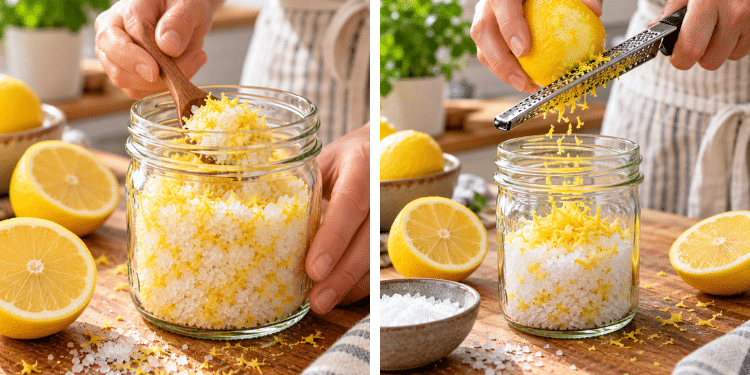
Step-by-Step: How to Make Lemon Zest Infused Salt
Creating your own multipurpose jar takes less than five minutes:
Mixing salt and lemon zest in a jar is a budget-friendly, highly practical habit that bridges the gap between gourmet cooking and eco-friendly home care, giving you a versatile tool for cleaning, cooking, and self-care.