Growing your own herbs indoors is not only satisfying but also a great way to add fresh flavor to your cooking year-round.
Among the easiest and most rewarding herbs to grow indoors is mint. With its invigorating scent, refreshing flavor, and wide range of culinary and medicinal uses, mint is a must-have for every indoor herb garden.
In this guide, you’ll learn how to grow mint plants indoors successfully—from choosing the right variety to harvesting and troubleshooting common issues.
Whether you have a sunny kitchen windowsill or a small indoor garden setup, mint can thrive in your home with just a little care.
Why Grow Mint Indoors?
Mint is a hardy perennial herb known for its vigorous growth and rich aroma.
Growing mint indoors offers several advantages:
-
Year-round fresh harvests
-
Pest and disease control is easier indoors
-
Prevents garden takeover—mint spreads aggressively outdoors
-
Perfect for small spaces and container gardening
Indoor-grown mint is perfect for making tea, cocktails, sauces, desserts, or simply adding a fresh pop of green to your dishes.
Best Mint Varieties for Indoor Growing
There are over 600 types of mint, but not all are suited for indoor cultivation.
Here are some top choices:
1. Spearmint (Mentha spicata)
-
Mild, sweet flavor
-
Great for teas, salads, and sauces
2. Peppermint (Mentha × piperita)
-
Stronger, cooling taste
-
Popular for teas, desserts, and digestion remedies
3. Chocolate Mint
-
Subtle chocolate aroma with a hint of mint
-
Ideal for baking and desserts
4. Apple Mint
-
Fruity, less intense mint flavor
-
Excellent in fruit salads and beverages
Choose your mint variety based on your preferred culinary or aromatic uses.
How to Grow Mint Indoors: Step-by-Step
1. Choose the Right Container
Mint loves space and needs good drainage. Use a pot that’s at least 8–10 inches wide with drainage holes.
Pro tip: Use a saucer or tray underneath to catch excess water.
2. Use the Best Soil Mix
Mint prefers loamy, well-draining soil rich in organic matter. A potting mix for herbs or vegetables is ideal. You can also mix your own:
-
2 parts potting soil
-
1 part perlite or sand
-
1 part compost
Avoid heavy garden soil that retains too much moisture indoors.
3. Provide Adequate Light
Mint needs plenty of bright, indirect sunlight to thrive indoors.
-
Ideal: 4–6 hours of light per day
-
South- or west-facing windows are best
-
Supplement with a grow light if natural light is limited
Without enough light, mint becomes leggy and loses flavor potency.
4. Water Regularly but Don’t Overwater
Mint likes consistently moist soil, but not soggy. Overwatering leads to root rot.
Watering tips:
-
Water when the top inch of soil feels dry
-
Ensure water drains completely through the pot
-
Mist occasionally to increase humidity in dry homes
5. Maintain Optimal Temperature and Humidity
Mint is adaptable but grows best in:
-
Temperatures between 60–75°F (15–24°C)
-
Moderate to high humidity levels
If your home is dry, place a tray of water and pebbles near the plant or use a small humidifier nearby.
6. Fertilize Lightly
Mint doesn’t need heavy feeding. Over-fertilizing can lead to reduced flavor intensity.
Use:
-
A balanced liquid organic fertilizer (like 10-10-10)
-
Apply every 4–6 weeks during the growing season
Avoid chemical fertilizers that can affect the taste and safety of edible herbs.
7. Harvest Properly to Encourage Growth
Regular harvesting encourages mint to grow fuller and bushier.
How to harvest:
-
Use clean scissors to snip stems just above a leaf node
-
Never remove more than ⅓ of the plant at once
-
Begin harvesting when the plant is about 4–6 inches tall
Frequent pinching and trimming also prevent flowering, which can make the leaves bitter.
Propagating Mint Indoors
Mint is easy to propagate, making it a great plant to multiply and share.
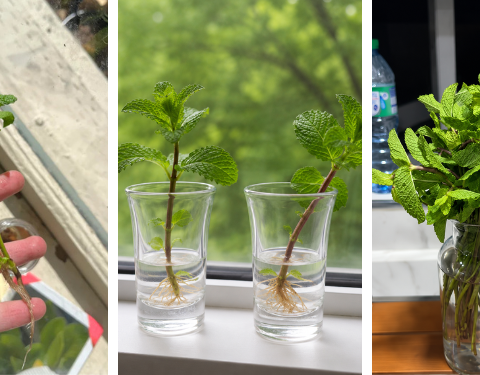
Propagation by cuttings:
-
Snip a healthy stem (4–6 inches long)
-
Remove the lower leaves
-
Place the stem in a glass of water in a sunny location
-
Change the water every 2–3 days
-
Once roots are 1–2 inches long, plant in soil
You’ll have a new mint plant ready to grow within 1–2 weeks!
Common Problems and Solutions
Leggy Growth
-
Cause: Not enough light
-
Fix: Move to a brighter spot or use a grow light
Yellowing Leaves
-
Cause: Overwatering or poor drainage
-
Fix: Check drainage, let the soil dry slightly before watering
Pests (aphids, spider mites)
-
Cause: Dry indoor air or poor airflow
-
Fix: Rinse leaves, mist regularly, or use neem oil spray
Weak Flavor
-
Cause: Over-fertilizing or lack of sunlight
-
Fix: Cut back on fertilizer and ensure the plant gets enough light
Where to Place Your Indoor Mint Plant
Mint not only grows well indoors, but it also adds a fresh scent and a pop of green wherever it lives.
Best spots:
-
Kitchen windowsill (easy access for cooking)
-
Sunroom or bright living room corner
-
Under a dedicated herb grow light on your counter or shelf
Keep it away from heating vents or cold drafts, which can stress the plant.
Benefits of Growing Mint Indoors
-
Year-round fresh herbs
-
Improves indoor air quality
-
Naturally repels pests like ants and flies
-
Adds fragrance and greenery to your home
-
Easy to grow—even for beginners
Learning how to grow mint indoors is one of the most rewarding (and fragrant) steps you can take toward a more sustainable and flavorful lifestyle.
With minimal effort, you’ll have a thriving indoor herb that’s ready to elevate your tea, desserts, and dinners—all while adding fresh air and beauty to your home.
Whether you’re growing it on your windowsill or creating a full indoor herb garden, mint is a smart, versatile choice that’s easy to grow, quick to harvest, and endlessly useful.