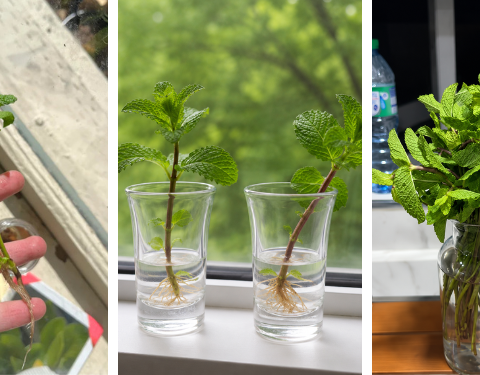
If there’s one herb that rewards you quickly and generously, it’s basil. Fragrant, fast-growing, and incredibly versatile in the kitchen, basil thrives when the weather begins to warm – and that makes May the perfect time to propagate it.
While many gardeners grow basil from seed, propagation is one of the easiest and fastest ways to multiply your plants.
With just a few cuttings, you can turn one basil plant into several strong, productive plants that will keep your garden full and your harvest continuous all season long.
Why May Is the Best Time to Propagate Basil
Basil is a warm-season herb that responds quickly to heat and sunlight.
In May:
- Soil temperatures begin to rise
- Daylight hours increase
- Growth becomes more vigorous
This combination creates ideal conditions for root development. Cuttings taken during this time establish faster and grow more consistently.
If you propagate too early, cooler temperatures can slow rooting. Too late, and the plant may focus more on flowering than leaf production.
May gives you the perfect balance – active growth without stress.
What Propagation Really Does for Basil Growth
Propagation is more than just creating new plants.
When you take cuttings:
- You encourage the parent plant to branch out
- You multiply your harvest potential
- You create younger, more productive plants
Each cutting becomes a clone of the original, meaning you preserve the same flavor and growth characteristics.
Over time, this leads to a fuller garden and a more continuous supply of fresh leaves.
Choosing the Right Basil Plant for Cuttings
Healthy cuttings start with a healthy plant.
Look for a basil plant that:
- Has strong, green stems
- Shows no signs of disease
- Is actively growing
Avoid plants that are already flowering heavily, as they may root more slowly.
The best stems for propagation are young but mature enough to hold structure – not too soft, and not woody.
Step-by-Step: How to Propagate Basil from Cuttings
Propagation is simple, but doing it correctly makes a big difference in success.
Start by selecting a healthy stem about 10–15 cm long. Cut just below a leaf node, which is the point where leaves grow from the stem. This is where roots will develop.
Remove the lower leaves, leaving only a few at the top. This helps the cutting focus its energy on root growth instead of maintaining too much foliage.
At this point, you have two main options: rooting in water or planting directly in soil.
Rooting Basil in Water (Fast and Easy Method)
This is the most popular method because it allows you to see root development.
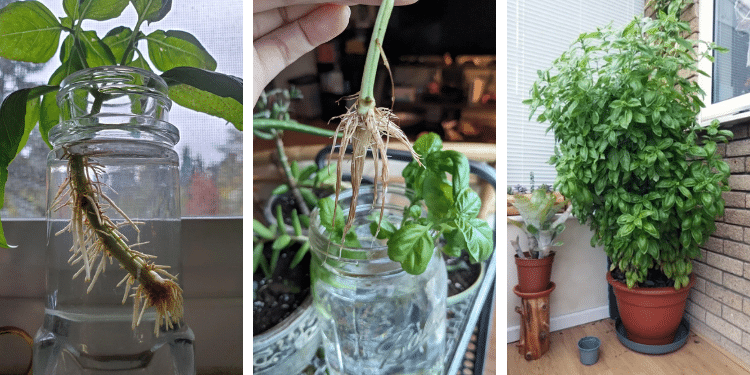
Place the cuttings in a glass of clean water, making sure the leaf nodes are submerged but the leaves stay above water. Put the glass in a bright spot with indirect sunlight.
Within a few days, you’ll start to see small roots forming. After about 7–10 days, the roots will be long enough to transplant into soil.
During this time, change the water every couple of days to keep it fresh and prevent bacteria buildup.
Rooting Basil Directly in Soil (Stronger Plants)
If you prefer, you can plant cuttings directly into moist soil.
Use a light, well-draining mix and insert the cuttings deep enough to cover the nodes. Water gently and keep the soil consistently moist.
Covering the cuttings with a loose plastic cover or placing them in a humid environment can help prevent moisture loss while roots develop.
This method takes slightly longer, but often produces stronger root systems from the start.
Transplanting and Establishing New Basil Plants
Once roots are well developed, it’s time to move your cuttings into their final location.
Choose a spot with:
- Full sun (at least 6 hours daily)
- Well-drained soil
- Good airflow
Plant the cuttings gently, firm the soil around them, and water thoroughly.
At this stage, the plants are still establishing, so avoid letting the soil dry out completely.
Encouraging Bushy Growth from the Start
Propagation is only the first step. To get a truly lush basil plant, you need to encourage branching.
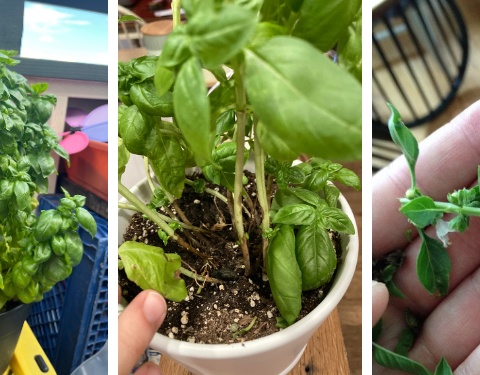
Once the plant reaches a few sets of leaves, begin pinching off the top growth. This may feel counterintuitive, but it forces the plant to grow sideways instead of upward.
Each time you pinch the top, two new stems form, doubling your potential harvest.
Over time, this creates:
- A fuller plant
- More leaves
- A longer harvesting period
Preventing Early Flowering
Basil naturally wants to flower, especially as temperatures rise.
However, once it flowers, leaf production slows and flavor can change.
To prevent this, regularly remove any flower buds as soon as they appear. This keeps the plant focused on producing leaves instead of seeds.
In May, this is especially important because early flowering can limit growth later in the season.
Watering and Feeding for Fast Growth
Basil grows quickly, but it still needs the right balance of water and nutrients.
Keep the soil evenly moist, but not soggy. Deep watering a few times a week is better than frequent shallow watering.
Feeding lightly with compost or a mild organic fertilizer supports steady growth without overwhelming the plant.
Healthy soil leads to healthier, faster-growing basil.
Common Mistakes to Avoid
One of the most common mistakes is taking cuttings that are too small or too weak. These struggle to root and grow slowly.
Another issue is placing cuttings in direct sunlight too early. Without roots, they can dry out quickly.
Overwatering is also a problem, especially in soil propagation. Excess moisture can cause rot before roots have a chance to develop.
Finally, forgetting to pinch the plant results in tall, leggy growth instead of a full, bushy shape.
What to Expect After Successful Propagation
Within a few weeks, your cuttings will transform into strong young plants.
You’ll notice:
- Rapid leaf growth
- New stems forming
- A richer green color
By early summer, your basil plants can become dense and highly productive.
With regular harvesting and pinching, they will continue producing leaves for months.
Extending Your Basil Harvest All Season
Propagation in May sets the foundation, but you can continue taking cuttings throughout the season.
This ensures:
- A continuous supply of fresh plants
- Replacement for older, slower-growing plants
- A steady harvest
By staggering propagation, you always have basil at its peak.
Propagating basil in May is one of the simplest ways to multiply your plants and maximize your harvest.
With just a few cuttings and the right conditions, you can create a garden full of lush, bushy basil that keeps producing all season long.