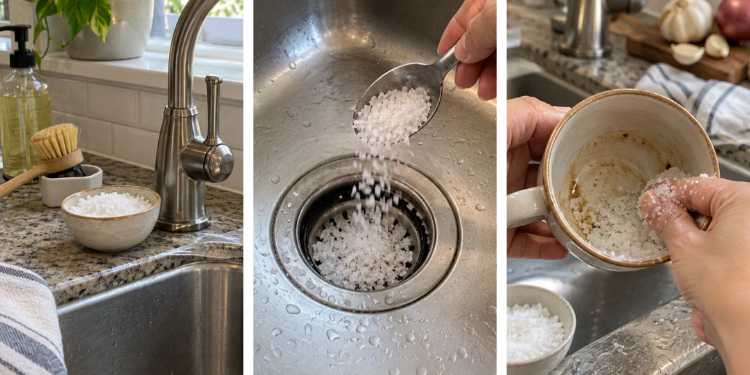
If you glance beside the kitchen or bathroom sinks in the homes of experienced home organizers, eco-friendly cleaners, and traditional homemakers, you might spot a small, open bowl filled with coarse salt resting right on the countertop.
While it looks like a misplaced cooking ingredient at first glance, keeping a dedicated bowl of salt within arm’s reach of the faucet is a brilliant, multifunctional household habit.
By taking advantage of the natural abrasive, dehydrating, deodorizing, and oil-absorbing chemical properties of sodium chloride, this simple setup forms an instant, eco-friendly cleaning, hand-care, and drain-maintenance station.
Here is a comprehensive breakdown of why people keep a small bowl of salt near the sink, the science behind its effectiveness, and how you can use this practical trick in your daily home routine.
The Chemical and Physical Science of Kitchen Salt
To understand why keeping a bowl of salt at the sink is so versatile, it helps to examine how sodium chloride functions on a physical and chemical level when paired with water and friction.
1. Mechanical Non-Scratch Abrasiveness
Salt crystals possess a sharp, geometric crystalline structure that makes them a natural scrubbing agent.
When rubbed against greasy pans, stained ceramic sinks, or sticky cutting boards, salt crystals mechanically scrape away food particles and grime without scratching delicate enamel, porcelain, or seasoned cast iron.
2. Hygroscopic and Hypertonic Action
Salt is naturally hygroscopic (it draws moisture from its surrounding environment) and hypertonic (it pulls water out of biological cells through osmosis).
When applied to fresh grease spills, liquid leaks, or damp food residue, salt binds to liquids rapidly, drawing moisture out of odor-causing bacterial cells and halting microbial growth at the sink.
3. Dissolving Power in Water
Unlike synthetic scouring pads or plastic scrubbers that leave behind micro-plastic particles, salt dissolves completely in warm water.
This means you can scrub heavy grease or burnt food off cookware, rinse with warm tap water, and send the dissolved salt harmlessly down the drain.
5 Practical Reasons People Keep Salt Near the Sink
1. Instant Hand Deodorizer After Cooking
After chopping fresh garlic, dicing onions, or cleaning raw fish, volatile sulfur compounds and fish oils penetrate deep into skin pores, resisting standard liquid hand soaps.
Scooping a small handful of salt from the bowl near the sink, adding a splash of water, and rubbing your hands together for 30 seconds scrubs away odoriferous molecules mechanically while the hypertonic salt absorbs skin oils, leaving your hands clean and odor-free.
2. Scrubbing Cast Iron and Burnt Cookware
Rinsing hot cast iron skillets with standard liquid dish soap can strip away delicate non-stick seasoning layers.
Keeping a bowl of coarse salt at the sink provides an immediate water-free scouring medium. Pouring a tablespoon of dry salt into a warm skillet and scrubbing it with a paper towel lifts charred food bits cleanly without stripping the iron’s protective oil coating.
3. Deodorizing and Clearing Slow Drain Pipes
Sink drains frequently accumulate organic grease buildup, soap scum, and food particles that release sour odors into the kitchen.
Dumping 2-3 tablespoons of dry salt from your countertop bowl directly into the drain – followed by a flush of hot tap water or vinegar – scrubs away interior drain slime, neutralizes trapped odors, and keeps plumbing flowing freely without harsh chemical drain openers.
Sink-Side Salt Application Matrix
| Application | Primary Action Mechanism | Target Problem Solved | Benefit Over Synthetic Alternatives |
| Hand Deodorizing | Sulfur absorption & micro-scrubbing | Garlic, onion, & raw fish odors | Removes smells soap leaves behind |
| Cast Iron Care | Non-dissolving dry abrasive | Charred food & stuck-on grease | Cleans without stripping oil seasoning |
| Tannin Stain Removal | Crystal scouring | Coffee & tea stains in mugs | Lifts stains without bleach or chemicals |
| Drain Maintenance | Hypertonic slime breakdown | Sour drain odors & grease buildup | 100% Non-toxic and safe for pipes |
| Grease Spill Cleanup | Rapid lipid binding | Liquid oil & sauce spills on counters | Prevents oil from spreading before wiping |
4. Lifting Coffee and Tea Stains from Mugs
Over time, ceramic coffee mugs, glass carafes, and porcelain sink basins develop stubborn brown tannin stains that standard sponges fail to remove.
Sprinkling a pinch of salt from your sink-side bowl onto a damp cloth and rubbing the stained ceramic scours away dark tannin rings in seconds without dulling the protective glaze.
5. Absorbing Sudden Countertop Oil Spills
If cooking oil or salad dressing spills on the countertop or near the sink, wiping it directly with a damp cloth or paper towel usually spreads a greasy film across the surface.
Scooping a generous mound of dry salt onto the oil spill immediately absorbs the liquid fat, turning the liquid into a dry, clumpy paste that can be wiped cleanly into the trash with zero greasy residue left behind.
Step-by-Step: How to Set Up Your Sink-Side Salt Station
Setting up a dedicated salt bowl at your sink takes less than one minute:
Pro-Tips for Sink-Side Salt Care
-
Preventing Clumping in Humid Kitchens: If ambient steam from washing dishes causes your salt to clump, drop a few grains of raw rice or a small wooden coffee stirrer into the bowl to absorb excess air moisture.
-
Pair with Squeezed Lemon Rinds: Don’t throw away squeezed lemon halves after cooking! Keep the spent rind near your salt bowl. Dip the lemon half directly into the salt to create an instant, fragrant citrus-scrubbing tool for cutting boards and stainless steel fixtures.
Keeping a small bowl of salt near the sink is a simple, budget-friendly, and chemical-free habit that brings traditional wisdom right to your kitchen faucet, turning an everyday cooking staple into your most versatile home care tool.