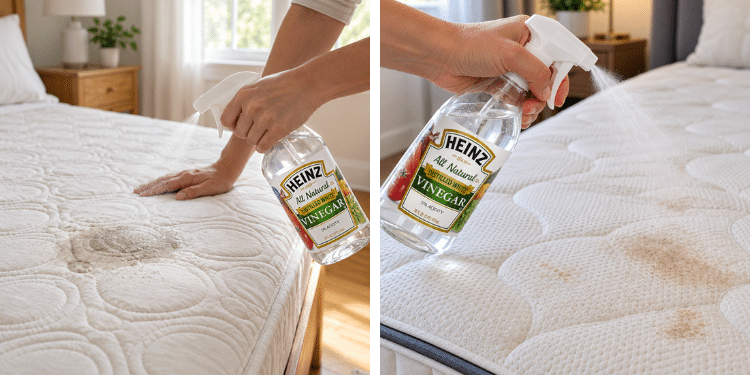

We spend roughly a third of our lives in bed, yet the mattress is often one of the most neglected items in the house when it comes to deep cleaning.
Unlike bedsheets and pillowcases, mattress covers cannot simply be tossed into a washing machine when they accumulate sweat, dead skin cells, spill stains, or lingering odors.
Over time, moisture and organic debris penetrate deep into mattress fibers, creating an ideal environment for dust mites, bacteria, and stale smells.
While commercial upholstery cleaners rely on heavy synthetic fragrances and harsh chemical solvents, experienced home care enthusiasts turn to a simple, non-toxic household staple: distilled white vinegar.
Spraying a fine mist of diluted white vinegar on your mattress is an eco-friendly, highly effective method for deodorizing, lifting stubborn organic stains, and sanitizing fabric layers.
Here is a look at the science behind this simple cleaning technique, what it accomplishes, and how to execute the process safely without damaging your bed.
The Chemistry: How Vinegar Cleans Mattress Fibers
Distilled white vinegar contains approximately 5% acetic acid dissolved in water. This mild acid provides three primary benefits when applied to mattress fabrics:
1. Neutralizing Alkaline Odor Compounds
Sweat, urine, pet accidents, and body oils leave behind alkaline compounds, such as urea and ammonia, which emit sharp, stale smells as they break down.
The acetic acid in vinegar reacts with these alkaline compounds in a classic acid-base neutralization reaction:
This reaction converts volatile, smelly molecules into odorless ammonium acetate salt. As the vinegar evaporates, it carries the neutralized odors away with it.
2. Breaking Down Organic Protein Stains
Yellow sweat stains, drool marks, and spill lines on mattress ticking consist of complex proteins and lipids.
The mild acidity of vinegar breaks the molecular bonds holding these dried proteins to synthetic and cotton mattress fibers, allowing them to be blotted away easily without bleaching or weakening the fabric.
3. Antimicrobial Properties
While vinegar is not an EPA-registered hospital disinfectant, its low pH (2.5) disrupts the cell membranes of many common household bacteria and mold spores, preventing mild dampness from turning into musty fungal growth deep inside the padding.
What Spraying Vinegar on Your Mattress Accomplishes
-
Eliminating Sweat and Pet Odors: Rather than masking stale smells with synthetic perfume sprays, vinegar breaks down the bacteria and chemical compounds causing the odor.
-
Lifting Sweat and Urine Stains: Combined with baking soda, vinegar creates a effervescent lifting action that pulls deep-seated yellow discoloration up to the surface.
-
Deterring Dust Mites: Dust mites thrive in warm, humid environments rich in dead skin cells. The mild acidic residue alters the microscopic pH of the mattress surface, making it far less hospitable to allergen-producing mites.
-
100% Non-Toxic and Safe for Breathing: Because you sleep with your face inches from your mattress for hours every night, using a food-grade, chemical-free cleaner prevents you from inhaling toxic volatile organic compounds (VOCs) or synthetic phthalates while you sleep.
Mattress Cleaning Methods Compared
| Method | Odor Neutralization | Stain Removal Efficacy | Chemical Exposure | Drying Time Required |
| Vinegar & Baking Soda Spray | High (Neutralizes bases & absorbs moisture) | Moderate to High (Lifts organic stains) | 100% Non-toxic | 4 – 6 Hours |
| Commercial Upholstery Spray | Moderate (Often masks odors with perfume) | High (Chemical solvents) | High (Synthetic VOCs) | 2 – 4 Hours |
| Bleach Solution | High (Disinfects) | Very High | Hazardous (Corrodes fibers & leaves harsh fumes) | 6 – 8 Hours |
| Steam Cleaning | High (Kills dust mites with heat) | Moderate | 100% Safe (Water vapor) | 8 – 12 Hours (Risk of mold if oversaturated) |
How to Clean and Deodorize Your Mattress Step-by-Step
The golden rule when cleaning any mattress – whether inner spring, memory foam, or hybrid – is to avoid oversaturating the fabric. Excessive moisture trapped inside internal foam layers can lead to internal mold growth.
Follow this step-by-step method for safe, effective results:
Important Guidelines for Memory Foam Mattresses
-
Use Minimal Liquid on Memory Foam: Memory foam acts like a dense sponge. If you are cleaning a memory foam mattress, use a very light misting technique and ensure maximum airflow with a floor fan directed at the bed during the drying phase.
-
The Vinegar Smell Disappears: Do not worry about your bed smelling like salad dressing! As white vinegar dries completely, its sharp sour smell evaporates entirely, leaving behind a neutral, fresh, fragrance-free mattress.
Spraying vinegar on your mattress is a budget-friendly, simple, and non-toxic routine that keeps your sleeping environment hygienic, stain-free, and deeply refreshed naturally.