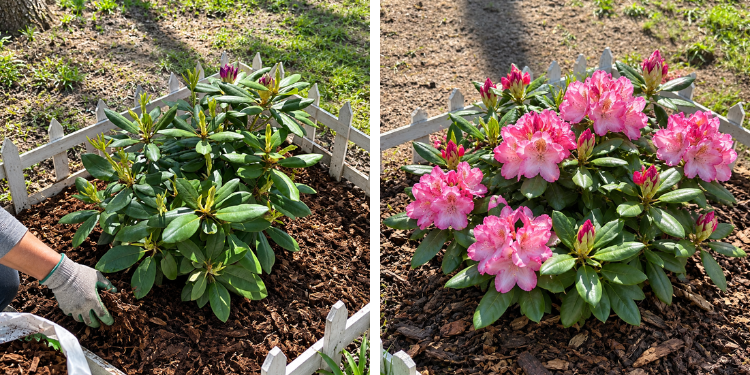
October is an important month for rhododendrons, even though their spectacular spring flowers are still several months away.
While many garden plants are preparing to go dormant, rhododendrons are entering a critical period that can influence how well they perform next year.
Here’s something many gardeners don’t realize: rhododendrons have usually already formed their flower buds for next spring by the time October arrives.
1. Give Your Rhododendrons a Deep Watering Before Winter
One of the most important things you can do for rhododendrons in October is make sure their roots have adequate moisture before freezing weather arrives.
Unlike deciduous shrubs that lose their leaves in autumn, most commonly grown rhododendrons remain evergreen. Their leaves continue losing moisture through transpiration, even during winter when growth has slowed considerably.
If the soil becomes excessively dry before the ground freezes, rhododendrons may experience winter desiccation. This happens when the leaves lose water faster than the roots can replace it, especially during cold, windy weather.
The result can be brown leaf edges, damaged foliage, and stressed flower buds.
What to Do
Check the soil several inches below the surface. If autumn has been unusually dry, water slowly and deeply so moisture reaches the root zone.
Rhododendrons have relatively shallow root systems, so they benefit from consistent moisture without waterlogging.
Continue monitoring soil moisture until the ground freezes, particularly for recently planted shrubs.
October note: Rhododendrons need moist, well-drained soil, not constantly saturated ground. If your garden receives regular autumn rainfall, additional watering may not be necessary.
Avoid shallow daily watering, which may wet only the surface while leaving deeper portions of the root zone dry.
2. Add a Fresh Layer of Mulch to Protect the Roots
Rhododendrons naturally grow in environments where fallen leaves and other organic materials protect the soil surface.
Their shallow roots can be sensitive to temperature fluctuations and drying, making mulch especially valuable during autumn.
A suitable mulch layer helps moderate soil temperature, conserve moisture, and reduce competition from weeds.
It also gradually contributes organic matter as it decomposes.
What to Do
Spread approximately 2–3 inches of organic mulch around the base of your rhododendron, extending outward over the root zone.
Pine bark, shredded leaves, and other suitable organic materials are good choices.
Keep the mulch a few inches away from the main stems to prevent moisture from remaining trapped directly against the bark.
If your rhododendron already has a healthy mulch layer, simply replenish areas where it has become thin.
October note: Avoid piling mulch into a thick mound around the trunk. This practice, sometimes called volcano mulching, can encourage excessive moisture around the stem and contribute to plant health problems.
A wide, relatively even layer is much more beneficial than a deep pile concentrated around the base.
3. Protect the Flower Buds That Are Already Forming
One of the biggest mistakes gardeners make in October is pruning rhododendrons without realizing they’re removing next spring’s flowers.
Most spring-flowering rhododendrons form their flower buds during summer and early autumn.
By October, you may already notice rounded, plump buds at the ends of the branches.
These are often flower buds waiting for the following spring.
If you cut off those branch tips now, you may remove the very flowers you’ve been waiting to see.
What to Do
Inspect your rhododendron carefully before reaching for the pruning shears.
Flower buds are often larger and rounder than the narrower, more pointed buds that produce leaves, although their appearance varies among varieties.
Leave healthy flower buds intact.
If you notice broken, dead, or clearly diseased branches, they can be removed carefully. However, avoid unnecessary shaping or heavy pruning during October.
The best time for routine rhododendron pruning is generally shortly after flowering, allowing the plant time to develop buds for the following year.
October note: If your rhododendron already has numerous healthy flower buds, that’s an encouraging sign. Your main goal now is to protect them from damage rather than stimulate additional growth.
Heavy autumn pruning is one of the easiest ways to accidentally reduce next spring’s flower display.
4. Check the Soil and Avoid Late-Season Fertilizing
Rhododendrons have specific soil preferences that influence their overall health and flowering performance.
They generally grow best in acidic soil, often within a pH range of approximately 4.5–6.0, depending on the species and growing conditions.
When soil is too alkaline, rhododendrons may struggle to absorb certain nutrients, particularly iron.
This can cause chlorosis, a condition where leaves become yellow while their veins remain green.
October is a useful time to evaluate the condition of your soil, but it isn’t usually the best time to encourage fresh growth with fertilizer.
What to Do
If your rhododendron has shown persistent yellowing, poor growth, or other signs of nutrient problems, consider testing the soil.
A proper soil test can help determine whether the pH needs adjustment or nutrients are lacking.
Avoid applying large amounts of fertilizer without knowing what the plant actually needs.
Late-season nitrogen feeding may encourage tender new growth that doesn’t have enough time to harden before freezing weather.
October note: Don’t automatically add coffee grounds, vinegar, or other homemade acidifying treatments around rhododendrons. These methods don’t provide predictable or lasting control of soil pH.
If soil adjustment is necessary, use an appropriate product based on soil-test recommendations.
Healthy soil conditions support better long-term flowering than excessive fertilizer.
5. Protect Your Rhododendrons From Cold Winds and Winter Sun
Rhododendrons are often quite cold-hardy, but winter damage can still occur, especially in exposed locations.
Strong winds and bright winter sunlight can increase moisture loss from evergreen leaves.
When the ground is frozen, the roots may be unable to replace that lost moisture quickly enough.
This can lead to brown foliage, scorched leaf edges, and damage to vulnerable buds.
Young rhododendrons and newly planted shrubs are particularly susceptible because their root systems are less established.
What to Do
If your rhododendron grows in an exposed location, consider installing a temporary windbreak before severe winter weather arrives.
A burlap screen positioned on the side facing prevailing winter winds can reduce exposure without enclosing the entire plant.
Avoid wrapping the shrub tightly in plastic, which can trap moisture and create undesirable temperature fluctuations.
In colder climates, some gardeners also protect newly planted rhododendrons with breathable materials when extreme weather is expected.
October note: Rhododendron leaves naturally curl and droop during very cold weather. This is often a normal protective response rather than a sign that the plant is dying.
The leaves usually return to their normal position when temperatures rise.
However, persistent browning or drying may indicate winter injury.
6. Inspect for Pests, Diseases, and Drainage Problems
October is an excellent opportunity to inspect your rhododendrons before winter.
Although growth is slowing, pests and diseases can still affect the health of the foliage, stems, and roots.
Rhododendron lace bugs, for example, can cause pale stippling on the upper leaf surfaces, while dark spots or insect residue may be visible underneath.
Other problems include fungal leaf spots, root rot, and damage caused by poor drainage.
One of the most serious threats to rhododendrons is prolonged waterlogging, which can encourage root diseases such as those caused by Phytophthora species.
What to Do
Examine the leaves, including their undersides, and look for unusual discoloration, spotting, or signs of insects.
Remove fallen, heavily diseased plant material where appropriate and keep the area around the shrub reasonably tidy.
Check whether water collects around the roots after heavy rain.
If the soil remains saturated for long periods, drainage may need improvement.
Avoid digging aggressively around the plant, as rhododendrons have shallow roots that are easily damaged.
October note: A rhododendron with drooping leaves isn’t always thirsty. If the soil is already wet, adding more water may make root problems worse.
Always check soil moisture before deciding what treatment the plant needs.
Should You Deadhead Rhododendrons in October?
Rhododendron deadheading is usually performed shortly after flowering in spring or early summer.
Removing spent flower clusters can improve appearance and may help young plants direct resources toward growth.
However, by October, next year’s flower buds have generally already developed.
There’s usually no reason to perform extensive deadheading or pruning at this stage.
If old flower clusters remain, remove them only if you can do so without damaging nearby buds.
Important note: Never twist or break off healthy, plump buds at the ends of branches. These may contain next spring’s flowers.
Why Your Rhododendron Didn’t Bloom Last Spring
If your rhododendron produced very few flowers this year, October is a good time to investigate possible causes.
Pruning at the wrong time: Cutting branches in late summer, autumn, or winter can remove flower buds before they open.
Insufficient sunlight: Many rhododendrons prefer partial shade, but deep shade can reduce flowering.
Winter bud damage: Extremely cold temperatures, drying winds, or sudden temperature changes may injure developing buds.
Nutrient or soil problems: Unsuitable soil pH and poor root health can affect the plant’s ability to grow and flower.
Young or recently transplanted plants: Rhododendrons sometimes need time to establish before producing abundant blooms.
Some varieties also naturally flower more heavily in certain years than others.
Flowering note: A healthy rhododendron with many visible flower buds in October has already completed an important part of its preparation for spring. Protecting those buds is now the priority.
Rhododendrons may produce their most spectacular flowers in spring, but October plays an important role in protecting that future display.