October is an exciting month for Christmas cactus owners. After spending spring and summer producing fresh green segments, these beautiful houseplants begin preparing for their spectacular holiday display.
But what happens when October arrives and your Christmas cactus shows absolutely no signs of flower buds?
You might have a healthy-looking plant with plenty of green growth, yet not a single tiny bud appears along its stems. This can be frustrating, especially if your Christmas cactus bloomed beautifully in previous years.
The good news is that a Christmas cactus that isn’t budding in October isn’t necessarily unhealthy.
1. Your Christmas Cactus Is Getting Too Much Light at Night
One of the most important factors in Christmas cactus flowering is the amount of uninterrupted darkness the plant receives.
Christmas cacti are short-day plants, meaning flower initiation is influenced by the length of the night. During autumn, naturally shorter days and longer nights help signal that it’s time to begin forming buds.
However, indoor lighting can interfere with this process.
If your Christmas cactus sits in a living room where lamps, televisions, or overhead lights remain on late into the evening, the plant may not experience the long, uninterrupted dark periods it needs.
Even if the plant receives plenty of natural daylight, artificial lighting during the night can delay flowering.
How to Fix It
Move your Christmas cactus to a location where it receives approximately 12–14 hours of uninterrupted darkness each night for several weeks.
A spare bedroom, quiet hallway with natural daylight, or another room that remains dark at night can work well.
During the day, provide bright, indirect sunlight so the plant can continue producing energy.
October note: Darkness needs to be consistent. Moving your Christmas cactus into a dark room for only one or two nights usually won’t be enough. Flower initiation typically requires several weeks of suitable conditions.
You don’t necessarily need to place the plant inside a closet. A naturally dark room with regular autumn daylight may provide everything it needs.
2. The Room Is Too Warm at Night
Temperature is another important factor in Christmas cactus bud formation.
These plants often respond well to cooler autumn nights, which help signal the transition toward flowering.
If your Christmas cactus remains in a consistently warm room throughout October, particularly near heating vents or radiators, bud formation may be delayed.
Warm indoor temperatures combined with artificial lighting late into the evening can make flowering especially difficult.
How to Fix It
Try keeping your Christmas cactus in a location where nighttime temperatures are approximately 55–65°F (13–18°C) during the bud-setting period.
Cooler conditions within this range can encourage flower initiation, particularly when combined with naturally longer nights.
However, avoid exposing the plant to freezing temperatures or sudden extreme changes.
Temperature note: Christmas cacti are tropical forest cacti, not desert cacti. They appreciate cooler autumn conditions, but they aren’t frost-hardy.
A bright, cool room away from heating vents can be an excellent location during October.
If your home stays warm at night, consistent uninterrupted darkness becomes even more important.
3. Your Plant Isn’t Getting Enough Daytime Light
Although Christmas cacti need long nights to initiate flowering, they still require adequate light during the day.
This is where many gardeners become confused.
They hear that Christmas cacti need darkness to bloom and move their plants into extremely dark locations for weeks.
Unfortunately, this can create another problem.
Without enough daytime light, the plant may not produce sufficient energy to support healthy growth and flowering.
Christmas cacti generally prefer bright, indirect light. They naturally grow in tropical forest environments, where they receive filtered sunlight rather than intense desert sun.
How to Fix It
Place your plant near a bright window where it receives plenty of indirect daylight.
An east-facing window can be particularly suitable because it provides gentle morning light without intense afternoon heat.
If you’re using a darker room to encourage bud formation, make sure the plant still receives adequate daylight during the day.
Light note: Your Christmas cactus needs both conditions: bright light during the day and long, uninterrupted darkness at night.
Too much direct sunlight can scorch the flattened green segments, while insufficient daylight can weaken the plant and reduce flowering.
The goal is balance.
4. You’re Watering Too Much – or Letting It Become Extremely Dry
Watering problems can also interfere with Christmas cactus flowering.
During spring and summer, the plant may use water relatively quickly as it produces new growth. However, as temperatures cool and daylight decreases in October, the potting mix may take longer to dry.
Continuing the same watering schedule can leave the roots constantly wet.
Excessive moisture reduces oxygen around the roots and can eventually lead to root rot, making it difficult for the plant to support healthy buds.
On the other hand, allowing the plant to become severely dehydrated can also cause stress.
How to Fix It
Check the upper portion of the potting mix before watering. When the top inch or so begins to dry, water thoroughly and allow excess water to drain away.
Avoid leaving the pot standing in water.
During the autumn bud-setting period, you can allow the mix to become slightly drier between waterings than during vigorous summer growth, but don’t repeatedly let the entire root ball become bone dry.
Watering note: Christmas cacti are different from desert cacti. They prefer a well-draining growing medium with reasonably consistent moisture rather than prolonged periods of extreme dryness.
Once buds appear, avoid dramatic changes in watering. Both excessive moisture and severe drought stress can contribute to bud drop.
5. You’re Still Fertilizing Too Heavily
Fertilizer can support healthy Christmas cactus growth, but too much feeding at the wrong time may create problems.
During spring and summer, occasional fertilizer can help the plant produce healthy green segments.
By October, however, the goal is no longer to encourage rapid leafy growth. Instead, the plant should be responding to seasonal signals that initiate flower buds.
Excessive nitrogen fertilization can encourage vegetative growth, particularly when combined with warm temperatures and long periods of light.
How to Fix It
If you’ve been feeding your Christmas cactus regularly throughout summer, reduce or pause fertilizer during the autumn bud-setting period.
There’s no need to apply large amounts of bloom booster fertilizer in an attempt to force flowering.
A healthy plant generally doesn’t need aggressive feeding to produce buds when light and temperature conditions are appropriate.
Fertilizer note: More fertilizer doesn’t automatically mean more flowers. If your Christmas cactus has plenty of healthy green segments but no buds, check nighttime lighting and temperature before adding nutrients.
Once flowering finishes and active growth resumes, you can return to an appropriate light feeding routine.
6. You Recently Repotted or Disturbed the Plant
Christmas cacti don’t need frequent repotting, and unnecessary root disturbance can sometimes create stress.
If you recently moved your Christmas cactus into a much larger container, divided it, or disturbed its roots, the plant may need time to recover before flowering.
A container that’s too large can also hold excessive moisture around the roots, especially if the potting mix drains poorly.
Christmas cacti often grow well in relatively snug containers, provided the roots are healthy and the growing medium drains properly.
How to Fix It
Avoid unnecessary repotting during October if your plant is healthy.
If it has adequate drainage and isn’t experiencing serious root problems, leave it in its current container through the flowering season.
Routine repotting is generally better done after flowering, when the plant is entering a period of active growth.
Repotting note: A Christmas cactus doesn’t need to be severely root-bound to bloom. The important thing is having healthy roots, an appropriately sized container, and suitable growing conditions.
If your plant was recently repotted, be patient. Focus on providing stable light, temperature, and moisture rather than making additional changes.
7. You May Have a Thanksgiving Cactus – or Your Plant Simply Isn’t Ready Yet
Here’s something many houseplant owners don’t realize: not every plant sold as a Christmas cactus is actually a true Christmas cactus.
Thanksgiving cactus (Schlumbergera truncata) is frequently sold under the general name “Christmas cactus,” even though the two plants have slightly different appearances and typical flowering periods.
Thanksgiving cacti often bloom earlier, sometimes during October or November, while true Christmas cacti (Schlumbergera × buckleyi) generally flower later, closer to December.
You can often distinguish them by examining the flattened stem segments.
Thanksgiving cactus segments usually have pointed, claw-like projections along their edges, while true Christmas cactus segments tend to have smoother, rounded edges.
How to Fix It
First, identify which type of holiday cactus you’re growing.
If you have a true Christmas cactus and it’s only early October, there’s no reason to panic. The plant may still be preparing to form buds.
Even Thanksgiving cacti can vary in flowering time depending on temperature, light exposure, and growing conditions.
October note: Don’t assume something is wrong simply because your Christmas cactus hasn’t produced buds by a particular date. Bud formation varies depending on the variety and environment.
Sometimes the best solution is simply to provide suitable conditions and wait.
How Long Does It Take for Christmas Cactus Buds to Appear?
Under favorable conditions, Christmas cacti may begin forming visible buds after approximately four to eight weeks of suitable long nights and cool temperatures.
However, the exact timing varies.
Some plants respond more quickly to cooler nighttime temperatures, while others require a longer period of consistent darkness.
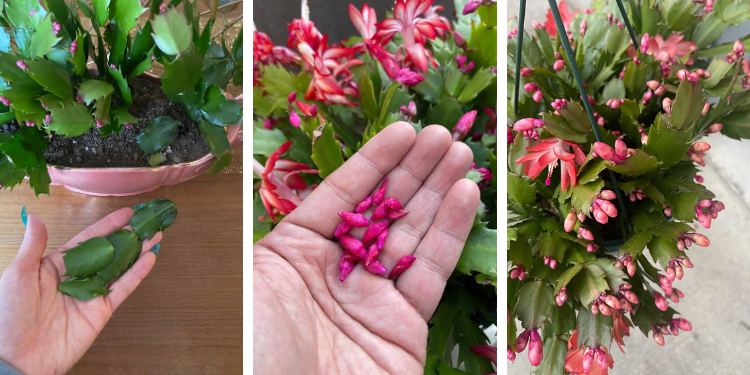
Once buds begin appearing, they usually look like tiny rounded or pointed structures emerging from the tips of the flattened green segments.
These gradually enlarge before opening into colorful flowers.
Bud-setting note: Don’t expect visible flowers immediately after changing your plant’s environment. The process takes time, and consistency is more important than trying several different tricks every few days.
What Should You Do Once Flower Buds Appear?
Once your Christmas cactus begins producing buds, your main goal is to maintain stable growing conditions.
Continue providing bright, indirect daylight and avoid sudden changes in temperature.
Water when the growing medium begins drying appropriately, but don’t allow the plant to become severely dehydrated or waterlogged.
You also don’t need to keep moving the plant between different rooms once buds are developing.
Although moving a Christmas cactus doesn’t automatically cause bud drop, abrupt changes in light, temperature, humidity, or watering can stress the plant.
Important note: If your Christmas cactus develops buds and then drops them before flowering, investigate environmental changes rather than assuming the plant is unhealthy.
Stable care usually gives developing buds the best chance of opening successfully.
Should You Put Your Christmas Cactus in a Dark Closet?
This is one of the most popular tricks recommended for encouraging holiday cactus blooms, but it isn’t always necessary.
A Christmas cactus needs extended periods of darkness during flower initiation, but it also needs adequate daylight.
Keeping it in a dark closet around the clock can weaken the plant rather than encourage healthy flowering.
A better approach is to provide bright, indirect light during the day and uninterrupted darkness at night.
If necessary, you can place the plant in a dark room overnight and return it to a suitable daytime location, but avoid unnecessary environmental changes.
Remember: The goal is to imitate naturally shorter autumn days, not deprive the plant of sunlight completely.
A Christmas cactus that isn’t budding in October isn’t necessarily a plant in trouble.
In many cases, it’s simply waiting for the right combination of longer nights, cooler temperatures, and suitable growing conditions.
The biggest mistake is trying to force flowers with extra fertilizer, excessive watering, or constant changes in location.