A fireplace can leave behind a fine gray layer that seems to rise into the air the moment you reach for a shovel. One simple trick some homeowners use before cleaning is to sprinkle used coffee grounds over the ashes. The idea isn’t to freshen the room or make the fireplace burn better. It’s to help keep loose ash from billowing up while you scoop it out.
This small step can make cleanup less dusty, especially if your fireplace has a broad bed of powdery ash. But timing matters: coffee grounds belong on completely cold ashes, never on a live fire or ashes that may still hide embers. Here’s how to try the method, what it can realistically do, and how to handle fireplace ash safely.
Why Sprinkle Coffee Grounds on Fireplace Ash?
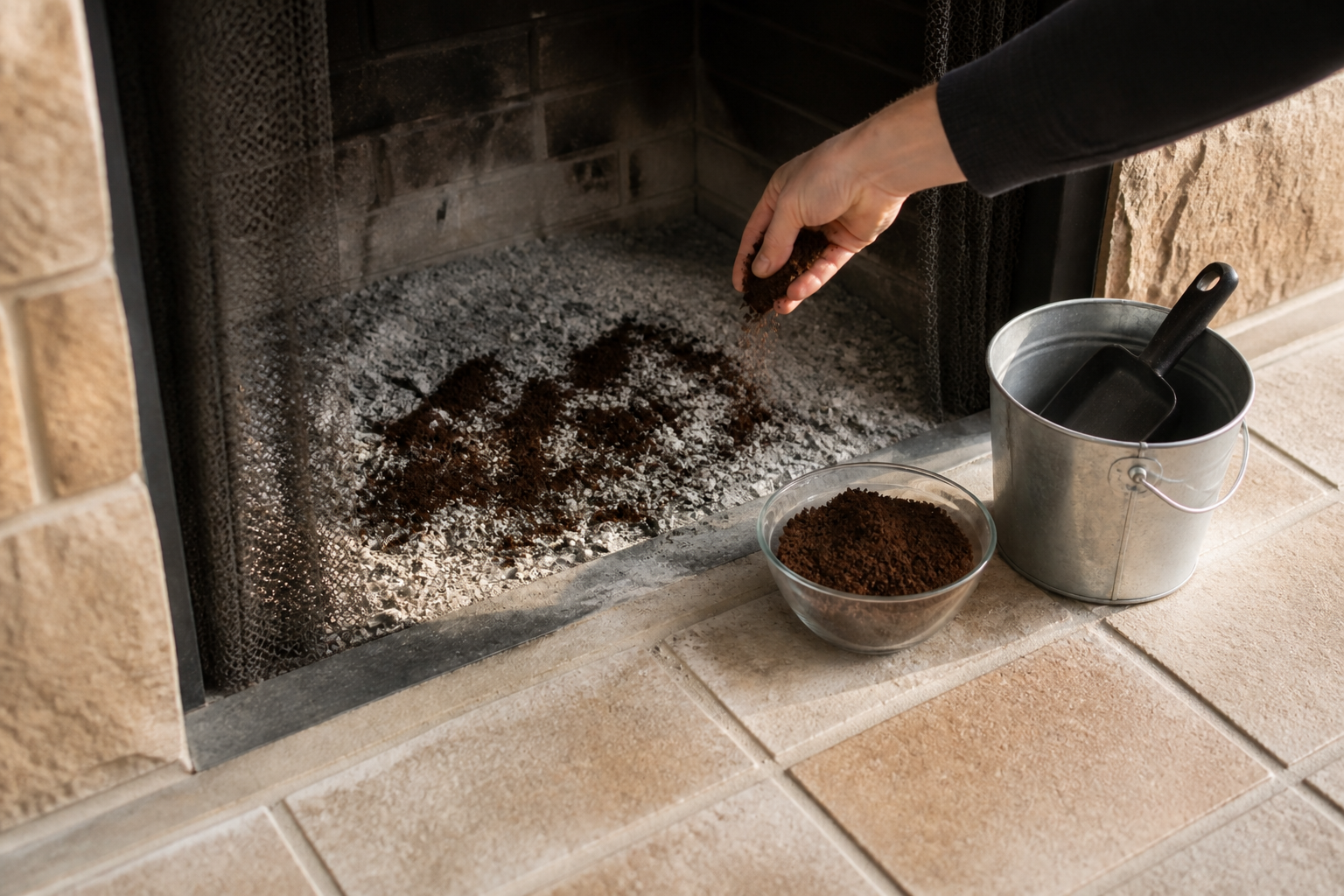
Dry fireplace ash is light and easily disturbed. A shovel, brush, or even a draft can send particles into the air and onto the hearth. Used coffee grounds—particularly when they’re slightly damp—add a little moisture and weight to the surface, helping loose ash stay put as you remove it.
Think of the grounds as a dust-control aid, not a cleaning product or a fire-safety measure. They won’t bind every ash particle, eliminate the need to clean carefully, or make hot ashes safe to handle. The main benefit is a less dusty cleanup when you’re working with cold, settled ash.
Spent grounds are often handy because they’re already in the kitchen, and a small amount is usually enough. There’s no need to empty a fresh bag of coffee into the fireplace; the trick is meant to use a modest quantity of grounds left over from brewing.
How to Use Coffee Grounds Before Cleaning the Fireplace
1. Make certain the ashes are completely cold
This is the most important step. Embers can remain hot beneath the surface of a fireplace ash bed long after the flames have gone out. Wait several days after the last fire before cleaning, and don’t rely on the surface looking gray or feeling cool as proof that everything underneath is safe.
If you see a glowing spot, feel warmth, or have any doubt, leave the ashes alone. Never add coffee grounds to a fire that is burning, smoldering, or possibly still warm. Grounds are organic material and can burn if they meet an ember.
2. Prepare a small amount of used grounds
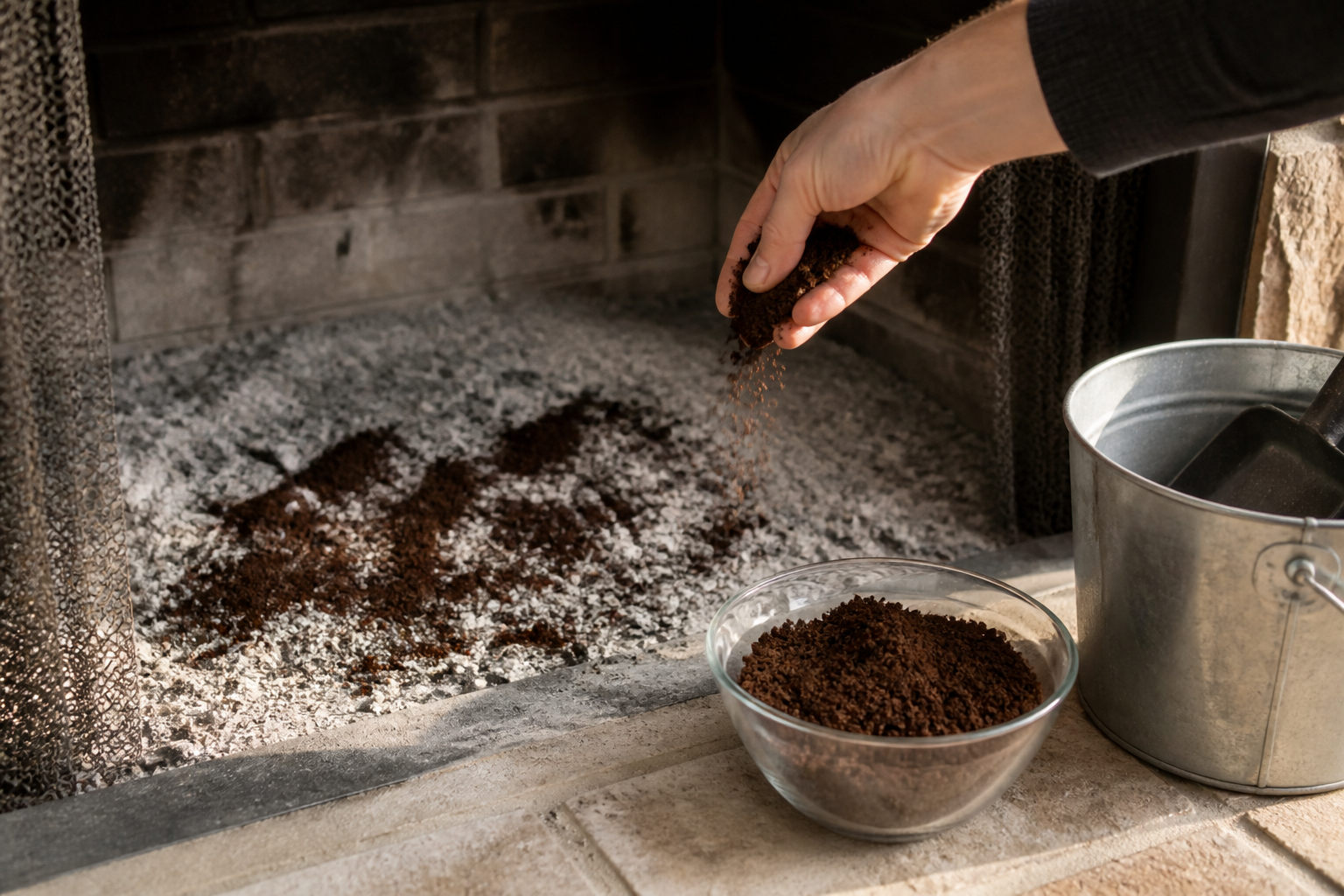
Save about 1 to 2 cups of spent coffee grounds for an average fireplace ash bed. If the grounds have dried out, sprinkle in a teaspoon or two of water and stir. They should feel lightly damp and crumbly—not wet, soupy, or dripping.
Freshly brewed grounds may already have enough moisture. If they’re saturated, let them drain briefly before using them; excess water can make ash messy and harder to shovel.
3. Scatter the grounds gently
With the fire completely out and the fireplace cool, sprinkle the grounds in a thin, even layer over the loose ash you plan to remove. You don’t need to bury the ash or cover every patch. Avoid tossing them from a height, which can stir up the very dust you’re trying to control.
4. Scoop slowly and avoid sweeping vigorously
Give the grounds a minute to settle, then use a fireplace shovel to lift the mixture into a metal container. Work gently, keeping the shovel close to the ash bed. A vigorous brush or fast scraping motion can still send fine particles airborne, even with grounds on top.
What to Expect—and What the Trick Won’t Do
When conditions are right, damp coffee grounds may help hold down some of the loose ash as you scoop. You may notice less of a visible puff, but results will vary depending on how dry and powdery the ash is, how much air is moving through the room, and how carefully you work.
This method doesn’t make the fireplace ash disappear, sanitize it, or remove soot from the fireplace walls. It also isn’t a substitute for routine fireplace and chimney maintenance. If you have heavy soot buildup, a damaged firebox, smoke coming into the room, or other concerns, address those issues separately rather than relying on a kitchen trick.
Some people may assume coffee grounds are being used mainly to cover an ash smell. Their practical role here is more modest: adding weight and a little moisture to loose ash. Don’t expect them to disguise persistent smoke or chimney odors.
Fireplace Ash Safety Comes First
Use a metal shovel and a sturdy metal container with a tight-fitting lid. Even ash that appears cold can contain a hidden ember. Keep the container outdoors on a noncombustible surface, well away from the house, deck, firewood, and other combustible materials. Don’t set it on a porch or put it directly against a wooden wall.
Follow your local fire department’s guidance for ash storage and disposal. Avoid using a household vacuum to clean up fireplace ash; fine particles can pass through some vacuum filters or damage equipment. If a little dust escapes, use a method suitable for fine debris and follow the vacuum manufacturer’s instructions rather than assuming an ordinary vacuum is safe for ash.
Only clean ashes from a fireplace that burned appropriate, untreated firewood. Ash from painted or treated wood, trash, or other burned materials should not be handled or reused as though it were ordinary wood ash. If you’re unsure what was burned, dispose of the material according to local guidance.
A Small Kitchen Leftover for a Tidier Cleanup
Sprinkling used coffee grounds on fireplace ash is a simple, low-cost way to try to cut down on dust when cleaning a cold fireplace. A cup or two of lightly damp grounds, scattered gently before shoveling, may help keep loose ash from floating around the hearth.
The key is not the coffee—it’s patience and safe handling. Let the fire go completely cold, work slowly, and treat every batch of ash as potentially hazardous until you’re certain it’s safe. With those precautions in place, this practical little trick can make an ordinary fireplace chore a bit less messy.