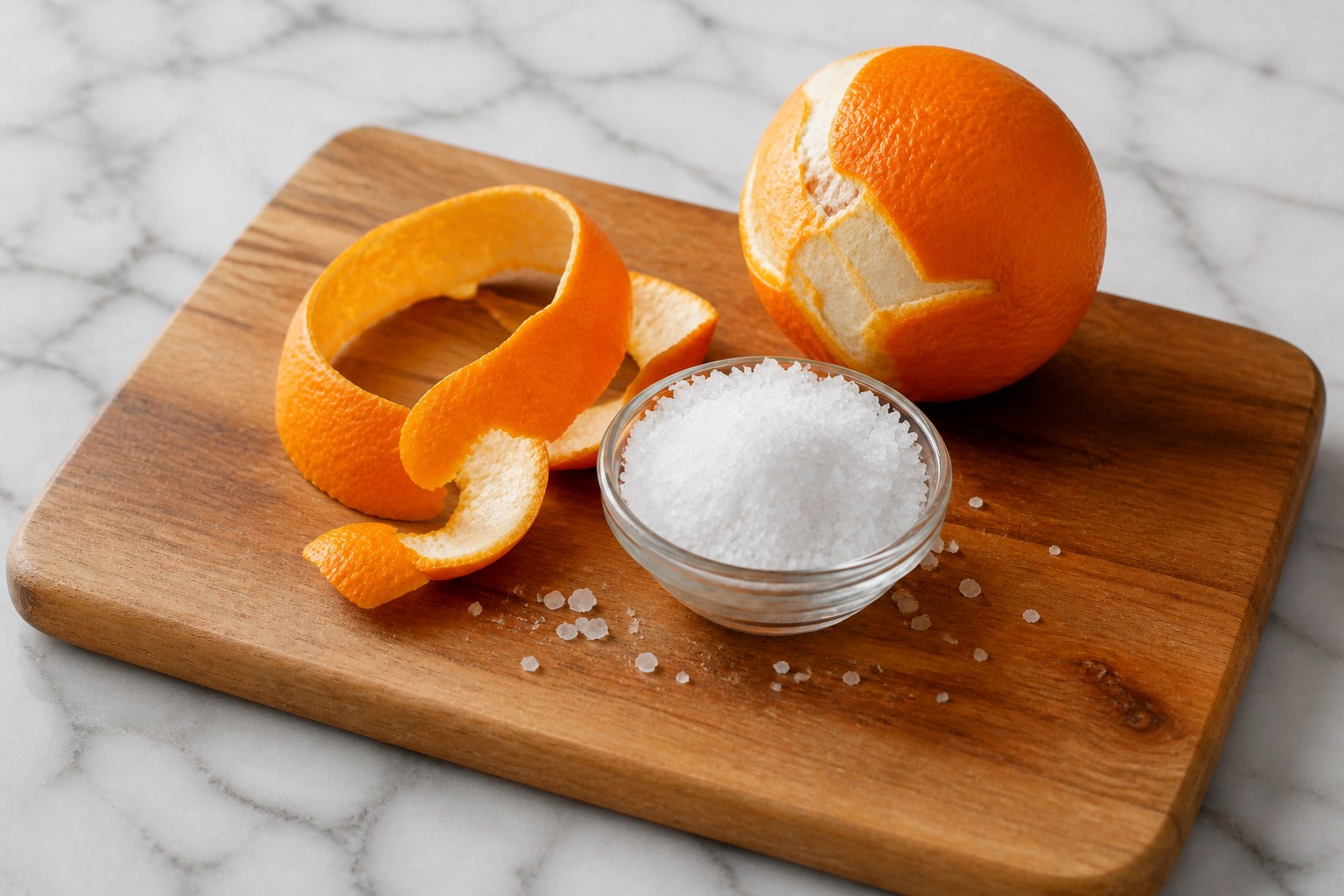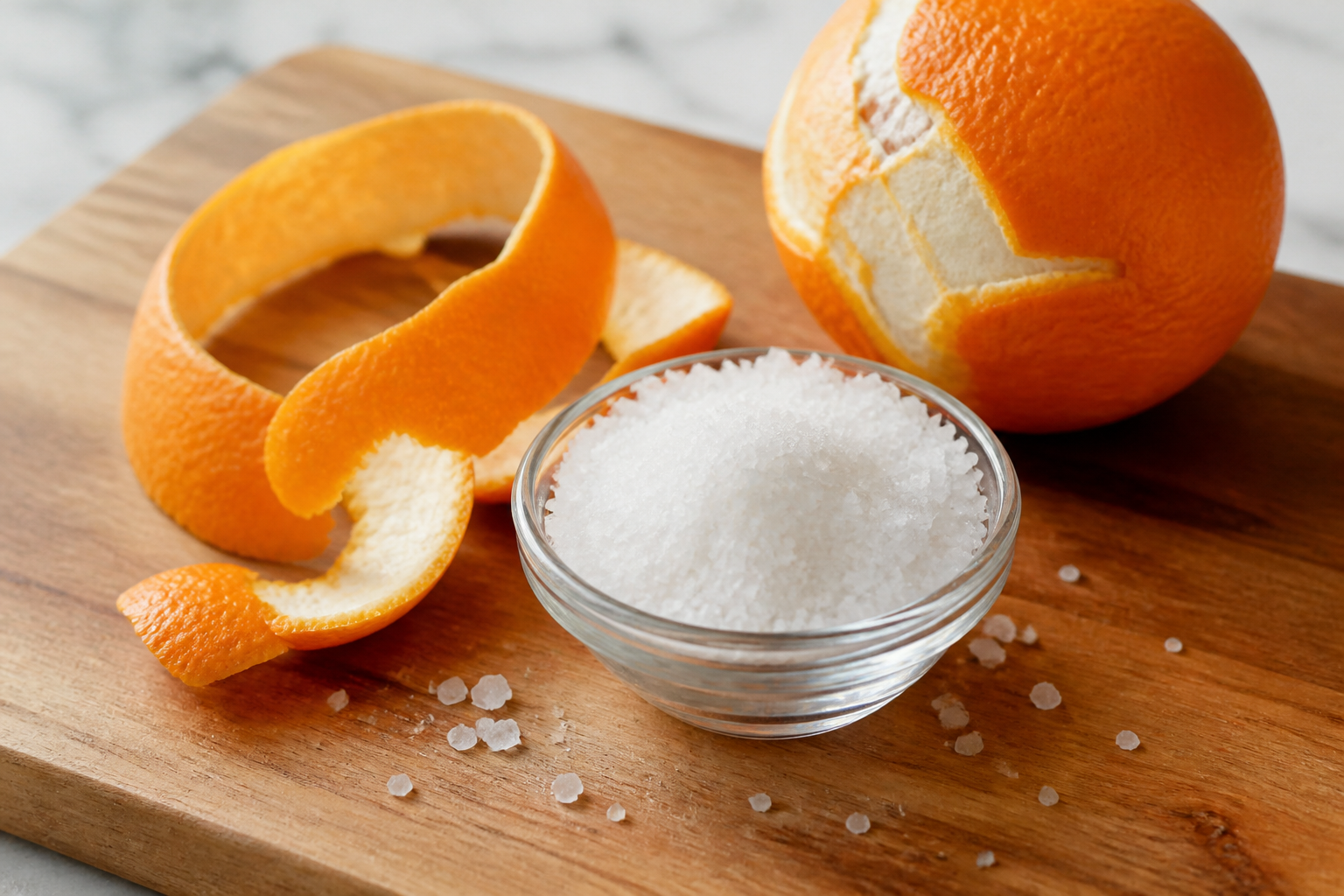
A leftover orange peel usually heads straight for the compost or trash. But paired with a little salt, it can earn a second turn around the house—as a handy scrubber, a quick way to tackle lingering food odors, or the start of a bright, homemade seasoning. The combination works for simple reasons: salt provides gentle abrasion, while the fragrant oils in orange peel can help loosen some greasy residue and leave a fresh citrus scent.
It isn’t a miracle cleaner, and it won’t disinfect surfaces or replace a good wash with soap and water. Still, when you choose the right surface and keep expectations sensible, orange peel and salt can be a useful little team. Here are seven practical ways to put them to work, along with a few precautions to keep your cookware, counters, and hands in good shape.
What Orange Peel and Salt Can—and Can’t—Do
For these ideas, use the colored outer part of a fresh peel, where the fragrant oils are concentrated. A pinch of ordinary table salt is usually enough; coarse salt offers more scrubbing power but can scratch delicate finishes.
Think of the mixture as a modest scrub or a source of citrus fragrance, not a sanitizer. It is not suitable for every material, and orange’s acidity and salt can both cause trouble if left sitting on a surface. When in doubt, test an inconspicuous spot first.
7 Clever Household Uses for Orange Peel and Salt
1. Rub Food Odors From Your Hands
After chopping garlic, onions, or fish, rub a small piece of orange peel over your fingertips with a pinch of salt. Rinse your hands well with soap and water afterward.
The citrus scent can help freshen your hands, while the salt adds a little friction. Skip this trick if you have a cut, irritated skin, or a citrus sensitivity; salt and peel oils can sting.
2. Scrub a Glazed Ceramic Mug
Tea or coffee film can cling to the inside of a glazed ceramic mug. Dampen a piece of orange peel, sprinkle a pinch of salt on the stained area, and rub gently in small circles. Rinse thoroughly and wash the mug as usual.
Use a light touch, especially on decorated mugs or older pieces with worn glaze. Don’t try this on unglazed pottery, delicate finishes, or anything you aren’t sure is safe to scrub.
3. Help Clean a Glass Jar
For a jar with oily or sticky food residue, add warm water, a drop of dish soap, a strip of orange peel, and about a teaspoon of salt. Close the jar and shake gently, then empty it and wash with a bottle brush or sponge.
This can help loosen residue in hard-to-reach corners, but it won’t remove every label adhesive. Avoid shaking a jar with a fragile or corroded metal lid, and take care when handling slippery glass.
4. Freshen a Small Trash Can
For a mild citrus scent, dry a few pieces of orange peel completely, then place them in a small open dish with a tablespoon or two of salt. Set the dish near—not inside—the trash can, where it won’t get wet or tip over.
Replace the mixture every few days, or sooner if the peel feels soft or damp. This may freshen the area temporarily, but it won’t cover strong odors or take the place of emptying and washing the can.
5. Make a Simple Citrus Finishing Salt
Orange peel and salt can also be useful in the kitchen. Finely grate the colored zest from a well-washed orange, avoiding the bitter white pith. Mix about one teaspoon of zest with a quarter cup of salt, spread it on a plate, and let it air-dry until the zest no longer feels damp. Stir occasionally.
Use a small pinch on roasted vegetables, fish, or popcorn. For safer storage, make sure the zest is thoroughly dry before transferring the mixture to a clean, airtight jar. If it clumps, smells off, or shows any sign of moisture or mold, discard it.
6. Give a Glass Baking Dish a Gentle Scrub
For stuck-on greasy residue in a glass baking dish, add warm water and a drop of dish soap, then let the dish soak. Use a piece of orange peel with a little salt to gently work at remaining spots before washing and rinsing well.
Don’t use this on nonstick coatings, painted surfaces, or dishes with delicate decoration. Avoid pressing coarse salt hard against glass, and never scrub hot glass; sudden temperature changes can cause it to crack.
7. Clean a Small Spot on Unlacquered Copper
For a small tarnished area on plain, unlacquered copper, sprinkle a little salt onto a damp piece of orange peel and rub gently for a few seconds. Rinse the area promptly and dry it thoroughly with a soft cloth.
Because acid and salt can affect metal, test first and don’t leave the mixture on the copper or soak the item. Avoid this method on lacquered, antique, or lined cookware, and keep the mixture off the inside of pots and pans. Follow the maker’s care instructions for valuable pieces.
Important Precautions Before You Start
Salt is abrasive, and citrus is acidic. Avoid using this combination on marble, limestone, granite, other natural stone, or surfaces labeled acid-sensitive. It can also scratch polished finishes, nonstick cookware, and some plastics. A small hidden-area test is worth the extra minute.
Use fresh peel for scrubbing, and don’t leave salty citrus residue sitting on metal. Wash food-contact surfaces afterward with dish soap and water. If you’re preparing citrus salt to eat, wash the orange first and use clean tools and a clean storage jar.
A Useful Little Second Life for Orange Peels
Orange peel and salt are simple household staples, but their best uses are modest: a little scrubbing, a little citrus fragrance, or a homemade seasoning. Choose a suitable surface, use a light hand, and rinse well. With those basics in mind, you can turn a peel that might have been tossed away into something practical—without expecting it to do a job it wasn’t made for.