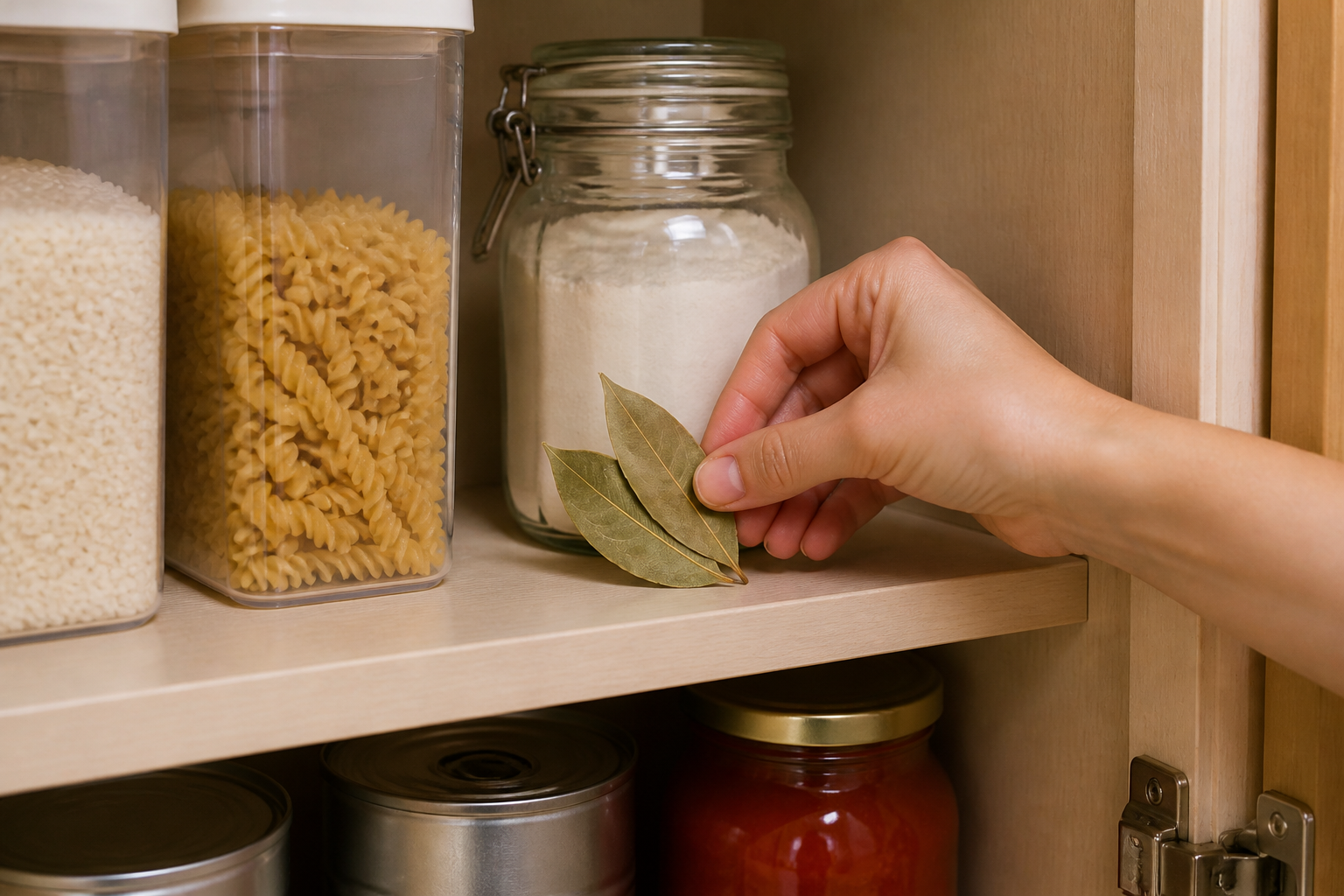
Open a pantry and you may find more than flour, pasta, and canned tomatoes. In some homes, a few dried bay leaves are tucked onto shelves or into the corners—a small, old-fashioned gesture meant to discourage pantry bugs. It costs little, takes only a moment, and has the appealing simplicity of a kitchen tip passed along by someone who has kept a tidy home for years.
But what can bay leaves actually do? Their strong, distinctive aroma is the reason people use them, and it may help make a pantry less inviting to some insects. Still, leaves are not a dependable pest-control solution. Here’s how to try the tradition sensibly, what to expect, and what works better if you spot signs of pantry pests.
Why People Put Bay Leaves in the Pantry
Bay leaves are the dried leaves of the bay laurel plant, commonly sold whole in the spice aisle. They’re best known for flavoring soups, stews, sauces, and braises. Their fragrance comes from naturally occurring aromatic compounds, which become noticeable when a leaf is crushed or warmed.
The pantry tradition is straightforward: place a few leaves near dry goods because their scent may discourage insects such as pantry moths or beetles. That idea is plausible enough to explain the custom, but it should be treated as a household experiment—not a proven way to prevent or eliminate an infestation. A few leaves won’t reliably protect food, and they won’t stop pests from entering a package that is already contaminated.
There’s also no need to assume every insect in the kitchen is coming from the pantry. Ants, flies, and other household pests may have different sources and need different solutions.
How to Try the Bay Leaf Pantry Tradition
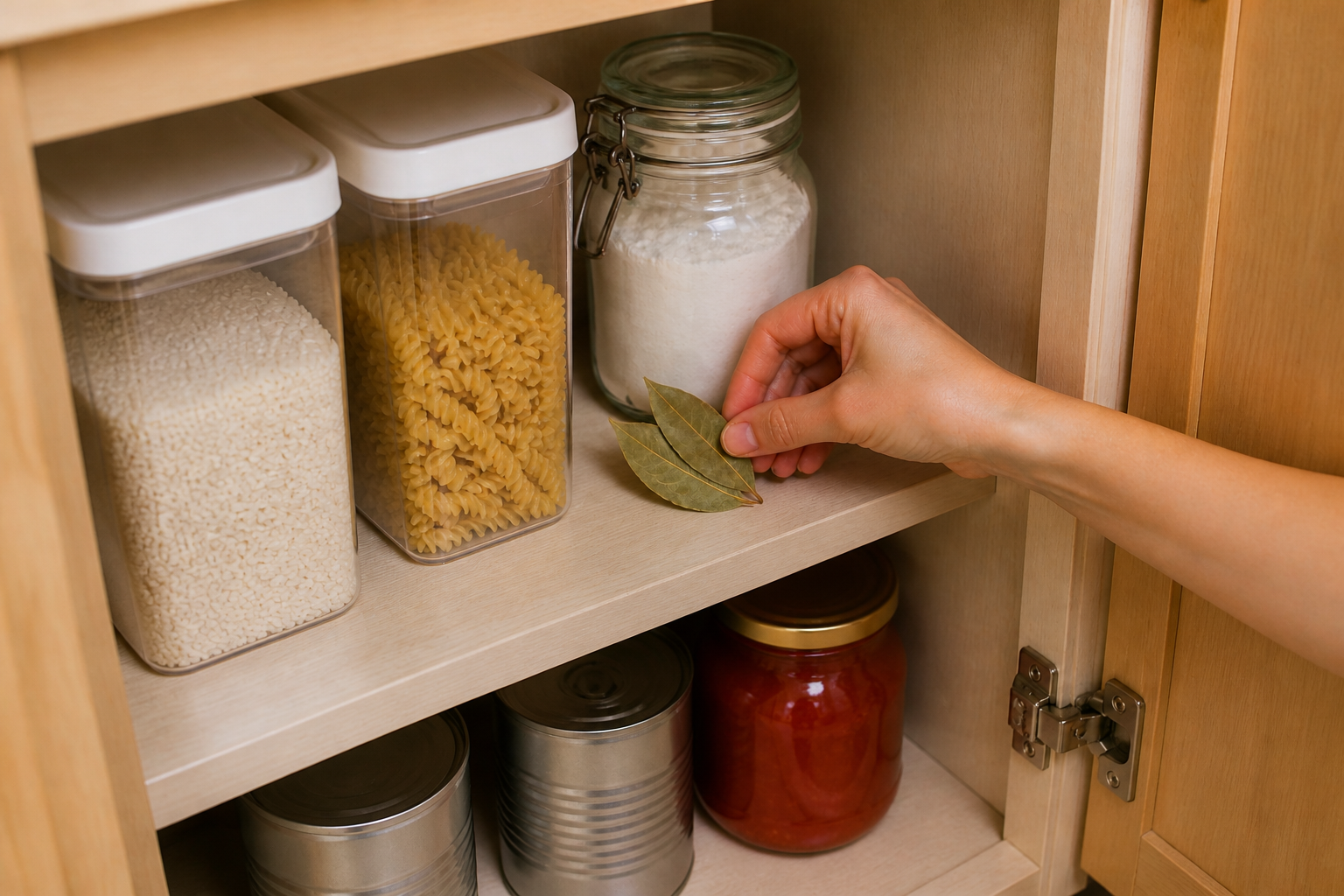
If you enjoy the scent and want to give the practice a try, use clean, dry, whole leaves. They can sit on a pantry shelf or in a small dish, away from moisture and direct contact with food.
A simple setup
1. Start with a clean shelf. Remove food packages and wipe up crumbs, spilled flour, or sticky spots. Let the shelf dry completely before returning anything.
2. Check your dry goods. Look over open packages of flour, cereal, rice, pasta, nuts, dried fruit, and pet food. Watch for webbing, small beetles, larvae, unusual clumping, or tiny holes in packaging. If you find insects or signs of infestation, handle those foods first rather than relying on bay leaves.
3. Place a few leaves around the pantry. Try one or two leaves in each area or corner where you store dry goods. You don’t need to crush them; keeping them whole makes them easier to remove and less likely to crumble onto a shelf.
4. Check them periodically. Replace leaves if they become damp, dusty, broken, or nearly scentless. There isn’t a reliable replacement schedule, since freshness and storage conditions vary. If you can no longer smell much aroma when you handle a leaf, it may be time to swap it out—or simply stop using it.
Some people place leaves inside cupboards near food, while others put them in a small open dish. Either approach is fine as long as the leaves stay dry and don’t get mixed into ingredients by accident.
What You Can—and Can’t—Expect
At best, bay leaves may add a noticeable herbal scent and possibly make a small area less attractive to certain insects. They are not a barrier, however. Pantry pests can arrive in groceries, hide in packaging, or find food despite the smell. A pantry that looks neat can still have a problem if an infested package is brought home.
Think of bay leaves as an optional extra, not the main line of defense. If you prefer a simple, scent-free pantry, you can skip them altogether and focus on careful food storage and regular checks. Those habits are more dependable than placing any herb in a cupboard.
More Reliable Ways to Keep Pantry Pests Away
Store flour, grains, cereal, nuts, dried fruit, and other vulnerable foods in tightly sealed containers made of sturdy plastic, glass, or metal. Thin bags and cardboard boxes are easy for some pests to enter or hide in, so transferring opened foods to secure containers can make a real difference.
Clean shelves now and then, especially after spills. Use a vacuum attachment to remove crumbs from corners and shelf joints, then empty the vacuum contents outside. When you bring home a new bag of flour or cereal, check the package for tears and consider using older supplies before opening newer ones.
If you find pantry insects, identify and remove the source. Discard infested food in a sealed bag outside the home, and inspect nearby packages carefully. Vacuum cracks and corners, wash shelves, and store unaffected food in airtight containers. Keep an eye on the area afterward; a single clean-up may not catch every egg or larva.
Avoid spraying household insecticides on pantry shelves or near food. If the infestation continues despite careful cleaning and storage, consult a licensed pest professional and follow any product directions closely.
Safety and Storage Notes
Bay leaves are used in cooking, but whole leaves are tough and can have sharp edges. Don’t leave them loose where they might accidentally be stirred into food or eaten. If you cook with bay leaves, remove them before serving, as you normally would.
Keep the leaves dry, and don’t use ones that show mold, dampness, or signs of spoilage. Store extra leaves in a sealed spice container away from heat and moisture so they retain their aroma. If children or pets can reach the pantry, place the leaves somewhere they won’t be mistaken for a snack or play with loose items.
A Small Tradition, With Realistic Expectations
Putting bay leaves in pantry corners is an easy, inexpensive tradition rooted in the leaves’ appealing aroma. You’re welcome to try it if you like the scent, but don’t count on it to protect food or solve a pest problem. Clean shelves, well-sealed containers, and prompt attention to any suspicious package remain the practical essentials of a pest-conscious pantry.