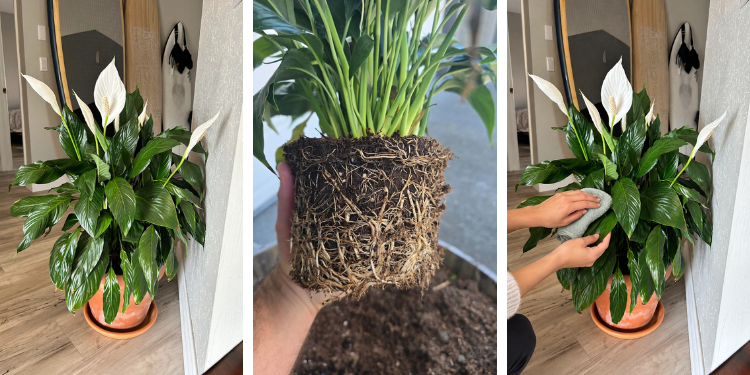
October is an important transition month for your peace lily. Even though it lives indoors, it still notices the seasonal changes happening outside.
The days become shorter, natural light becomes weaker, temperatures may drop, and once indoor heating starts running, the air inside your home can become considerably drier.
These changes mean that the care routine that worked perfectly during summer may no longer be appropriate. Your peace lily may grow more slowly, use less water, and produce fewer new leaves or flowers.
Here are 7 things to do with your peace lily in October for healthy growth.
1. Adjust Your Watering as the Days Get Shorter
One of the most important changes to make in October is your watering routine. During summer, warm temperatures and brighter light cause peace lilies to use water relatively quickly. As daylight decreases and temperatures cool, the potting mix can remain moist much longer.
This means you shouldn’t continue watering simply because a certain number of days have passed. Before reaching for the watering can, feel the soil about an inch below the surface.
If it still feels noticeably moist, give the plant more time. When the upper portion has started drying, water thoroughly and allow excess water to drain completely from the bottom of the pot.
Peace lilies do prefer more consistent moisture than many drought-tolerant houseplants, but they don’t want their roots permanently sitting in saturated soil. Constantly wet conditions reduce the amount of oxygen available around the roots and can eventually contribute to root problems.
October note: Your peace lily may suddenly need water much less frequently than it did in July or August. This doesn’t mean anything is wrong with the plant. Its environment has simply changed.
Also remember that peace lilies are famous for dramatically drooping when thirsty, but drooping doesn’t always mean the plant needs water. Plants with stressed or damaged roots can wilt too. Always check the soil before assuming that more water is the solution.
2. Move It Closer to a Bright Window
Peace lilies are often described as low-light houseplants, but this can be misleading. They tolerate relatively low light better than many houseplants, but they generally grow better with plenty of bright, indirect light.
A location that was bright enough during summer may become considerably darker by October. If your peace lily is several feet away from a window or sitting in a dark corner, consider moving it closer to natural light for fall and winter.
A bright window with filtered or indirect light is usually a good choice. Gentle morning sunlight may also be tolerated, but suddenly exposing a plant accustomed to shade to intense direct sun can scorch the leaves. Make changes gradually.
Better light becomes particularly important if you’d like your peace lily to bloom. A plant can survive for a long time in relatively low light while producing healthy-looking foliage, yet rarely produce flowers.
Light note: “Low-light tolerant” doesn’t mean “prefers darkness.” If your peace lily hasn’t bloomed for a long time, insufficient light is one of the first things worth considering.
You can also rotate the pot occasionally if most of the light comes from one direction. This encourages more balanced growth and prevents the plant from leaning too heavily toward the window.
3. Reduce Fertilizer as Growth Slows
October generally isn’t the time to push a peace lily into rapid new growth. As natural light decreases, the plant’s growth often slows naturally, and its nutrient requirements may decrease as well.
If you’ve been fertilizing regularly throughout spring and summer, begin reducing feeding as fall progresses.
A peace lily growing under strong artificial grow lights may continue actively growing and need different care, but plants relying primarily on natural daylight generally don’t require aggressive feeding through the darkest months.
Too much fertilizer can contribute to an accumulation of mineral salts in the potting mix. Over time, this may stress the roots and can be one factor associated with brown leaf tips.
October note: Don’t use fertilizer as the automatic solution whenever your peace lily looks unhappy. Yellow leaves, brown tips, or drooping are often related to watering, light, drainage, humidity, or temperature rather than a lack of nutrients.
If the plant is healthy but simply growing more slowly, that’s often normal seasonal behavior. You don’t need to force it to keep producing new leaves at its summer pace.
4. Pay Attention to Humidity Once the Heating Comes On
Indoor heating can create another major October change. Once radiators, furnaces, or heating vents begin operating regularly, the air around your houseplants may become considerably drier.
Peace lilies generally appreciate moderate humidity, and very dry indoor air can contribute to crispy leaf edges and brown tips. If possible, keep your plant away from heating vents or radiators that blow hot, dry air directly over the foliage.
If your home becomes extremely dry during winter, a humidifier can be helpful. Grouping several houseplants together may also create a slightly more humid microclimate around their foliage, although the effect is much smaller than using a humidifier.
You don’t need to constantly mist your peace lily. Misting only increases humidity around the foliage briefly and isn’t a substitute for improving the overall environment.
Humidity note: If brown tips begin appearing after you turn on the heating, don’t automatically assume the plant needs more water. Dry air may be contributing even when the soil moisture is perfectly adequate.
Brown tips can also result from inconsistent watering, fertilizer salts, water quality, or a combination of factors, so consider the plant’s entire environment before making major changes.
5. Clean Those Large Green Leaves
October is also a good time to give your peace lily’s foliage a gentle cleaning. Those large, glossy leaves can collect surprising amounts of household dust, particularly when windows remain closed more often during colder weather.
Dusty foliage isn’t just a cosmetic problem. A thick layer of dust can reduce the amount of light reaching the leaf surface, and light is already becoming more limited during autumn.
Use a soft cloth dampened with plain water and gently wipe each leaf. Support the leaf with your other hand so you don’t accidentally bend or tear it.
There’s no need to use mayonnaise, milk, oil, or other homemade leaf-shine tricks. Healthy peace lily leaves naturally have an attractive sheen once the dust is removed, and oily substances can leave residues that attract even more dust.
Cleaning also gives you an excellent opportunity to inspect the plant closely.
Quick note: While wiping the leaves, check their undersides and the areas where leaf stalks meet the plant. These hidden spots are where pests can easily go unnoticed.
A quick cleaning every few weeks during fall and winter can help the plant make the most of the available light while keeping it looking much better.
6. Check Carefully for Indoor Pests
October is an especially useful time for a pest inspection if your peace lily spent any part of summer outdoors or was positioned near open windows and other houseplants.
Look carefully beneath the leaves, along the stems, and around the base of the plant. Peace lilies can occasionally experience problems with spider mites, mealybugs, scale, aphids, and fungus gnats.
Spider mites are worth watching as indoor heating begins because they often thrive in warm, dry conditions. Fine webbing, pale speckling on the foliage, or leaves that look dusty even after cleaning can be warning signs.
Mealybugs are easier to recognize because they often resemble tiny pieces of white cotton hiding around stems and leaf joints.
Fungus gnats are slightly different. If tiny flies repeatedly appear around the potting soil, it may indicate that the growing medium is remaining consistently moist. While the adult flies are mostly annoying, their presence is also a good reason to reconsider whether you’re watering too frequently.
Pest note: If you buy new houseplants during fall, inspect them carefully and consider keeping them separated from your established plants initially. It’s much easier to deal with pests on one plant than an infestation spreading through your entire collection.
Catching problems early is always easier than treating a severe infestation later in winter.
7. Protect Your Peace Lily From Cold Drafts
Peace lilies prefer relatively stable indoor temperatures, and October can introduce sudden temperature changes.
A plant positioned beside an exterior door may receive blasts of cold air every time the door opens. Similarly, a peace lily pressed directly against cold window glass can experience much lower temperatures overnight than the rest of the room.
Move the plant slightly back from extremely cold windows if necessary, but don’t solve one problem by placing it directly beside a radiator. The goal is a stable environment without freezing drafts or constant hot, dry air.
If your peace lily spent summer outside, bring it indoors well before temperatures become genuinely cold. Before moving it inside, inspect the leaves, stems, and pot carefully for pests.
Temperature note: If leaves suddenly develop dark, damaged areas after a cold night, temperature stress may be responsible. Don’t immediately assume the plant needs more water or fertilizer.
Peace lilies generally respond better to consistency than dramatic changes in location and temperature.
Should You Repot Your Peace Lily in October?
You don’t need to repot a healthy peace lily simply because October has arrived. If the plant is comfortable in its container, drains properly, and isn’t severely root-bound, it can usually wait until a more active growing period.
However, don’t ignore serious problems just because it’s fall. If the soil remains waterlogged for an unusually long time, roots are rotting, the container has no drainage holes, or the potting mix has deteriorated badly, repotting may be necessary.
When you do repot, avoid moving a relatively small plant into an enormous container. A large volume of unused potting mix can stay wet for much longer than the roots need, increasing the risk of overwatering.
Repotting note: Move up only modestly in pot size. Peace lilies don’t need huge containers to grow well, and proper drainage is much more important than giving the roots excessive amounts of soil.
What Should You Do With Yellow Leaves?
Seeing one yellow leaf doesn’t necessarily mean your peace lily is in trouble. Older lower leaves naturally age and eventually die, and removing one occasionally is normal maintenance.
If several leaves begin turning yellow at the same time, however, investigate the growing conditions.
Excessive moisture is a common possibility, particularly during fall when soil takes longer to dry. Poor drainage, insufficient light, temperature stress, and root problems can also contribute.
Once a leaf has turned completely yellow or brown, you can remove it with clean scissors by cutting the stalk near the base.
Yellow-leaf note: Don’t diagnose a peace lily from leaf color alone. The same symptom can result from several different problems. Always check the soil, roots, light, and environment before changing your routine.
What About Brown Leaf Tips?
Brown tips are one of the most common peace lily complaints.
Dry indoor air can contribute, but it isn’t the only possibility. Inconsistent watering, mineral buildup from fertilizer, and water quality can also play a role.
If the brown portion bothers you, trim only the damaged tissue with clean scissors, following the natural shape of the leaf. Leave a tiny margin of brown rather than cutting deeply into healthy green tissue.
Trimming improves appearance, but remember that it doesn’t correct the underlying cause.
If every new leaf develops brown tips, investigate your watering routine, humidity, fertilizer use, and water quality rather than repeatedly reaching for the scissors.
Remove Old Peace Lily Flowers
If your peace lily bloomed during summer, you may still have old flowers turning green, brown, or dry.
Once a flower is clearly finished, remove the entire flower stalk rather than simply cutting off the white portion. Follow the stalk toward the base of the plant and cut it there with clean scissors.
This keeps the plant looking tidy and prevents old flower stems from lingering among the foliage.
Flowering note: Don’t be disappointed if your peace lily doesn’t flower during fall and winter. Maintaining healthy foliage and roots during the darker months is more important than trying to force continuous flowering.
October peace lily care is mostly about recognizing that your indoor environment is changing.
Check the soil before watering, provide brighter indirect light, reduce unnecessary feeding, protect the plant from dry heat and cold drafts, keep its leaves clean, and watch carefully for pests.