September is an important transition month for snake plants.
After months of warm temperatures, long days, and active summer growth, the conditions inside your home slowly begin to change.
Days become shorter, sunlight shifts, temperatures may drop, and your snake plant usually starts using water more slowly.
Here are 7 things you should do for your snake plant this September.
1. Start Reducing How Often You Water
This is the most important September adjustment.
Snake plants store water in their thick, fleshy leaves and tolerate dry soil extremely well.
During summer, warmer temperatures and longer days can cause the potting mix to dry relatively quickly. As autumn approaches, however, the plant often grows more slowly and uses less water.
At the same time, cooler indoor temperatures can cause the soil to remain wet for longer.
If you continue watering according to your summer schedule, you can accidentally create ideal conditions for root rot.
What should you do?
Stop watering according to the calendar.
Instead, check the soil.
Push your finger several inches into the potting mix or use a wooden stick to check deeper into the container.
If the soil still feels damp, don’t water yet.
Wait until the potting mix has dried thoroughly before watering again.
Then water deeply enough for excess moisture to drain from the bottom of the pot.
Empty any water remaining in the saucer or decorative outer pot.
September note: Your snake plant may need water less frequently as daylight decreases. Don’t automatically water every 7 or 10 days just because that’s what you did during summer.
The plant should determine the schedule – not the calendar.
2. Move It Closer to Better Light
Snake plants have a reputation for being “low-light plants.”
That’s only partly true.
They can survive relatively low-light conditions, but that doesn’t mean low light is ideal.
Snake plants generally grow better with plenty of bright, indirect light and can tolerate some gentle direct sun when properly acclimated.
September is a good time to reconsider where your plant is sitting.
The sunny location that worked beautifully during June and July may receive much less light as the angle of the sun changes and the days become shorter.
Look at your plant’s location.
Has a nearby tree grown enough to shade the window?
Is the plant sitting several feet away from the window?
Does the room become noticeably darker during fall?
If so, consider moving the snake plant closer to a bright window.
But make the change gradually.
A plant accustomed to a dark corner shouldn’t suddenly be placed in hours of intense direct sunlight.
Leaves can become damaged if the change is too abrupt.
Quick note: “Tolerates low light” and “prefers low light” are two very different things.
Providing better light also helps the soil dry more predictably, reducing the risk associated with a plant sitting in dark conditions with wet roots.
3. Inspect the Leaves and Roots for Trouble
September is an excellent time to give your snake plant a proper health inspection.
Don’t just glance at it from across the room.
Look closely at every part of the plant.
Healthy snake plant leaves should generally feel firm and upright, although appearance varies between cultivars.
Watch for:
- Yellowing leaves
- Mushy areas near the base
- Brown spots
- Wrinkled leaves
- Soft leaves
- Leaves falling over
- Unusual discoloration
- Signs of insects
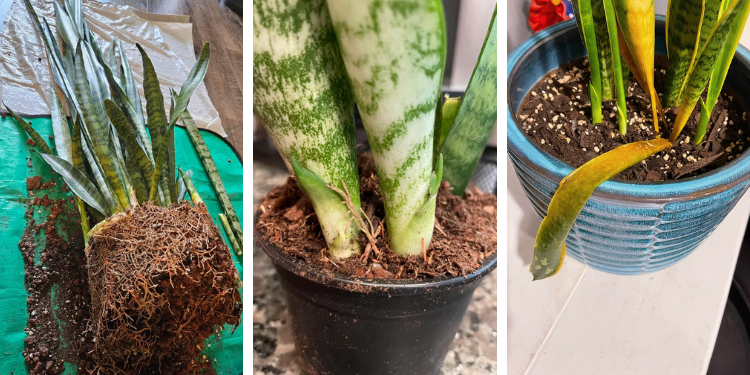
Soft, yellow leaves?
Your first suspicion should often be excess moisture.
Snake plants are much more tolerant of being slightly too dry than sitting in wet soil.
If several leaves are yellowing and becoming soft near the base, inspect the potting mix.
If it’s staying wet for a long time, you may be watering too frequently, the pot may have poor drainage, or the growing medium may be too dense.
Wrinkled leaves?
Wrinkling can sometimes occur when the plant has remained dry for an extended period.
But don’t immediately pour water into the pot without checking the soil and roots.
Damaged roots can also prevent a plant from taking up water properly.
Important note: Don’t diagnose a snake plant from one leaf alone. Look at the soil, roots, watering history, light, and overall condition of the plant.
4. Clean the Leaves Before Fall
Snake plant leaves can collect an impressive amount of dust.
Because the leaves are broad, upright, and relatively smooth, dust becomes especially noticeable over time.
September is a good month to clean them before windows begin staying closed more frequently during cooler weather.
Use a soft damp cloth and gently wipe each leaf.
Support taller leaves with your other hand so you don’t accidentally bend or break them.
Why bother cleaning the leaves?
Besides making the plant look dramatically better, removing dust keeps the leaf surface clean and makes it easier to notice:
- Spider mites
- Mealybugs
- Scale insects
- Damage
- Discoloration
You don’t need commercial “leaf shine” products.
Plain water and a soft cloth are usually enough.
Quick tip: Check the undersides and bases of the leaves while cleaning. Pests often hide in places you don’t notice during normal watering.
If you find pests, isolate the affected plant from your other houseplants while you identify and manage the problem.
5. Ease Up on Fertilizer
September isn’t the time to push your snake plant into producing lots of fresh growth.
As natural light decreases, growth commonly slows.
That means the plant generally requires fewer resources than it did during its most active growing period.
If you’ve been fertilizing regularly throughout spring and summer, September is a good time to reduce or stop feeding, depending on your indoor conditions and the product you’re using.
Snake plants aren’t heavy feeders in the first place.
Overfertilizing can cause more problems than benefits.
Too much fertilizer can contribute to:
- Salt buildup in the soil
- Root damage
- Brown leaf tips
- Unnecessary weak growth
If your plant continues receiving strong light and actively growing indoors, its seasonal slowdown may be less dramatic. But there’s still no need to feed aggressively.
September note: Fertilizer doesn’t compensate for inadequate light. If growth slows because days are shorter, adding more fertilizer isn’t the solution.
When vigorous growth resumes during spring, you can gradually return to an appropriate feeding schedule.
6. Check the Pot and Drainage
Before cooler weather arrives, look at what your snake plant is actually growing in.
Snake plants strongly dislike sitting in constantly wet soil.
That’s why drainage matters so much.
Check the bottom of the pot.
Does it have a drainage hole?
Can excess water escape easily?
Does water remain trapped inside a decorative cachepot after watering?
If your plant is growing directly inside a container without drainage, September is a good opportunity to correct the problem.
A container with drainage holes gives you much more control.
Check the potting mix too.
After watering, does it remain wet for a week or longer?
Does it feel dense and compacted?
Does water sit on the surface instead of draining?
These can be signs that the growing medium isn’t draining well enough.
Snake plants generally perform best in a loose, fast-draining mix rather than dense soil that holds moisture for extended periods.
A potting mix formulated for succulents can work, or regular indoor potting mix can be amended with drainage-promoting materials such as perlite or pumice.
Important: Good drainage doesn’t mean putting rocks in the bottom of a pot without drainage holes. The water still needs somewhere to escape.
7. Protect It From Cold Drafts and Sudden Temperature Changes
This one becomes increasingly important as September progresses.
Snake plants are tropical plants.
They don’t appreciate freezing temperatures or prolonged exposure to cold.
As nights become cooler, be careful if your plant has spent summer:
- On a balcony
- On a porch
- On a patio
- Near an open window
Bring outdoor snake plants inside before nights become too cold.
Don’t wait for frost.
September reminder: If your snake plant spent summer outdoors, inspect it carefully for insects before bringing it inside. You don’t want to introduce pests to the rest of your houseplants.
Snake plants have earned their reputation as some of the easiest houseplants to grow.
But their toughness can sometimes encourage us to ignore them completely – or, just as commonly, to give them too much attention.