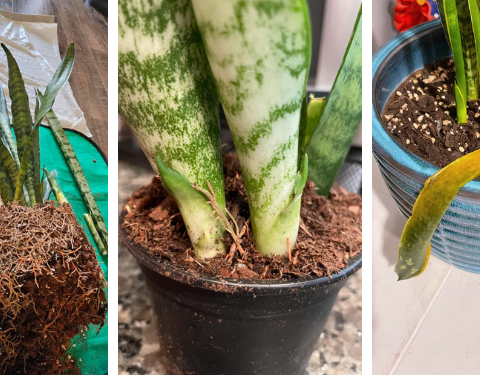
Peace lilies (Spathiphyllum) are among the most popular houseplants, loved for their glossy green leaves and elegant white flowers. They’re relatively easy to care for, but November can bring unexpected problems.
As daylight decreases and indoor heating becomes more common, peace lilies may develop yellow leaves, brown tips, or drooping foliage.
Their growth also slows, which means they don’t need the same care they received during summer.
The biggest November mistake is continuing your summer watering and fertilizing routine when your plant’s needs have changed.
Fortunately, a few simple adjustments can help your peace lily stay healthy throughout winter.
Here are seven important things to do this November.
1. Move Your Peace Lily Closer to a Bright Window
Peace lilies tolerate low light, but that doesn’t mean they grow best in dark rooms.
During November, shorter days reduce the sunlight reaching your houseplants. A location that worked well in summer may no longer provide enough light.
Without sufficient light, peace lilies may produce smaller leaves, grow more slowly, and stop flowering.
What to do: Move your plant near an east-facing window or another location with bright, indirect sunlight. Avoid intense direct sun, which can scorch the leaves.
If your home receives very little natural light, consider using a grow light.
November tip: Brighter indirect light encourages healthier foliage and improves the chances of future flowering.
2. Water Less Frequently to Prevent Root Rot
Overwatering is one of the most common problems peace lilies face during colder months.
In summer, warm temperatures and active growth help the soil dry relatively quickly. During November, slower growth means the roots absorb less water.
If you continue watering on the same schedule, the soil may remain wet for too long.
This can lead to yellow leaves, drooping, and root rot.
What to do: Check the top inch of soil before watering. If it still feels moist, wait a little longer.
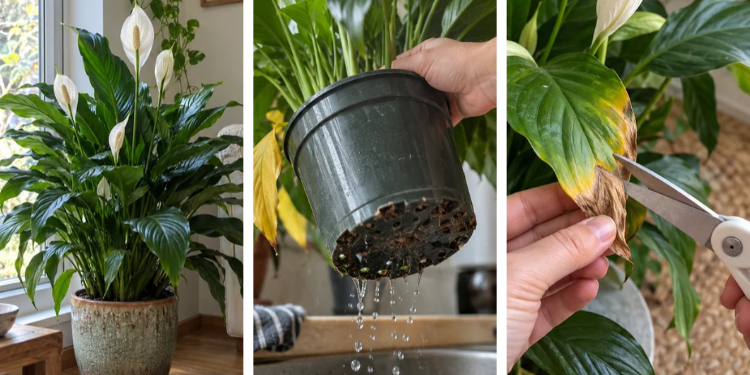
When the soil begins to dry, water thoroughly and allow excess moisture to drain away.
Never leave the pot standing in water.
November tip: Drooping doesn’t always mean your peace lily needs water. Check the soil first, because overwatered plants can droop too.
3. Protect It From Dry Indoor Air
Peace lilies naturally grow in humid tropical environments.
When indoor heating systems begin running in November, the air inside your home may become much drier.
Low humidity can contribute to brown leaf tips and crispy edges, especially when plants sit close to radiators or heating vents.
However, brown tips can also result from inconsistent watering, mineral buildup, or excessive fertilizer.
What to do: Keep your peace lily away from direct heating airflow.
If your home is particularly dry, use a humidifier to maintain moderate humidity, ideally around 40–60%.
You can also group tropical houseplants together, although this usually provides only a modest humidity increase.
November tip: Misting leaves provides only temporary moisture. A humidifier is more effective for maintaining consistent humidity.
4. Stop Heavy Fertilizing Until Spring
Peace lilies don’t need frequent feeding during periods of slow growth.
As daylight decreases in November, your plant may produce fewer new leaves and flowers.
Adding fertilizer when the plant isn’t actively growing can cause excess salts to accumulate in the soil.
This may damage roots and contribute to brown leaf tips.
What to do: Reduce or pause fertilizer applications during November and winter if your peace lily has slowed down.
If the plant continues growing actively under bright light, occasional light feeding may still be appropriate.
Avoid using fertilizer simply because the leaves are yellowing.
November tip: Yellow leaves are often caused by watering or light problems rather than a lack of nutrients.
5. Remove Yellow Leaves and Clean the Foliage
It’s normal for peace lilies to lose an occasional older leaf.
However, several yellow leaves appearing at once may indicate a problem with watering, light, or root health.
November is a good time to inspect your plant and remove damaged foliage.
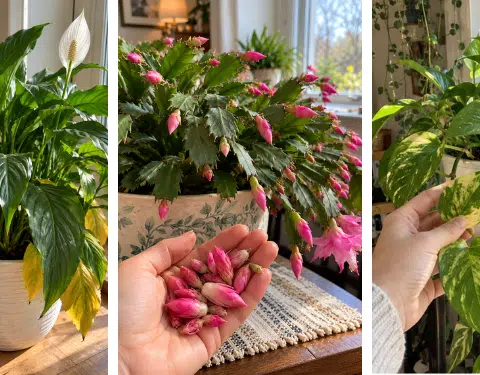
What to do: Use clean scissors to cut completely yellow or dead leaves near their base.
Don’t remove healthy green leaves unnecessarily.
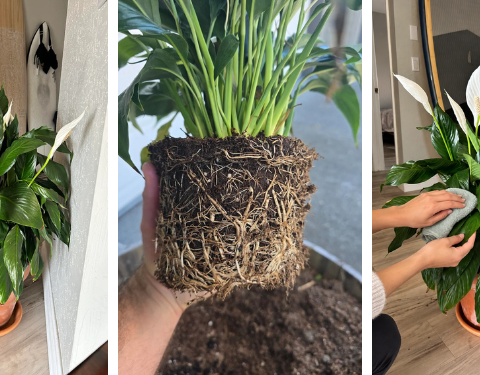
Gently wipe the remaining foliage with a soft, damp cloth to remove dust.
Clean leaves can absorb available sunlight more efficiently, which is especially helpful during shorter winter days.
While cleaning, inspect the undersides of leaves for spider mites, mealybugs, and other pests.
November tip: One yellow leaf usually isn’t a reason to panic. Widespread yellowing deserves closer attention.
6. Keep Your Peace Lily Away From Cold Drafts
Peace lilies prefer warm, stable temperatures.
Although they’re grown indoors, November can expose them to cold air from open doors, poorly insulated windows, and chilly windowsills.
Sudden temperature changes may cause drooping, discoloration, or damaged foliage.
What to do: Keep your peace lily in a room where temperatures remain around 65–80°F (18–27°C).
Avoid prolonged exposure to temperatures below approximately 55°F (13°C).
Move the plant away from frequently opened exterior doors and make sure its leaves aren’t touching cold window glass.
Also avoid placing it directly beside radiators.
November tip: Peace lilies generally respond better to stable temperatures than to frequent changes in location.
7. Check Drainage, but Don’t Rush to Repot
Many gardeners assume that a struggling peace lily needs a bigger pot.
However, November isn’t usually the best time for unnecessary repotting because the plant may be growing more slowly.
Moving it into a much larger container can also cause the potting mix to retain excess moisture.
What to do: Check that your pot has drainage holes and that water flows freely through them.
If the soil stays soggy for days, investigate the drainage and root condition.
Healthy roots should feel firm, while rotting roots may appear dark and mushy.
If root rot is present, remove damaged roots and repot into fresh, well-draining potting mix.
Otherwise, wait until spring for routine repotting.
November tip: Peace lilies often grow well when slightly snug in their pots. A larger container isn’t always better.
What Your Peace Lily’s Leaves Are Telling You
Your peace lily often shows signs of stress through its foliage. Here’s what some common symptoms may mean:
- Yellow leaves: Overwatering, natural aging, insufficient light, or root problems.
- Brown tips: Dry air, mineral buildup, inconsistent watering, or excessive fertilizer.
- Drooping leaves: Dry soil, waterlogged roots, or temperature stress.
- Small new leaves: Insufficient light or other growing problems.
- No flowers: Reduced daylight, inadequate light, or normal seasonal changes.
Remember that the same symptom can have several causes. Always check the soil, light, and growing conditions before making major changes.
November is an important month for adjusting your peace lily’s care.
Give your peace lily the right conditions in November, and you’ll help it maintain healthy roots and beautiful green foliage until stronger growth returns in spring.