When viral headlines claim a common garden weed can obliterate nearly all traces of a deadly disease, it naturally sparks immediate hope and intense viral sharing.
You may have seen the striking statistic sweeping across wellness forums and social media feeds: “Scientists discover dandelion root extract eliminates more than 95% of colon cancer cells.”
At first glance, this sounds like a groundbreaking revolution in oncology – a natural, side-effect-free alternative to traditional chemotherapy growing right in your backyard.
The data itself is real, originating from rigorous university laboratory studies. However, as with most sensationalized medical news, the gap between a promising laboratory discovery and a practical medical treatment is immense.
To truly understand what this discovery means, we have to look closely at the science, examine the remarkable ways dandelion root behaves in a lab dish, and fully unpack the critical “catch” that changes everything.
The Laboratory Discovery: What Actually Happened?
The buzz stems from published oncology research – most notably a series of cell studies led by researchers at the University of Windsor in Canada.
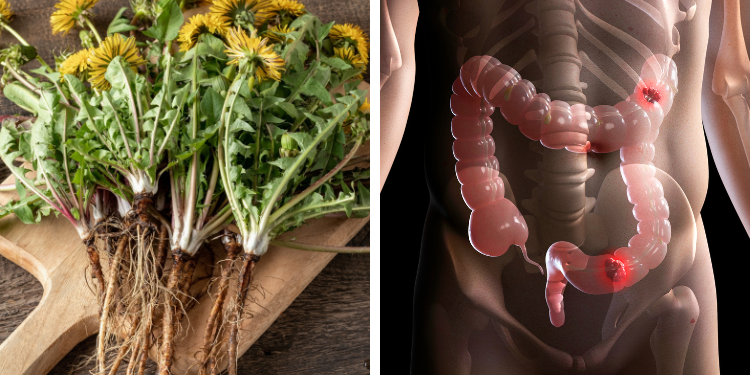
In these controlled laboratory environments, scientists extracted specific active compounds from the roots of the common dandelion (Taraxacum officinale) and applied them directly to human colon cancer cell lines (such as HT-29 and HCT116).
The results in the petri dishes were undeniable and remarkably rapid:
-
-
Programmed Cell Death: Within 48 hours of direct exposure to a highly concentrated dandelion root extract (DRE), more than 95% of the colon cancer cells committed cellular suicide—a biological process known as apoptosis.
-
Targeted Destruction: The extract managed to collapse the mitochondria (the energy powerhouses) of the cancer cells, systematically cutting off their power supply and forcing them to disintegrate.
-
Sparing Healthy Cells: Remarkably, unlike harsh systemic chemotherapies that indiscriminately kill both cancerous and healthy dividing cells, the dandelion extract left non-cancerous human cells completely unharmed.
-
The Three Crucial Catch Points
If dandelion root extract is so devastatingly effective against cancer cells under a microscope, why isn’t every oncologist prescribing it?
This is where the vital context of modern medicine comes into play. In the scientific community, there is a classic, grounded phrase: “Bleach kills cancer cells in a petri dish, but you can’t drink bleach to cure cancer.”
Three structural obstacles explain why a 95% success rate in a laboratory rarely translates directly to a cure in the human body.
1. The Petri Dish Illusion (In Vitro vs. In Vivo)
A laboratory cell study – termed in vitro (Latin for “in glass”) – takes place in a highly artificial environment. Cancer cells are grown in a single, isolated layer inside a plastic dish.
They are completely cut off from the protective biological mechanisms of the human body and are exposed to a direct, constant bath of the test substance.
When a human drinks dandelion tea or swallows a root supplement, the active compounds don’t travel straight to a colon tumor.
They are systematically broken down by powerful stomach acids, altered by digestive enzymes, and heavily filtered by the liver through first-pass metabolism.
By the time any remnants enter the bloodstream, the active, cancer-fighting compounds are incredibly diluted, failing to achieve the overwhelming concentrations achieved in a glass dish.
2. The Solid Tumor Shield
Inside a living human body, colon cancer isn’t a neat, fragile layer of floating cells. It forms a complex, dense three-dimensional mass known as a solid tumor.
This tumor constructs its own protective microenvironment, surrounding itself with a dense matrix of connective tissue, signaling proteins, and abnormally winding blood vessels.
This biological shield actively blocks external substances from penetrating deep into the core of the mass. What easily coats a cell in a flat dish cannot easily penetrate a physical tumor inside a human organ.
3. The Bioavailability Crisis
For any natural compound to work as medicine, it must possess high bioavailability – meaning it can be readily absorbed by the human body and circulate in the bloodstream long enough to do its job.
Dandelion root contains a complex mix of phytochemicals, including sesquiterpene lactones and triterpenes. Many of these large molecules are notoriously difficult for the human digestive tract to absorb effectively.
To match the exact concentrations that killed 95% of the cells in the lab, a human would likely need to consume impossibly massive, potentially toxic quantities of the root daily.
Natural Compounds vs. Standard Oncology
Understanding the historical pipeline of drug development helps frame where dandelion root currently stands. Many of our most effective, standard chemotherapy drugs were originally discovered in nature.
For example, Paclitaxel (Taxol) was discovered in the bark of the Pacific yew tree, and Vincristine was isolated from the Madagascar periwinkle plant.
The Drug Development Pipeline: Isolating a natural molecule is only the first step of a rigorous multi-decade journey.
| Phase | Testing Environment | Primary Focus | Historical Success Rate |
| Pre-Clinical | Petri dishes and rodent models | Basic mechanism and toxicity | Less than 10% advance |
| Phase I Clinical | Small groups of human volunteers | Safety, dosing, and tolerability | 70% advance |
| Phase II Clinical | Larger patient cohorts | Initial therapeutic efficacy | 30% advance |
| Phase III Clinical | Thousands of randomized patients | Definitively proving superiority to standard care | 25% approve |
Scientists didn’t just tell cancer patients to chew on yew bark or drink periwinkle tea. They spent decades identifying the exact, single active molecule, extracting it, chemically modifying it to boost its bioavailability, and running rigorous human clinical trials to establish precise, safe dosing guidelines.
Dandelion root extract is currently at the very beginning of this incredibly long, complex scientific pipeline.
The Hidden Dangers of Self-Treating
While drinking a standard cup of dandelion root tea is generally safe for the average person, using store-bought herbal supplements as a primary, self-styled cancer therapy introduces severe, hidden risks:
-
Dangerous Drug Interactions: Dandelion root acts as a natural diuretic (increasing urination) and can significantly alter how your kidneys flush out vital medications. Furthermore, because it is broken down by the same liver enzymes (Cytochrome P450) that process standard chemotherapy drugs, taking high doses can unintentionally cause your real cancer medications to build up to toxic levels in your blood, or flush them out too quickly, rendering your treatment ineffective.
-
The Cost of Delayed Care: The most tragic consequence of viral medical headlines is when a patient delays proven, life-saving medical interventions – such as surgical removal, targeted radiation, or standard chemotherapy- in favor of unproven herbal regimens. In oncology, timing is everything, and treating an aggressive disease with unstandardized supplements can allow an easily treatable cancer to advance to an incurable stage.
The Safest Approach to Integrating Natural Wellness
If you love natural wellness and want to support your body’s overall health alongside conventional medicine, you can easily integrate natural elements safely by following a structured, cautious process:
The revelation that dandelion root extract can collapse 95% of colon cancer cells in a controlled laboratory setting is a genuine, exciting scientific data point.
It opens up fascinating new avenues for targeted drug development and highlights the immense power hidden within the plant kingdom.