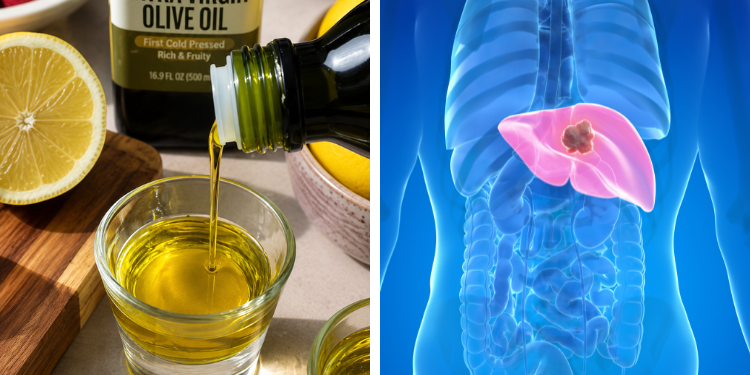
Your liver doesn’t need aggressive, restrictive cleanses; it is already a highly efficient, self-cleaning organ.
What it does require is a steady, reliable supply of specific micronutrients, healthy monounsaturated fats, and potent antioxidants to fuel its natural metabolic and filtration pathways.
Combining the organic citric acid and vitamin C of lemons with the dense polyphenols and healthy fats of extra virgin olive oil provides exactly that framework.
Here is a detailed look at the science behind this morning ritual, accompanied by seven distinct ways it supports long-term liver health.
The Morning Liver Tonic Recipe Matrix
The true effectiveness of this wellness ritual depends entirely on consistency and the quality of the raw materials.
Because you are drinking this tonic on an empty stomach immediately upon waking, your digestive tract is highly receptive, meaning the quality of the ingredients directly impacts how well your body absorbs the active nutrients.
How to Prepare It Properly
-
Select Your Oil: Source a high-quality, cold-pressed, extra virgin olive oil (EVOO). Look for labels that explicitly state the harvest date and come in dark glass bottles, which protect the delicate, heat-sensitive polyphenols from light damage.
-
Squeeze Fresh: Cut a fresh, organic yellow lemon in half. Squeeze the juice directly into a small glass to yield roughly one tablespoon of fresh juice. Avoid pasteurized, store-bought bottled lemon juice, as the heating process destroys the live enzymes and a significant portion of the natural vitamin C.
-
Emulsify: Add one tablespoon of the extra virgin olive oil to the lemon juice. Whisk the mixture vigorously with a small fork or bamboo whisk for ten to fifteen seconds. You will notice the translucent green oil and clear juice blend into a uniform, cloudy, and slightly thick emulsion.
-
The Consumption Window: Drink the tonic immediately after mixing, 20 to 30 minutes before consuming your morning coffee, tea, or breakfast. This brief window allows the organic acids and fats to interface with your upper digestive tract without competing with other foods. If the rich texture of pure oil is unappealing to you at first, simply stir the emulsion into two to four ounces of warm (not boiling) water to create a mild, comforting herbal broth.
7 Potential Liver Benefits of This Daily Ritual
Your liver is the primary metabolic engine of your body, running continuously to perform over 500 vital functions.
It filters every drop of blood leaving your digestive tract, synthesizes crucial blood-clotting proteins, breaks down spent hormones, manages cholesterol production, and neutralizes internal and external waste.
By introducing a daily dose of lemon and olive oil, you support this hard-working organ through seven distinct biochemical mechanisms:
1. Combats Hepatic Oxidative Stress with Dense Polyphenols
Every day, your liver is exposed to massive amounts of oxidative stress. As it neutralizes metabolic waste, environmental impurities, medications, and alcohol, it produces unstable molecules known as free radicals.
If these free radicals are left unchecked, they attack healthy liver cells (hepatocytes), causing localized cellular damage and tissue degradation.
Premium extra virgin olive oil is packed with high-potency, plant-derived antioxidants, specifically oleuropein and hydroxytyrosol.
These unique polyphenols act as highly efficient free-radical scavengers. They cross cellular membranes easily, neutralizing unstable molecules before they can cause lipid peroxidation or damage the structural integrity of your liver tissue, helping to preserve healthy liver architecture.
2. Helps Protect Against Non-Alcoholic Fatty Liver Disease (NAFLD)
Non-Alcoholic Fatty Liver Disease has become one of the most widespread metabolic challenges globally, characterized by an abnormal buildup of excess triglycerides directly inside liver cells.
The primary fat structure found within high-quality olive oil is oleic acid, a vital monounsaturated fatty acid (MUFA).
Clinical nutritional studies demonstrate that replacing saturated animal fats with high-quality, plant-derived MUFAs actively alters how the liver processes lipids.
Oleic acid sends regulatory signals to hepatic genes, prompting the liver to decrease internal lipid accumulation while accelerating the breakdown and transport of stored fats. This helps prevent fat from pooling inside the liver tissue.
3. Accelerates Master Glutathione Production via Vitamin C
Lemons are celebrated for their exceptional concentration of ascorbic acid (Vitamin C), a powerful, water-soluble antioxidant.
Beyond its direct immune-supporting properties, vitamin C functions as an essential biochemical precursor that helps your liver synthesize glutathione.
Often referred to by biochemists as the body’s “master antioxidant,” glutathione is the primary molecule your liver utilizes during Phase II detoxification.
It binds directly to fat-soluble toxins, heavy metals, and waste products, neutralizing them and converting them into water-soluble compounds that can be safely and efficiently flushed out of the body through the kidneys and digestive tract.
4. Stimulates Bile Secretion and Prevents Biliary Stagnation
Bile is a fluid synthesized continuously by your liver cells and stored inside the gallbladder. It is responsible for breaking down and emulsifying dietary fats so they can be absorbed by the small intestine.
However, a diet low in healthy fats or high in processed sugars can cause bile to become thick, sluggish, and stagnant inside the biliary network, increasing the risk of painful gallstones and impeding waste clearance.
When you consume a clean, concentrated source of healthy monounsaturated fat like olive oil on an empty stomach, it triggers your upper small intestine to release a signaling hormone called cholecystokinin.
This hormone immediately commands your gallbladder to contract firmly, releasing a fresh, concentrated wave of bile into the digestive tract.
This regular flushing action prevents bile stagnation, keeps the internal hepatic drainage pathways completely clear, and helps the liver flush out processed waste smoothly.
5. Supports Optimal Cellular Insulin Sensitivity
The liver plays a central, dual-action role in managing your blood glucose levels. It stores excess sugars as glycogen and releases them back into the bloodstream whenever your energy drops.
However, when you develop cellular insulin resistance, the liver becomes overwhelmed with excess glucose, leaving it with no choice but to convert those sugars into localized fat deposits.
The rich monounsaturated fats in extra virgin olive oil, paired with the unique bioflavonoids found in fresh lemon juice (such as hesperidin and naringenin), work together to improve insulin sensitivity across your muscle and fat cells.
By helping your cells respond to insulin more efficiently, this daily tonic takes a massive amount of metabolic pressure off the liver, allowing it to balance glucose production and storage smoothly without turning to fat synthesis.
6. Dampens Systemic and Hepatic Inflammation
Chronic, low-grade inflammation is the primary driver that causes simple fatty liver changes to progress into more severe, irreversible conditions such as hepatic fibrosis or cirrhosis. Extra virgin olive oil contains a highly unique, naturally occurring phenolic compound called oleocanthal.
Biochemical research has revealed that oleocanthal acts as a natural anti-inflammatory agent that works along the exact same pathways as low-dose ibuprofen.
Consuming this daily helps to dampen inflammatory responses throughout your entire vascular network, including the vital hepatic portal vein that carries blood to the liver, protecting delicate liver tissue from long-term inflammatory stress.
7. Provides Vascular Balance and Cholesterol Management
The liver is the primary factory responsible for manufacturing, regulating, and balancing cholesterol in the human body.
The active plant sterols and monounsaturated fats in olive oil work to reduce circulating levels of oxidized LDL (often referred to as “bad”) cholesterol while actively maintaining or elevating healthy HDL cholesterol levels.
By improving the overall quality and balance of fats moving through your bloodstream, this simple morning ritual makes the liver’s lipid-management job significantly cleaner and more efficient—protecting both your long-term cardiovascular health and your foundational hepatic network.
3 Critical Safety and Wellness Guidelines
While incorporating a fresh lemon and olive oil mixture into your morning routine is a highly nutritious, low-cost habit, it is important to practice it safely to get the best results:
-
Protect Your Tooth Enamel: Fresh lemon juice contains highly concentrated citric acid, which can temporarily soften and weaken your tooth enamel. To avoid wearing down your teeth, never brush them immediately after drinking the tonic. Instead, thoroughly rinse your mouth with plain, cool water right after finishing your drink, and wait at least 30 to 45 minutes before brushing with toothpaste.
-
Avoid Overwhelming Your Digestion: If your body is not accustomed to consuming raw, healthy oils first thing in the morning, starting with a full tablespoon of olive oil can occasionally trigger mild nausea or loose stools as your gallbladder adjusts to the sudden fat boost. If you have sensitive digestion, start with just half a tablespoon of olive oil and a splash of lemon juice, gradually increasing the ratio over a week as your system adapts.
-
Consult Your Healthcare Provider for Pre-Existing Conditions: If you have a history of large, active gallstones, severe biliary tract obstruction, or advanced liver disease, consult your primary care physician or gastroenterologist before introducing this routine. Forcing a compromised gallbladder to contract rapidly can occasionally trigger discomfort if structural issues are already present.
True physical wellness is rarely about forcing your body through quick-fix, restrictive cleanses. Your liver is a remarkably resilient organ that responds beautifully to consistent, gentle, and supportive daily nutrition.