Amid the rapid rise of modern wellness trends, few ancient botanicals have maintained as steadfast a reputation as turmeric (Curcuma longa).
For thousands of years, this brilliant golden-orange rhizome has served as a cornerstone of traditional Ayurvedic and Chinese medicine.
Historically celebrated as a systemic purifier and an energy balancer, modern clinical research has spent the last few decades validating what ancient practitioners observed empirically: turmeric is a molecular powerhouse.
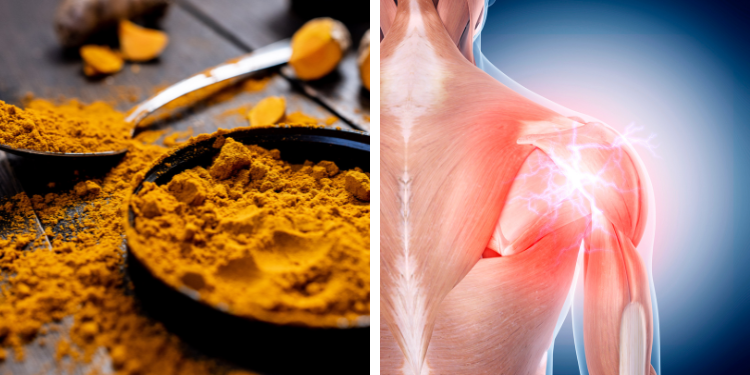
While most people associate turmeric with digestive wellness or general immunity, a growing body of orthopaedic research is focusing on a different structural network: the human skeletal system.
As we age, our bones and joints face continuous cellular stress, often manifesting as chronic discomfort, cartilage degradation, and a loss of bone mineral density.
Understanding how turmeric interfaces with skeletal biology reveals a sophisticated mechanism that calms joint distress, preserves bone density, and reinforces skeletal architecture from the inside out.
The Inflammatory Cascade: The Root of Bone and Joint Decline
To understand how turmeric supports skeletal health, it helps to first examine the true biological drivers of bone and joint degeneration.
For decades, conditions like osteoarthritis were viewed simply as mechanical “wear-and-tear” – the inevitable friction of aging joints wearing down like old tires.
Modern rheumatology, however, has fundamentally rewritten this narrative. We now know that bone loss and joint degradation are actively driven by a state of chronic, low-grade cellular inflammation.
Inside a healthy joint, cartilage acts as a smooth, rubbery shock absorber protecting the ends of your bones.
When injury, metabolic stress, or aging triggers the surrounding tissues, the body initiates an inflammatory cascade. Two primary molecular culprits drive this destructive process:
-
NF-κB (Nuclear Factor Kappa B): This molecule behaves like a master genetic command switch located inside your cells. When activated, NF-κB slips into the cell’s nucleus and turns on the genes responsible for manufacturing a flood of inflammatory proteins (cytokines). These proteins act like biochemical acid, slowly chewing through the delicate collagen matrix of your joint cartilage.
-
COX-2 (Cyclooxygenase-2): This specific enzyme is responsible for producing prostaglandins—the active messenger molecules that cause localized swelling, heat, throbbing, and intense joint pain. Standard over-the-counter pain relievers (NSAIDs) work precisely by temporarily blocking this enzyme.
Concurrently, this same inflammatory environment disrupts the delicate balance of bone remodeling.
Your skeleton is not static; it is constantly being broken down by cells called osteoclasts and rebuilt by cells called osteoblasts.
Chronic inflammation hyper-activates the bone-destroying osteoclasts while suppressing the bone-building osteoblasts, leading to a progressive loss of bone density and an increased risk of fractures.
How Turmeric Intervenes: The Molecular Mechanics
Turmeric’s skeletal benefits are driven by a group of active polyphenolic compounds called curcuminoids, with curcumin being the most thoroughly studied.
Curcumin does not simply mask joint pain; it behaves like a smart molecular modulator that targets the root causes of skeletal decline.
1. The Natural Disruption of COX-2 and NF-κB
Curcumin operates as a potent, natural inhibitor of the inflammatory cascade. Clinical studies demonstrate that curcumin physically binds to and blocks the activation of the master switch NF-κB.
By keeping this switch turned off, the body drastically cuts its production of cartilage-destroying cytokines.
Simultaneously, curcumin naturally down-regulates the production of the COX-2 enzyme. Because it targets the exact same biochemical pathway as synthetic anti-inflammatory medications, turmeric reduces joint pain in osteoarthritis effectively, helping to ease localized swelling and morning stiffness without the gastrointestinal side effects often associated with long-term pharmaceutical use.
2. Preserving Cartilage Architecture
By shifting the joint environment away from chronic inflammation, curcumin allows chondrocytes (the cells responsible for maintaining cartilage) to function normally.
It helps prevent the breakdown of the vital extracellular matrix—the dense web of collagen and hyaluronic acid that keeps joints bouncy, resilient, and fully lubricated during physical movement.
3. Balancing Bone Density Remodeling
Emerging research indicates that curcumin plays a direct role in protecting bone mineral density. By dampening the inflammatory signals that hyper-activate bone-destroying osteoclasts, turmeric helps restore balance to the skeleton.
This allows the bone-building osteoblasts to lay down new calcium matrices effectively, reinforcing structural strength and helping to ward off conditions like osteopenia and osteoporosis.
The Catch: Solving the Bioavailability Puzzle
Despite its incredible molecular potential, raw turmeric possesses a significant natural limitation: exceptionally low bioavailability.
Curcumin is a fat-soluble molecule that does not dissolve easily in the water-based environment of the human digestive tract.
When you consume raw turmeric powder on its own, the vast majority of the active curcuminoids are poorly absorbed by the gut, rapidly metabolized by the liver, and quickly eliminated from the body before they ever have a chance to reach your bloodstream or your skeletal joints.
Fortunately, traditional culinary practices discovered how to solve this puzzle long before modern laboratories mapped out the chemistry.
To unlock the full skeletal potential of turmeric, it must always be paired with two specific catalyst components:
-
Black Pepper (Piperine): Black pepper contains a distinct alkaloid called piperine. When ingested alongside turmeric, piperine temporarily disables the specific liver enzymes responsible for breaking down curcumin. Clinical research has shown that pairing turmeric with even a small pinch of black pepper boosts curcumin absorption by a staggering 2,000%.
-
Healthy Lipids (Fats): Because curcumin is lipophilic (fat-loving), dissolving it in a healthy fat allows the active compounds to be absorbed directly into the lymphatic system, bypassing the liver’s first-pass filtration and allowing the molecules to circulate throughout the body much longer.
4 Effective Ways to Use Turmeric for Skeletal Support
To consistently deliver these bone and joint-supportive compounds to your skeletal system, you can easily integrate turmeric into your daily routine using four highly effective methods.
1. The Traditional Ayurvedic “Golden Milk” Elixir
This ancient, comforting beverage remains one of the absolute best ways to consume turmeric because it inherently incorporates both the fat and the black pepper required for maximum absorption.
-
How to Prepare: Warm 1 cup of your preferred milk (such as whole cow’s milk, coconut milk, or almond milk) in a small saucepan over medium heat. Whisk in 1 teaspoon of pure turmeric powder, 1/2 teaspoon of ground cinnamon, a tiny pinch of finely ground black pepper, and 1/2 tablespoon of virgin coconut oil or grass-fed ghee. Simmer gently for 5 to 7 minutes without letting it reach a boil. Remove from the heat, stir in a teaspoon of raw honey to sweeten if desired, and drink warm before bed to soothe aching joints overnight.
2. A Target-Specific Topical Joint Compress
For acute osteoarthritis flares, localized knee swelling, or throbbing wrist joints, applying a concentrated topical paste can deliver localized anti-inflammatory relief directly through the skin tissue.
-
How to Apply: Mix 2 tablespoons of turmeric powder with 1 tablespoon of melted extra virgin olive oil or castor oil, and a few drops of warm water until a thick, uniform paste forms. Gently smooth the warm paste directly over the painful, aching joint. Wrap the area securely with a clean cotton bandage or plastic wrap to lock in the heat and protect your clothes, as turmeric will heavily stain fabrics a bright yellow. Leave the compress in place for 20 to 30 minutes, then rinse the area thoroughly with warm water and soap.
3. Golden Culinary Bone Broth Infusions
Integrating turmeric directly into slow-simmered bone broths creates a powerful skeletal tonic that pairs the anti-inflammatory action of curcumin with the joint-building collagen blocks found in traditional broths.
-
In the Kitchen: When simmering your homemade chicken, beef, or vegetable broths, add a generous 2-inch piece of fresh, sliced turmeric root (or 1 tablespoon of high-quality organic powder) along with a tablespoon of whole black peppercorns during the final hours of cooking. The natural fats extracted from the bones perfectly dissolve the curcumin, creating a deeply nourishing, golden broth that supports joint lubrication and structural bone health.
4. Standardized High-Potency Targeted Supplements
If you are dealing with advanced osteoarthritis discomfort or established bone density loss, dietary intake alone may not deliver high enough therapeutic doses. In these cases, a standardized supplement is highly effective.
-
What to Look For: Select a supplement explicitly labeled as “Standardized to 95% Curcuminoids.” To guarantee absorption, ensure the formula explicitly includes BioPerine (the patented extract of black pepper) or utilizes a specialized liposomal or micellar delivery technology that pre-dissolves the curcumin in fat matrices for enhanced systemic uptake.
A Structured Protocol for Skeletal Optimization
To safely transition your daily routine and allow turmeric to fully fortify your structural framework, follow this systematic, progressive timeline:
By shifting our approach from masking joint distress to naturally addressing its molecular causes, we can actively protect our structural frameworks.
Turmeric offers an exceptional, time-tested tool for this protective strategy. By bypassing its natural absorption limits with black pepper and healthy fats, you can harness its ability to quiet inflammatory enzymes and proteins.
The result is a resilient skeletal system that moves comfortably and supports an active lifestyle year after year.