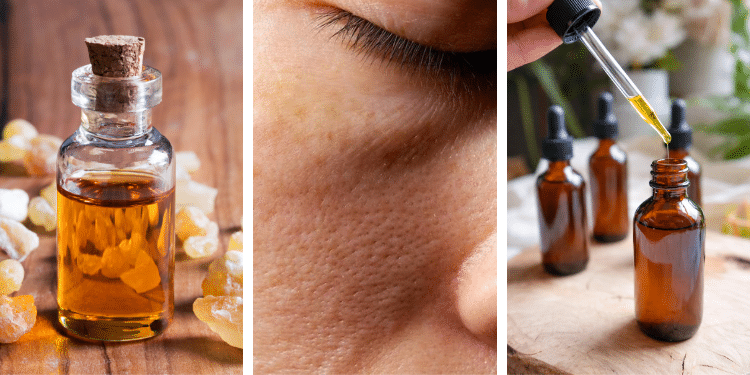
Derived from the resinous sap of the Boswellia tree, frankincense was once valued more highly than gold in the ancient world.
But what actually happens when you introduce a single, concentrated drop of this ancient resin into your nightly skincare routine?
Far from a simple aromatic trend, applying frankincense oil nightly initiates a fascinating chemical rewrite within the layers of mature skin, fortifying its structure while you sleep.
1. The Anatomy of Aging Skin: What Are We Up Against?
To understand how frankincense works, we first have to look at what happens to our skin as we age. Starting in our mid-to-late 20s, the skin’s natural renewal systems begin to slow down:
-
-
Collagen Depletion: We lose roughly 1% of our collagen reserves every year. Collagen is the structural scaffolding that keeps skin plump, firm, and bouncy.
-
Cellular Sluggishness: Cellular turnover – the process where the skin sheds dead surface cells and pushes fresh, new ones to the top – slows down dramatically. What took 28 days in our youth can take up to 45 to 60 days as we age, leading to a dull, rough texture.
-
Moisture Barrier Collapse: The skin’s natural production of lipids, ceramides, and hyaluronic acid drops, compromising the moisture barrier. This leaves the skin highly vulnerable to dehydration, inflammation, and environmental damage.
-
2. The Chemistry of Frankincense: The Active Molecules
When you apply a drop of pure frankincense essential oil, you are delivering a highly concentrated dose of active volatile organic compounds directly to your epidermis.
The primary drivers behind its skin-supportive properties include:
-
Alpha-Pinene & Limonene: Powerful natural antioxidants that neutralize free radicals – unstable oxygen molecules generated by sun exposure and pollution that tear apart healthy collagen cells.
-
Octyl Acetate & Incensole Acetate: Compounds heavily researched for their ability to soothe deep-seated inflammation. Chronic, low-grade skin inflammation (often called “inflammaging”) is a major accelerating factor behind wrinkle formation and sagging.
A Crucial Note on Chemistry: Pure steam-distilled frankincense essential oil contains volatile terpenes and compounds that easily penetrate the skin’s surface. However, the heavy boswellic acids found in raw resin are actually too large to pass through the steam distillation process. To capture the full spectrum of both volatile oils and heavy boswellic acids, look for co2 extracts or specialized resin infusions.
3. What Happens to Your Skin Night by Night
Introducing a single drop of diluted frankincense oil into your nightly routine kickstarts a predictable, cumulative timeline of rejuvenation.
The First Night: Immediate Barrier Comfort
As you blend the oil across your face, the volatile compounds slip past the outer layers of the stratum corneum (the skin’s topmost shield).
Frankincense acts as a natural astringent, causing a temporary, micro-tightening effect that minimizes the visual appearance of enlarged pores.
The soothing properties immediately reduce surface redness, while the rich carrier oil anchors deep moisture, preventing trans-epidermal water loss (TEWL) while you sleep.
Week Two: Increased Micro-Circulation and Radiance
By the second week of continuous nightly application, the antioxidant compounds have built up a defensive shield within the skin cells. Frankincense helps stimulate local micro-circulation.
This increased blood flow delivers a steady surge of oxygen and fresh nutrients to the basal layer of the skin, accelerating the shedding of dead, sluggish surface cells. The result is a noticeable improvement in skin luminosity and smoothness.
Month Two and Beyond: Fading Discoloration and Structural Recovery
This is where the true transformation takes place. Long-term use of frankincense helps regulate the activity of melanocytes – the cells responsible for producing skin pigment.
By calming overactive melanocytes, it gently fades stubborn age spots, sun damage, and post-inflammatory hyperpigmentation.
Furthermore, by shielding existing collagen fibers from oxidative stress and encouraging healthy cellular renewal, the skin matrix grows more resilient, visibly softening fine lines and restoring a firmer feel to the jawline and cheeks.
Skincare Active Ingredient Comparison
How does the natural, protective action of frankincense stack up against mainstream commercial anti-aging ingredients?
| Active Ingredient | Primary Mechanism | Best Used For | Potential Side Effects | Nature |
| Frankincense Oil | Antioxidant shield, calms inflammation, regulates pigment | Gentle aging support, fading spots, smoothing texture | Low (Must be properly diluted in carrier oil) | 100% Botanical |
| Retinol (Vit. A) | Forces rapid, aggressive cellular turnover | Deep wrinkles, cystic acne | High dryness, peeling, redness, sun sensitivity | Synthetic or Derived |
| Vitamin C (L-Ascorbic) | Neutralizes free radicals, brightens skin | Brightening dark spots, environmental defense | Can cause stinging, oxidizes quickly in the bottle | Synthetic stable form |
| Hyaluronic Acid | Draws moisture from the air into the skin surface | Immediate plumping, temporary fine line smoothing | Can dry skin out further if used in arid climates | Bio-fermented |
While retinol is an undeniable powerhouse for accelerating cell turnover, it frequently causes irritation, flaking, and intense sun sensitivity that many people find difficult to tolerate.
Frankincense offers a gentler path, strengthening the skin matrix through protective antioxidant pathways without disrupting the moisture barrier.
The Golden Rules of Application: How to Use It Safely
Because essential oils are highly concentrated plant extracts, applying them raw and undiluted to your face can lead to contact dermatitis or sensitization over time.
To get the maximum benefit safely, follow this simple nightly ritual:
A Guide to Sourcing: There are several species of frankincense used in skincare. Boswellia carterii is highly prized for its exceptional skin-soothing properties, while Boswellia serrata is famous for its powerful antioxidant profile. For the ultimate aging support routine, look for a blend that utilizes both species.
Adding a drop of frankincense oil to your evening routine is a beautiful way to honor your skin’s natural journey.