Rosemary (Salvia rosmarinus) is a jewel of the culinary garden. Whether you are running your hands through its pine-scented, needle-like foliage to release its volatile essential oils, tossing fresh sprigs into a skillet of roasting potatoes, or utilizing its beautiful purple blooms to draw native bees to your patio, it is a rewarding perennial herb.
Yet, any gardener who has browsed online plant forums knows a frustrating truth: rosemary is one of the most common victims of household plant failure.
You buy a lush, emerald-green potted rosemary plant from the nursery, bring it home, water it faithfully, and watch in dismay as it turns a brittle brown or develops black, wilted leaves within a month.
The secret to reversing this cycle doesn’t lie in expensive liquid fertilizers or high-tech grow lights. Rosemary is an exceptionally hardy, drought-tolerant Mediterranean native.
The secret to growing a massive, bushy, bush-like rosemary plant inside a container comes down to one fundamental trick: completely changing how you manage the air-to-water ratio within the root zone.
By mirroring the specific, unforgiving coastal mechanics of the Mediterranean basin, you can unlock rapid, healthy growth that keeps your rosemary productive for years.
The Ultimate Container Trick: Perlite and Airation Layering
To grow an exceptionally lush rosemary plant, you must understand its subterranean architecture. Rosemary roots are thin, fibrous, and hyper-sensitive to stagnant moisture.
In their native habitats across Spain, Italy, and Greece, these plants thrive in loose, rocky, calcareous soils that drain almost instantly after a rainstorm.
When you plant rosemary in standard, out-of-the-bag potting soil, the dense peat moss holds onto water like a sponge.
This deprives the roots of oxygen, leading to root rot (pythium), which chokes off the plant’s ability to draw nutrients up to its leaves.
The single best trick to guarantee success is building a 40% coarse drainage matrix directly into your soil mix and eliminating the traditional pot tray.
Why This Trick Works
By mixing 40% coarse perlite or pumice with 60% standard organic potting soil, you physically alter the texture of the growing medium.
Perlite is a volcanic glass that contains countless tiny microscopic cavities. It does not absorb water internally; instead, it creates large structural gaps (macropores) throughout the container.
These gaps allow excess water to flush out of the bottom drainage holes within seconds, while simultaneously trapping fresh air inside the soil matrix.
This high-oxygen environment forces the rosemary roots to branch out rapidly, creating a massive, highly efficient root network that can support heavy top-heavy foliage.
4 Supporting Pillars of Container Rosemary Care
While optimizing your soil’s air-to-water ratio is the core trick, container plants are entirely dependent on you for their basic environmental needs. To maximize your plant’s growth, master these four essential pillars:
1. Sunlight Is Non-Negotiable
Rosemary cannot survive in dim, cozy indoor corners or shaded patios. It requires a minimum of six to eight hours of direct, intense, unfiltered sunlight daily to produce its aromatic oils and maintain its structural integrity.
If you are growing rosemary indoors, place it directly on a south- or west-facing window sill. If your home lacks strong natural light, you must supplement it with a full-spectrum LED grow light positioned three to five inches above the top foliage for 12 to 14 hours a day to prevent the plant from becoming leggy and weak.
2. The “Soak and Dry” Watering Method
Because you have built a highly porous soil mix using our perlite trick, your watering technique needs to change. Avoid giving your rosemary light, daily sips of water. This keeps the top layer of soil constantly damp while leaving the deep roots bone-dry.
Instead, employ the soak and dry method:
-
Wait until the top two to three inches of soil are completely dry to the touch. You can verify this by pushing your index finger deep into the pot.
-
Take the container to the sink or outdoors and pour water thoroughly over the soil surface until it flows freely out of the bottom drainage holes.
-
The Crucial Golden Rule: Never let the container sit in a saucer filled with standing water. If your pot has a decorative tray, empty it completely 10 minutes after watering. Stagnant water sitting in a tray travels back up into the pot via capillary action, drowning the bottom roots and causing root rot.
3. Terracotta: The Ideal Container Material
When selecting a home for your rosemary, skip plastic, glazed ceramic, or metal pots. Opt for a classic, unglazed terracotta pot.
Terracotta is a highly porous, breathable clay. It allows moisture to evaporate outward through the container walls, which helps dry out the soil mix uniformly and prevents hidden water pockets from forming at the center of the root ball.
4. Lean Feeding (Less Is More)
Rosemary has evolved to thrive in nutrient-poor coastal soils. If you over-feed it with heavy nitrogen fertilizers, it will produce rapid, watery green growth that lacks the concentrated essential oils that give the herb its deep fragrance and flavor.
Feed your rosemary just once in the early spring when fresh growth appears, using a mild, diluted organic liquid fertilizer like fish emulsion or kelp meal at half the manufacturer’s recommended strength.
Step-by-Step Potting Blueprint for Rapid Growth
To set up your container using our oxygenation trick, gather your materials and follow this precise installation sequence:
The Pruning Secret for a Bushier, Fuller Plant
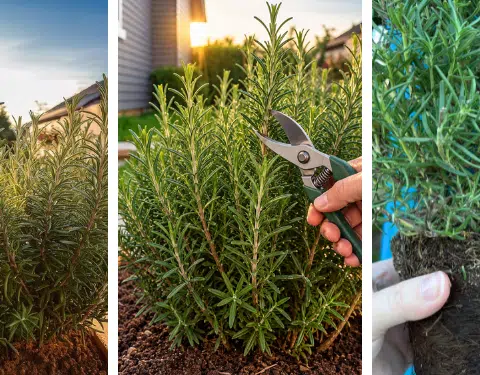
Once your rosemary is settled into its high-drainage container and receiving plenty of sunshine, you can use regular pruning to guide its shape. Left to its own devices, a rosemary plant can become woody, tall, and sparse at the base.
To create a dense, highly branching sphere of culinary foliage, implement directional pruning:
-
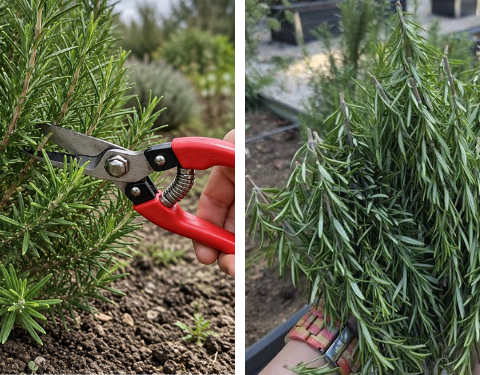
Pinch the Growing Tips: Whenever you need rosemary for a recipe, don’t just pluck individual needles. Snip off the top two to three inches of an active, green stem right above a pair of leaves.
-
The Branching Response: Directly beneath where you made that cut, the plant will react by activating two dormant nodes, sprouting two brand-new branches where there used to be only one.
-
Avoid the Hard Wood: Never cut deeply back into the old, woody, gray sections of the rosemary branches. Rosemary stems lose their active bud nodes as they age; if you prune back into the hard wood, that specific branch will rarely sprout fresh green growth again. Always leave plenty of soft green needles on a stem when harvesting.
The Container Gardner’s Mindset: Growing a thriving rosemary plant isn’t about giving it constant attention, continuous water, or rich soil amendments.
True mastery comes from stepping back and providing exactly what the plant evolved to love: intense sunlight, sharp drainage, and plenty of breathing room around its roots.