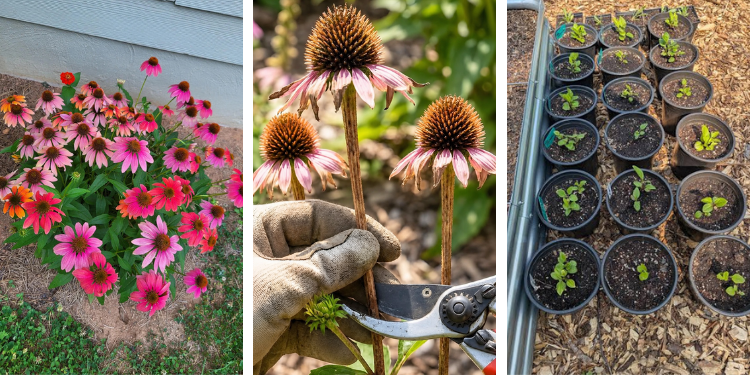
Coneflowers (Echinacea) are rugged, heat-tolerant perennials celebrated for their bright daisy-like petals and prominent central cones.
While they manage basic survival with minimal intervention, August is a critical transition month that determines whether your plants will merely survive or put on a spectacular display next season.
By late summer, a coneflower’s priorities shift. Peak flowering is winding down, days are shortening, and the plant is deciding where to store its remaining energy: into ripening seeds, expanding its root crown, or setting underground lateral buds for next year.
Understanding how to manage your coneflowers in August ensures a healthy garden now and guarantees heavier, larger blooms next spring and summer.
1. Tactical Deadheading: Early vs. Late August Strategy
Deadheading – removing spent flowers – is the most effective way to manage a coneflower’s energy reserves in late summer. However, your approach should shift as the month progresses.
Early to Mid-August: Prune for Late-Season Flushes
If your coneflowers show faded blossoms with drooping petals alongside fresh emerging side buds, keep deadheading.
Removing spent heads prevents the plant from expending energy on seed production, redirecting that vitality into opening lateral buds for a secondary flush of late-summer blooms.
-
Where to cut: Follow the stem of the faded flower down to a junction with a set of healthy leaves or a visible, emerging side bud. Make a clean cut with sharp pruners roughly 1/4 inch above that leaf node or bud. Avoid leaving bare stem stubs (“coat hangers”), which rot and attract pests.
Late August: Stop Deadheading for Root Health and Wildlife
By the last week of August, transition from deadheading to letting the final flowers mature into seed cones.
Allowing the plant to set seeds signals it to shift focus from foliage and flower production toward strengthening its crown and roots for winter survival.
Ecological Benefit: Dried coneflower seed heads are a critical autumn and winter food source for native songbirds, particularly American Goldfinches. The dark, rigid cones also add architectural interest to the winter garden landscape.
2. Soil Moisture and Deep Watering
August heat and erratic late-summer rain dry out topsoil quickly. While established coneflowers are drought-tolerant, prolonged water stress in August suppresses crown development and reduces the number of flower primordia (flower buds in their embryonic stage) set for next year.
Water Management Guidelines:
-
Deep, Infrequent Soaking: Rather than light daily sprinklings that evaporate quickly, give your coneflowers a thorough, deep watering (1 to 1.5 inches of water) once a week during dry spells.
-
Water at the Base: Always apply water directly to the soil root zone using a drip line, soaker hose, or watering wand. Avoid soaking the leaves, which encourages fungal leaf spots and powdery mildew in hot, humid August air.
-
Replenish Mulch: Ensure a 2-inch layer of organic mulch (shredded bark, leaf mold, or clean straw) surrounds the plant base. Keep mulch pulled back 1–2 inches from the central green crown to prevent rot.
3. The “No High-Nitrogen Fertilizer” Rule
One of the most common mistakes gardeners make in late summer is applying high-nitrogen fertilizers to force one last flush of growth.
In August, high nitrogen triggers a flush of soft, tender green foliage. This late growth drains carbohydrate stores away from the root system.
Even worse, tender late-season growth lacks the cell structure to survive early autumn frosts, leaving the plant vulnerable to rot and crown disease over winter.
What to Apply Instead:
-
Organic Compost Top-Dressing: Scratch a thin 1/2-inch layer of well-aged organic compost or earthworm castings gently into the soil around the drip line. Compost provides gentle, slow-release trace minerals without forcing tender top growth.
-
Potassium and Phosphorus (Optional): If a soil test indicates a deficiency, a light application of organic bone meal or rock phosphate in late summer supports root development without pushing unwanted foliage.
4. Late-Summer Disease Monitoring and Sanitation
High humidity combined with warm August days creates prime conditions for fungal diseases. Catching these early protects plant health into winter.
| Disease / Issue | Visual Symptoms | August Action Plan |
| Powdery Mildew | White or grayish powder-like coating on upper leaf surfaces. | Snip off severely affected lower leaves. Improve air circulation by thinning surrounding weeds or overcrowded companion plants. |
| Cercospora Leaf Spot | Small reddish-purple spots on leaves that turn brown or black in the center. | Remove infected leaves immediately. Clean up all fallen leaf debris around the base of the plant to prevent spores from overwintering in the soil. |
| Aster Yellows | Deformed, greenish flower heads; stunted growth; bushy yellowing foliage. (Caused by a phytoplasma spread by leafhoppers). | Crucial: Aster yellows is incurable. Promptly dig up and destroy the entire infected plant (do not compost it) to protect neighboring perennials. |
5. Planning Division: Spring vs. Autumn Timing
Over time, coneflower clumps grow thick and woody in the center. When a clump becomes overcrowded (usually every 3 to 4 years), inner stems compete for light and nutrients, resulting in smaller flowers and weaker stems.
While August is the ideal time to identify and tag overgrown clumps, hold off on digging and dividing until the proper window:
-
Avoid Summer Division: Never divide or transplant coneflowers in August heat. High air temperatures and strong sun cause rapid moisture loss, leading to root shock and severe dieback.
-
When to Divide: In mild, southern climates (Zones 7–9), wait until early autumn (late September or October), at least 6 to 8 weeks before your first expected hard frost. In cold northern climates (Zones 3–6), wait until early spring just as new green shoots break through the soil.
August Care Summary Checklist
By taking a thoughtful approach in August, you balance immediate garden aesthetics with long-term plant health.
-
Deadhead strategically: Prune spent blossoms early in the month for secondary flushes; stop deadheading by late August to allow seed production for birds and root signaling.
-
Water deeply: Provide 1 inch of water weekly at the base of the plant during dry spells.
-
Skip nitrogen fertilizers: Avoid high-nitrogen synthetic feeds to protect root stores and prevent frost damage.
-
Practice good sanitation: Remove powdery mildew or leaf-spotted foliage and keep soil surfaces clear of decaying plant matter.
-
Mark clumps for division: Note which overcrowded plants need lifting in late autumn or next spring.
Following these late-summer steps gives your coneflowers the foundation they need to establish strong root systems over winter, setting the stage for bigger, bolder, and more prolific blooms next spring!
The best gardens don’t just brighten your yard – they become something you can enjoy season after season.
If you’re ready to grow your own backyard pharmacy, the Medicinal Garden Kit is a wonderful place to begin.
Inside you’ll find 2,409 non-GMO seeds, a detailed Herbal Medicinal Guide, and 2 FREE bonuses to help you grow a wide variety of traditional medicinal herbs with confidence.
Take a look at the Medicinal Garden Kit and start growing something truly rewarding.