Among the rapidly growing trends in sustainable, zero-waste living, some of the most profound innovations are actually modern rediscoveries of traditional, practical household wisdom.
For decades, the standard response to kitchen scraps like vegetable trimmings has been to throw them straight into the trash or toss them blindly into a compost pile.
However, combining two of the most common, unassuming kitchen items – raw potato peels and sodium bicarbonate (baking soda) – creates an incredibly effective, multi-purpose solution.
This simple combination sounds unusual at first glance, but it leverages a powerful chemical and structural synergy.
The natural starch networks, mineral content, and enzyme profiles locked inside potato skins react brilliantly with the mild, alkaline, and abrasive properties of baking soda.
Whether you want to revive weathered metal cookware, clear stubborn, sluggish sink drains, or create a nutrient-dense booster for your potted plants, this eco-friendly pairing is a versatile alternative to harsh, store-bought chemical cleaners.
The Molecular Synergy: Why Potato Peels and Baking Soda Work Together
To understand why this kitchen scrap combination is so effective, it helps to examine the unique chemical profiles of both components.
1. The Power of the Peel (Starch and Oxalic Acid)
Raw potato skins are far more than a useless outer casing. They are packed with a high concentration of natural starches and liquid moisture.
Starch behaves as a natural surfactant – a substance that wraps around stubborn grease, oils, and surface grime, breaking their physical bond with a surface so they can be easily rinsed away.
Additionally, potato juice contains trace amounts of oxalic acid, a natural organic compound widely utilized in industrial cleaning agents for its ability to safely dissolve rust, oxidation, and mineral scaling on contact.
2. The Alkaline Abrasive (Sodium Bicarbonate)
Baking soda is a mild, alkaline chemical compound. Its fine crystalline structure provides a gentle mechanical grit that lifts stuck-on debris without scratching delicate surfaces beneath.
Because it is alkaline, baking soda chemically neutralizes acidic foul odors and cuts through organic fatty acids, acting as an exceptional cleaner and deodorizer.
When you mix raw potato peels directly with baking soda, you create a powerful dual-action dynamic. The moisture and acids from the peel activate the baking soda, while the potato starch binds the mixture into a thick, usable paste.
The result is a highly effective, scratch-free polishing paste and cleaning agent that costs pennies to make.
3 Household Applications of the Potato Peel and Baking Soda Mix
1. Restoring Tarnished Metal Cookware and Rust Removal
If you have seasoned cast iron pans, stainless steel baking sheets, or copper pots covered in burnt-on food grease and rust spots, this combination is an absolute game-changer.
-
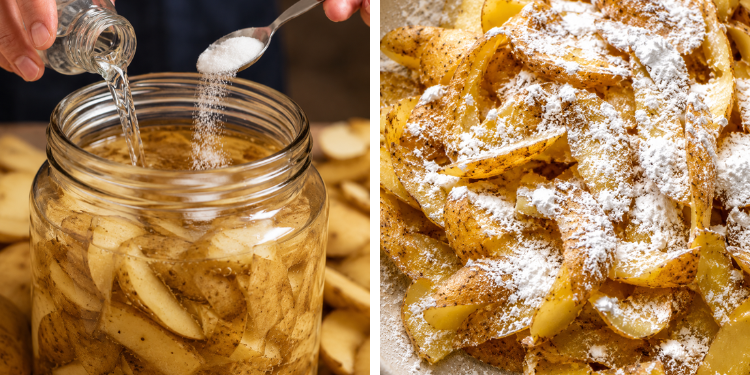
The Method: Wash a handful of raw potato peels, keeping them slightly damp. Generously sprinkle baking soda directly across the scorched or rusted surface of your cookware, or apply the powder straight onto the fleshy, wet underside of the potato skins.
-
The Action: Use the baking-soda-coated potato peel exactly like a disposable scrubbing sponge, pressing firmly in circular motions over the stained areas. The oxalic acid in the potato juice instantly goes to work chemically breaking down metallic rust, while the starch binds to burnt-on grease, and the baking soda lifts away the debris. Rinse thoroughly with warm water to reveal a clean, polished metal surface.
2. Clearing Sluggish Sink Drains and Deodorizing Pipes
Kitchen sink drains constantly cope with a steady buildup of viscous animal fats, cooking oils, and food debris, leading to slow drainage and sour, unpleasant odors.
-
The Method: Place your leftover potato peels into a pot of water and bring it to a rolling boil for 10 to 15 minutes, allowing the hot water to extract the dense, concentrated starches from the skins. While the water boils, pour 1/2 cup of baking soda straight down your sluggish sink drain.
-
The Action: Carefully strain out the solid peels, and pour the boiling, starch-heavy potato water directly down the drain over the baking soda. The hot water melts hardened grease, the baking soda creates a bubbling action that scours the pipe walls, and the starchy water wraps around loose oil molecules, flushing them cleanly out of your plumbing system.
3. Creating an Enzyme-Rich Soil and Plant Booster
Beyond cleaning, this combination can be repurposed into a wonderful, nourishing liquid fertilizer for indoor houseplants or outdoor container gardens.
-
The Method: Place your raw potato peels into a large glass jar, fill it with water, and add 1 teaspoon of baking soda. Seal the container and let it sit at room temperature for 24 to 48 hours to ferment.
-
The Action: Potato skins are naturally packed with potassium, phosphorus, and magnesium—the core nutrients plants need to build strong roots and vibrant foliage. The minor addition of baking soda helps neutralize the water’s pH, keeping foul fermentation odors at bay and discouraging fungal spores from taking root in your soil. Strain the liquid, dilute it 50/50 with fresh water, and use it to water your garden beds for a natural boost.
Cleaning Performance Comparison
| Cleaning Challenge | Standard Chemical Cleaner | Potato Peel + Baking Soda Mix | Environmental Impact |
| Cookware Rust & Scorch | Uses harsh synthetic acids; requires heavy rubber gloves | Oxalic acid in potato juice dissolves rust; baking soda gently polishes | Completely safe, non-toxic, and chemical-free |
| Sluggish Sink Drains | Uses toxic, corrosive lye; can melt or warp thin PVC pipes | Hot starchy water melts fat; baking soda neutralizes foul odors safely | Safe for septic systems and municipal water |
| Plant Nutrition | Synthetic chemical sprays; can cause chemical burn on leaves | Fermented potassium and minerals paired with pH-balancing sodium | Zero chemical runoff; completely circular recycling |
4 Steps to Prepare and Use the Mixture Safely
To get the absolute best results from your kitchen scraps while avoiding common mistakes, follow this simple preparation checklist:
Embracing zero-waste kitchen solutions changes how you view everyday waste. Combining potato peels with a simple scoop of baking soda turns basic food scraps into a powerful, multi-purpose tool.