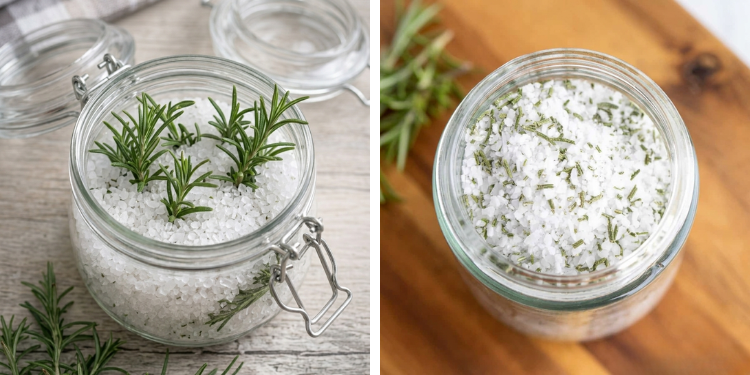
If you keep up with home wellness trends or traditional cleaning remedies, you have likely come across the practice of placing rosemary sprigs and coarse salt inside an open glass jar indoors.
Proponents claim this simple combination cleanses indoor air, neutralizes lingering food odors, keeps small pests away, and acts as a passive, natural freshener for living spaces.
But can two basic kitchen ingredients really make a noticeable difference in your home’s air quality and atmosphere?
To test the claims, I set up a simple 7-day experiment using fresh garden rosemary sprigs and coarse sea salt in an open mason jar on my kitchen counter.
Here is a breakdown of the chemistry behind this traditional remedy, the day-by-day results, and how you can prepare your own jar at home.
The Chemistry: Why Rosemary and Salt Work Together
The combination of fresh herbs and coarse mineral salt relies on two well-established physical and biological mechanisms: hygroscopic moisture absorption and essential oil diffusion.
-
Hygroscopic Moisture Binding: Coarse salts (like sea salt, kosher salt, or Himalayan pink salt) are naturally hygroscopic. They attract water vapor directly from the surrounding air. Because household odor molecules often travel bound to microscopic airborne water droplets, the salt draws in humidity and traps those lingering scents inside the jar.
-
Volatile Oil Release: Fresh rosemary (Salvia rosmarinus) leaves contain high concentrations of volatile essential oils – specifically 1,8-cineole (eucalyptol), camphor, and alpha-pinene. As the salt draws slight moisture out of the bruised rosemary leaves, it pulls these essential oils to the surface, allowing a steady, subtle pinene scent to diffuse naturally across the room without any synthetic chemicals or heat.
-
Antimicrobial and Preservative Properties: Salt acts as a natural preservative. Instead of the cut rosemary wilting, turning slimy, or growing mold in a jar, the salt dehydrates the plant material just enough to preserve the needles while maintaining oil potency for weeks.
The 7-Day Experience Log
For seven days, I kept an open 16-ounce glass jar filled with layered coarse sea salt and bruised fresh rosemary sprigs on my main kitchen counter, right between the stove and sink area.
Comparison: Rosemary & Salt Jar vs. Common Air Remedies
| Feature / Metric | Rosemary & Salt Jar | Commercial Plugin Freshener | Baking Soda Box |
| Primary Mechanism | Essential oil diffusion + moisture draw | Synthetic fragrance evaporation | Chemical acid-base neutralization |
| Chemical Safety | 100% natural, non-toxic | May contain phthalates/VOCs | 100% natural, non-toxic |
| Aroma Profile | Herbal, piney, subtle | Strong, synthetic perfumed | Completely odorless |
| Insect Deterrent Value | High (due to camphor & cineole) | Low | None |
| Average Lifespan | 3 to 4 weeks | 30 days | 30 to 60 days |
How to Prepare a Rosemary and Salt Jar at Home
Creating your own jar takes less than five minutes using common household items:
Pro-Tip for Upcycling: Don’t throw the salt away when replacing the herbs! The salt will be heavily infused with essential rosemary oils. You can reuse the herb-scented salt as an aromatic outdoor doorstep scrub or mix it into hot water as a foot soak base.
Key Benefits Observed Over the Week
-
Subtle, Non-Synthetic Scent: Unlike artificial sprays that cover up smells with heavy perfumes, the jar produces a natural forest aroma that keeps rooms smelling clean.
-
Zero Electricity or Flame: It provides passive, safe freshening for homes with pets or small children without needing tea lights, wax warmers, or wall plugs.
-
Low-Cost & Zero Waste: The entire setup costs pennies – especially if you grow your own rosemary in your garden or on a sunny windowsill.
Placing a jar of rosemary and salt indoors is a simple, effective, and low-cost way to improve your home’s daily atmosphere while repurposing fresh garden herbs.