Many traditional kitchen practices were developed long before modern pest-control products existed. Home cooks relied on simple natural methods to protect their stored foods from insects and spoilage.
One surprisingly effective trick that has been passed down for generations is placing bay leaves inside containers of flour.
At first glance, mixing bay leaves with flour might seem unusual. However, this method has a practical purpose: helping to deter pantry pests that commonly infest dry food products.
The bay leaf comes from the evergreen herb Laurus nobilis, which is widely used in cooking for its aromatic flavor. But beyond its culinary use, bay leaves contain strong natural oils that many insects dislike.
For decades, households around the world have placed bay leaves in bags or jars of flour, rice, beans, and other grains to discourage pantry pests such as weevils and moths.
Why Pantry Pests Are a Common Problem
Pantry pests are small insects that feed on stored grains and dry foods.
Some of the most common pests include:
• Flour weevils
• Grain beetles
• Pantry moths
• Rice weevils
These insects can enter homes in several ways.
Sometimes they arrive in packaged foods from the store. Eggs may already be present inside bags of flour or grains before they reach the pantry.
Other times, adult insects enter through small cracks or gaps in cabinets.
Once inside, they reproduce quickly and spread to other stored foods.
Because flour and grains provide an ideal food source, infestations can grow rapidly if not addressed.
The Role of Bay Leaves in Pest Prevention
Bay leaves contain aromatic compounds that produce their distinctive scent.
These compounds include cineole, eugenol, and other natural oils.
Many insects rely on smell to locate food sources and communicate with other members of their species.
The strong scent of bay leaves can disrupt this process.
While bay leaves do not kill insects, their aroma may help discourage pests from settling in food containers.
For this reason, placing bay leaves near stored foods has long been used as a natural deterrent.
Why Flour Is Especially Vulnerable
Flour is one of the most common foods affected by pantry pests.
Because flour is finely ground and nutrient-rich, it provides an ideal environment for insects to feed and reproduce.
Flour containers that are loosely sealed or stored for long periods may become vulnerable to infestation.
Warm temperatures and humidity can also increase the risk.
Once insects enter flour, they can spread quickly to nearby grains, cereals, and baking ingredients.
Using simple preventative methods helps reduce the chances of infestation.
How Mixing Bay Leaves with Flour Works
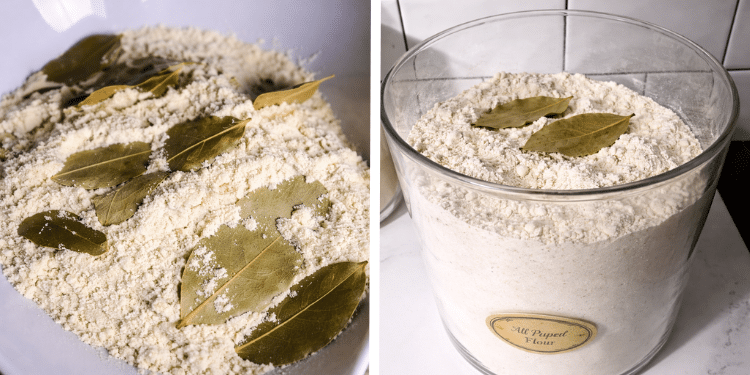
The traditional method involves placing whole dried bay leaves inside flour containers or storage jars.
The leaves release aromatic oils that fill the container with their scent.
This scent may help discourage insects from entering or remaining in the flour.
Because the leaves are dry and whole, they do not affect the quality of the flour.
They simply act as a natural aromatic barrier.
Some households place a few leaves on top of the flour, while others insert them along the sides of the container.
Additional Foods That Benefit from Bay Leaves
Although flour is the most common product protected by this method, bay leaves can also be used with other dry foods.
These include:
• Rice
• Beans
• Lentils
• Pasta
• Cornmeal
• Oats
Placing bay leaves inside containers of these foods may help discourage pantry pests from settling there.
The leaves are often replaced every few months to maintain their aroma.
How to Use Bay Leaves in Flour Storage
Using bay leaves in flour storage is simple and requires only a few steps.
First, transfer flour into an airtight container if possible.
Glass jars, metal tins, or sealed plastic containers work well.
Next, place two or three dried bay leaves inside the container.
Position the leaves near the surface or along the edges of the flour.
Close the container tightly and store it in a cool, dry location.
The bay leaves will gradually release their aroma inside the container.
Replace the leaves every few months if the scent fades.
Why This Method Became Popular
Before modern food packaging, pantry foods were often stored in cloth sacks or wooden containers.
These storage methods allowed insects easier access to grains and flour.
Natural deterrents like bay leaves, cloves, and dried herbs were commonly used to protect food supplies.
Because bay leaves were widely available and inexpensive, they became one of the most popular choices.
Even today, many people continue this practice because it is simple and chemical-free.
Additional Natural Pantry Pest Prevention Tips
While bay leaves can help discourage insects, they work best when combined with proper storage practices.
Several other strategies can help protect pantry foods.
Storing dry foods in airtight containers prevents insects from entering.
Keeping pantry shelves clean removes food particles that attract pests.
Rotating stored foods regularly ensures older items are used before they sit too long.
Inspecting newly purchased grains before storing them can also help detect early infestations.
These habits greatly reduce the chances of pantry pests developing.
Freezing Flour as an Extra Precaution
Some people choose to freeze flour for a few days after purchasing it.
Freezing helps kill insect eggs that may be present in packaged products.
After freezing, the flour can be stored normally in airtight containers.
Combining freezing with bay leaf storage offers an extra level of protection.
This practice is particularly helpful in warm climates where pantry pests are more common.
The Importance of Airtight Storage
Even the best natural deterrents cannot replace proper food storage.
Airtight containers are the most effective way to prevent pests from entering flour.
Containers made from glass or heavy plastic provide strong barriers against insects.
Keeping containers tightly sealed also protects flour from humidity, which can cause spoilage.
Using bay leaves inside airtight containers provides an additional layer of protection.
Do Bay Leaves Affect the Flavor of Flour?
Many people worry that bay leaves might change the flavor of flour.
Fortunately, whole dried bay leaves release only a mild aroma.
Because the leaves are not crushed or mixed directly into the flour, they usually do not affect the taste of baked goods.
The leaves simply sit inside the container and provide a subtle herbal scent.
If desired, they can be placed in a small piece of cloth or tea bag inside the container.
Other Traditional Kitchen Herbs for Pest Control
In addition to bay leaves, several other herbs have historically been used to deter pantry pests.
These include:
• Cloves
• Rosemary
• Mint
• Lavender
These herbs contain aromatic oils similar to those found in bay leaves.
Some households combine several herbs together to create natural pest-repellent sachets for pantry shelves.
Why Natural Pantry Solutions Remain Popular
Natural pest prevention methods remain popular because they offer simple and chemical-free alternatives to synthetic pesticides.
Many people prefer using herbs and spices that are already part of their kitchen.
These methods are inexpensive and easy to apply.
Although they may not eliminate severe infestations, they can help reduce the likelihood of pests appearing in the first place.
Combining natural deterrents with good storage practices creates a safer food storage environment.
Mixing bay leaves with flour may sound like an unusual kitchen trick, but it is actually a long-standing household tradition designed to protect pantry foods from insects.
The aromatic compounds in bay leaves produce a scent that many pantry pests dislike, helping discourage them from settling in flour and other grains.