Almost everyone has experienced that sudden, uncomfortable shift in their abdomen: a sharp, stabbing pressure, a dull, heavy ache, or a stomach that feels so tight and distended it feels like a balloon.
Trapped gas and bloating are among the most common digestive complaints, yet they are often misunderstood.
While bloating refers to the internal sensation of swelling or physical distention of the abdomen, trapped gas is the literal, mechanical buildup of air pockets within the twists and turns of your gastrointestinal tract.
While chronic or painful bloating should always be evaluated by a healthcare professional, everyday trapped gas can usually be relieved using simple, biologically sound strategies.
Here are seven practical, fast-acting tips designed to break up gas bubbles, accelerate digestion, and help you find rapid relief.
1. Execute the “Wind-Relieving” Yoga Pose (Apanasana)
When gas is physically trapped in the loops of the colon, changing your posture can alter the internal pressure gradients of your abdomen, helping to physically guide the gas pockets toward elimination.
One of the most effective mechanical stretches for this is the traditional yoga pose Apanasana, appropriately translated as the “wind-relieving pose.”
How to do it:
-
Lay flat on your back on a comfortable surface, keeping your spine and neck relaxed.
-
Slowly bend your knees and pull them up toward your chest.
-
Clasp your hands around your shins or behind your knees, gently pulling your thighs down against your abdomen.
-
Hold this position for 1 to 2 minutes while taking deep, slow diaphragmatic breaths. As your abdomen expands against your thighs during inhalation, it applies a gentle internal massage to your organs.
-
For added relief, rock slowly from side to side to help mechanically shift the trapped air bubbles out of the intestinal bends.
2. Deploy a Targeted, Clockwise Abdominal Massage
Your large intestine forms a literal frame around your abdomen, beginning in the lower right quadrant (ascending colon), traveling up and across below your ribs (transverse colon), and heading down the left side (descending colon).
Massaging your stomach in a random, haphazard direction can actually push gas backward, worsening the pressure. Instead, follow the natural path of digestion.
The Clockwise Protocol:
-
Lay flat on your back with your knees slightly bent to relax your abdominal muscles.
-
Place your fingers in your lower right quadrant (near the hip bone). Apply gentle, firm, circular pressure, moving upward toward your right ribcage.
-
Sweep across your upper abdomen, just below the ribs, over to the left side.
-
Move downward along the left side of your abdomen toward your left hip bone.
-
Repeat this rhythmic, clockwise loop 10 to 15 times. This focused friction stimulates peristalsis—the involuntary, wave-like muscular contractions of the intestinal walls—helping to push trapped air pockets forward.
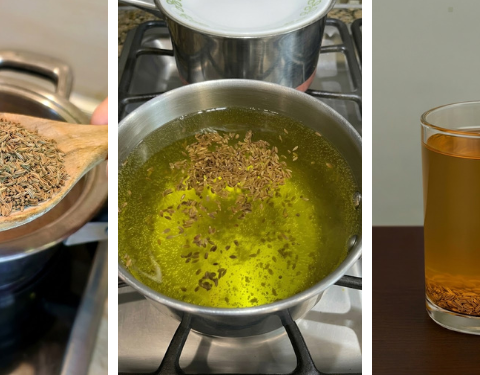
3. Sip a Hot Cup of Peppermint or Ginger Tea
When your digestive tract is stressed, the smooth muscles of your intestinal walls can spasm and tighten, locking air bubbles in place. Hot, herbal infusions work as natural anti-spasmodic agents to loosen these tight tissues.
-
The Peppermint Mechanism: Peppermint contains menthol, an organic compound that has a direct, relaxing effect on the smooth muscle lining of the GI tract. By relaxing these muscles, the intestinal walls can widen slightly, allowing trapped gas to pass through smoothly and painlessly. Note: Avoid peppermint if you suffer from severe acid reflux or GERD, as it can also relax the lower esophageal sphincter, potentially triggering heartburn.
-
The Ginger Mechanism: Ginger is a classic carminative – a substance that helps soothe the digestive tract and expel gas. It acts as a natural prokinetic, meaning it speeds up the rate at which food empties from the stomach into the small intestine, preventing the sluggish, stagnant state where food ferments and generates excess gas.
4. Take a Brisk 15-Minute Walk
When you are bloated and in pain, curling up into a ball on the couch is a natural reaction. However, physical stillness slows your digestive tract down even further. Movement is one of the fastest, most effective ways to clear trapped air pockets.
A brisk 15-minute walk introduces gentle, rhythmic vertical vibration and movement to your internal organs. It stimulates the muscles of your core and abdomen, which actively encourages your intestines to contract and move stagnant gas along.
Additionally, standard physical movement triggers the release of nitric oxide in the blood vessels supplying your gut, which improves circulation and boosts overall digestive efficiency.
5. Implement the Deep Diaphragmatic “Belly Breathing” Technique
When we experience sudden abdominal discomfort, our natural response is to take shallow, rapid breaths into our upper chest. This chest breathing can cause you to swallow air inadvertently, exacerbating your bloating issues.
By contrast, shifting into deep diaphragmatic breathing acts as a natural, highly effective internal pump for your digestive tract.
The 4-7-8 Breathing Method:
Inhale slowly through your nose for a count of 4 seconds, focusing on expanding your belly outward while keeping your chest completely still. Hold that breath for 7 seconds.
Finally, exhale completely through your mouth with a soft “whoosh” sound for a full 8 seconds, pulling your belly button back toward your spine.
As the diaphragm muscle drops down into the abdominal cavity during a deep inhalation, it applies light physical pressure to the stomach and intestines.
This downward motion, paired with the release during exhalation, acts like an internal piston, breaking up large, stubborn gas bubbles into smaller, easily passed pockets.
6. Prime Your Gut with Apple Cider Vinegar Before Meals
If your bloating and gas frequently occur within an hour of eating a meal, the root cause could be a lack of adequate stomach acid.
When stomach acid levels are low, dense foods—especially proteins and complex carbohydrates—sit stagnant in your stomach for too long.
This delayed processing leads to premature fermentation, releasing a steady stream of carbon dioxide gas that expands your stomach like a balloon.
To optimize your digestive environment, try drinking a natural acidifier roughly 15 to 20 minutes before you eat your main meal.
Mix 1 tablespoon of raw, unfiltered apple cider vinegar into a large glass of warm or room-temperature water.
The acetic acid in the vinegar temporarily lowers the pH inside your stomach, priming your gastric juices to break down food efficiently and helping to stop gas before it ever forms.
Always drink this mixture through a straw to protect your tooth enamel, and rinse your mouth with plain water afterward.
7. Avoid the Silent Culprits: Carbonation, Straws, and Chewing Gum
Sometimes, the best way to relieve trapped gas is to stop introducing excess air into your digestive tract from the outside world.
A significant percentage of trapped gas isn’t actually produced by gut bacteria fermenting food; it is simply swallowed air—a condition known clinically as aerophagia.
If you are currently struggling with high bloating, eliminate these habits for a few days. Drink directly from the rim of a glass, opt for flat, filtered water instead of sparkling varieties, and skip the gum.
These small lifestyle adjustments can drastically lower the amount of external air entering your stomach, allowing your intestines to clear existing gas pockets and return to a comfortable, flat state.
While occasional trapped gas and bloating are uncomfortable, they are usually harmless, temporary byproducts of digestion.
However, you should listen to your body and recognize when a symptom requires a closer look.