If you’ve ever grown cucumbers sprawling across the ground, you know how quickly they can take over your garden beds.
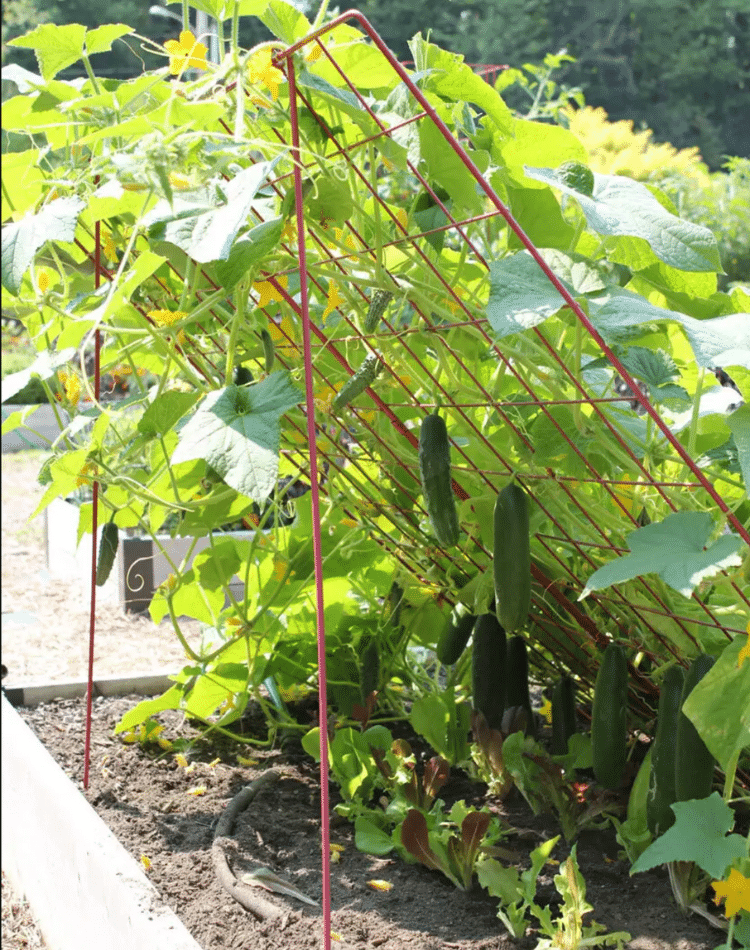
Those twisting vines love to run, turning once-tidy plots into a tangled jungle. But there’s a smarter, more efficient way to cultivate cucumbers that saves space, boosts yields, and results in healthier plants: growing cucumbers on a trellis.
Trellising cucumbers isn’t just a neat gardening trick – it’s a transformative method that can elevate your gardening game, whether you’re planting in raised beds, containers, or a large backyard plot.
Let’s dive deep into the many reasons why you should grow cucumbers on a trellis, how to do it successfully, and the countless benefits this vertical approach brings to your garden.
The Problem with Growing Cucumbers on the Ground
Cucumbers are vigorous growers. Left to sprawl, each vine can extend six to ten feet long – or more!
This ground-hugging habit creates several problems:
- Wasted Space: A few cucumber plants can swallow entire garden beds, leaving little room for other crops.
- Pest Issues: Ground-level leaves and fruit are magnets for insects like cucumber beetles, squash bugs, and slugs.
- Disease Risk: Moist conditions under dense foliage promote fungal diseases like powdery mildew and downy mildew.
- Misshapen Fruit: Cucumbers hidden under leaves or lying on soil often develop curved or yellowed sides.
- Difficult Harvesting: Crawling on your hands and knees through vines makes harvesting tedious – and easy to miss ripe fruits.
Growing cucumbers vertically eliminates many of these challenges and transforms cucumbers into one of the easiest, most rewarding crops in your garden.
1. Trellising Saves Precious Garden Space
Perhaps the biggest advantage of growing cucumbers on a trellis is space efficiency.
Instead of letting vines spread horizontally, you guide them upward. Vertical growing can reduce each plant’s footprint to just a few square feet.
This makes trellising perfect for:
- Small backyards
- Urban gardens
- Raised beds
- Balconies and patios
A single trellis can support several plants, allowing you to fit more crops into limited space. For gardeners dreaming of maximizing their harvests in tight quarters, trellising is the answer.
2. Improved Air Circulation Reduces Disease
Cucumber plants are prone to diseases like:
- Powdery mildew
- Downy mildew
- Bacterial wilt
When vines grow along the ground, leaves overlap and trap moisture, creating a humid microclimate ideal for pathogens. A trellis lifts vines into the air, improving air circulation and keeping foliage drier.
Benefits of better airflow include:
- Faster drying after rain or watering
- Less fungal infection risk
- Reduced pest hiding spots
- Healthier overall plant growth
Simply growing vertically can mean the difference between a thriving cucumber crop and one devastated by disease.
3. Healthier, Cleaner Fruit
Trellised cucumbers are:
- Cleaner: Fruits grow off the soil, away from dirt and splashing mud.
- Straighter: Hanging cucumbers develop uniform shapes because gravity encourages straight growth.
- Better colored: Sun exposure all around the fruit promotes even coloring and reduces yellow spots.
These aesthetic improvements aren’t just for looks – they translate into higher-quality produce for your kitchen table or farmers’ market stand.
4. Easier Harvesting
Crawling through vines is one of the biggest frustrations with ground-grown cucumbers. Fruits hide under leaves, and harvesting becomes a game of hide-and-seek.
With a trellis:
- Fruits hang visibly from the vines.Harvesting takes minutes, not hours.
- No more squishing plants as you search for hidden cucumbers.
- Less bending or kneeling, saving strain on your back and knees.
Easier harvesting also means you’re less likely to miss cucumbers, helping prevent oversized, bitter fruits that reduce overall production.
5. Maximizes Sunlight Exposure
Cucumber plants crave sunlight to fuel their rapid growth and fruit production. In ground-level beds, overlapping vines shade leaves and reduce photosynthesis.
Trellising ensures:
- Leaves receive maximum sunlight from all angles.
- Plants produce more energy, supporting higher yields.
- Lower risk of leaves becoming shaded and turning yellow.
By growing upward, you give every part of the plant a fair share of sunshine, leading to healthier vines and bigger harvests.
6. Protects Against Soil-Borne Pests and Rot
Cucumbers lying on the ground are vulnerable to:
- Slugs and snails
- Squash bugs
- Rot from wet soil contact
When fruits hang in the air, pests have a harder time reaching them, and soil moisture doesn’t cling to developing cucumbers. This drastically reduces spoilage and pest damage.
7. Higher Yields Per Square Foot
Vertical gardening is famous for increasing yields per square foot. Trellising cucumbers means:
- Better pollination as flowers are exposed and accessible.
- More airflow and light result in healthier, more productive plants.
- Less fruit loss to pests or rot.
Gardeners often report significantly higher harvests from trellised cucumbers compared to those sprawling on the ground.
8. Versatility for Containers and Raised Beds
If you garden in containers or raised beds, trellising isn’t optional – it’s essential. Without vertical support, cucumber vines quickly overflow pots or raised edges.
Benefits in small spaces:
- Efficient use of vertical real estate.
- Prevents vines from overwhelming neighboring plants.
- Keeps pathways clear and tidy.
Even a balcony gardener can grow cucumbers successfully with a simple trellis and a large pot.
9. Creates Garden Beauty and Structure
Beyond practical benefits, trellises add architectural interest to your garden. A trellis laden with green vines and dangling cucumbers is both functional and beautiful.
Trellises:
- Provide vertical accents that draw the eye.
- Soften fences or garden walls.
- Create shade or privacy screens.
- Encourage wildlife like beneficial insects and bees.
Whether you choose rustic wooden frames, metal grids, bamboo teepees, or arched tunnels, cucumber trellises can become focal points in your garden design.
Types of Trellises for Cucumbers
Not all trellises are created equal. Your choice depends on your garden size, budget, and aesthetic preferences.
Here are popular options:
A-Frame Trellis
- Two slanted sides forming an A shape.
- Easy to build with wood or bamboo.
- Allows cucumbers to hang inside for easy picking.
Vertical Grid or Fence Trellis
- Tall panels of wire mesh, lattice, or string.
- Perfect for raised beds or garden edges.
- Good airflow and sunlight penetration.
Arch or Tunnel Trellis
- Creates a dramatic garden feature.
- Vines cover the arch, producing hanging fruit you can harvest while walking underneath.
- Fantastic for large gardens.
Teepee Trellis
- Poles tied together at the top, spreading out like a cone.
- Excellent for containers or small spaces.
- A charming visual addition.
Whatever design you choose, ensure it’s sturdy enough to support the weight of mature vines loaded with fruit.
How to Grow Cucumbers on a Trellis
Ready to give trellising a try? Follow these steps for success:
1. Choose the Right Variety
Some cucumber types are naturally suited for trellising:
- Vining or indeterminate cucumbers grow long, climbing vines.
- Bush types are compact and less suitable for vertical growing.
Good trellising varieties include:
- Marketmore
- Straight Eight
- Lemon cucumber
- Armenian cucumber
2. Plant Properly
- Space seeds or seedlings 12 inches apart along the trellis base.
- Provide well-drained, fertile soil enriched with compost.
- Water regularly, especially during fruit set.
3. Train the Vines
- As vines grow, gently tie them to the trellis using soft ties, twine, or strips of cloth.
- Avoid tight knots that damage stems.
- Guide tendrils onto the trellis for natural climbing.
4. Monitor for Pests
Even on a trellis, cucumbers can attract pests like cucumber beetles. Inspect plants regularly and address issues promptly.
5. Harvest Often
- Pick cucumbers frequently for continuous production.
- Smaller fruits often taste sweeter and crisper.
Common Mistakes to Avoid
- Overcrowding: Too many plants can lead to poor airflow and disease.
- Weak Supports: A flimsy trellis will collapse under mature vines.
- Neglecting Pruning: Remove excess side shoots if vines become too dense.
Growing cucumbers on a trellis isn’t just a clever gardening hack – it’s a game changer. It transforms cucumbers from sprawling space hogs into vertical, high-yielding, and visually stunning crops.
Whether you garden in a suburban backyard or a city balcony, trellising helps you save space, protect your harvest, and keep your garden healthy and beautiful.