When planning a summer garden, few annuals deliver the reliable, sun-drenched impact of marigolds (Tagetes).
Whether you favor the dense, pom-pom blooms of African varieties (Tagetes erecta) or the compact, multi-colored carpets of French marigolds (Tagetes patula), these rugged flowers are celebrated for their ability to thrive in intense heat, deter garden pests with their pungent aroma, and bloom continuously for months.
But as mid-summer arrives, every gardener encounters a familiar sight: the once-brilliant orange and golden petals begin to fade, turning into dry, brown, papery tufts.
This leaves many wondering: Do you actually need to deadhead marigolds?
The short answer is no, a marigold will not drop dead if you leave it alone. However, if your goal is to transform your plants from a sparse collection of scattered blossoms into an explosive, dense sheet of continuous color that lasts until the first winter freeze, understanding the botanical mechanics of deadheading is essential.
The Biological Engine: Why Deadheading Works
To understand why deadheading is such a powerful tool, you have to look at the lifecycle of an annual plant. Marigolds live, bloom, set seed, and die all within a single growing season.
Their primary evolutionary purpose is not to look pretty for your backyard barbecues; it is to pass on their genetics by producing seeds.
When a marigold flower is pollinated and begins to wither, the plant undergoes a profound hormonal shift. It stops directing nutrients and energy toward developing new flower buds.
Instead, it funnels its resources – namely sugars, nitrogen, and phosphorus – into the swelling base of the spent flower, where hundreds of needle-like seeds are forming.
If you leave these spent blooms on the plant, seed production takes over. The plant considers its biological mission accomplished, leading to a noticeable decline in new bud formation, long, leggy stems, and an overall tired appearance by late summer.
The Power of the Pinch: By removing the spent flower head before it can mature its seeds, you trick the plant’s hormonal system. Realizing it has failed to reproduce, the marigold hits the reset button, sending a surge of energy to the dormant lateral buds below, resulting in a massive wave of fresh, brand-new blossoms.
African vs. French Marigolds: Who Needs It Most?
While all marigolds benefit from a clean-up, the urgency of deadheading depends heavily on the specific variety growing in your garden beds.
African Marigolds (Tagetes erecta) – High Priority
African marigolds are the giants of the family, producing massive, dense flower heads that can reach the size of tennis balls.
Because these blossoms are so structurally complex and heavy, they require an immense amount of energy from the plant to develop and maintain.
-
The Problem: If left to go to seed, a single African marigold head can stall new flower production for weeks. Furthermore, their dense, tightly packed petals easily trap water from summer rainstorms or overhead watering, leading to gray mold (Botrytis) that can travel down the stem and infect healthy buds.
-
The Verdict: Deadheading African marigolds is highly recommended to maintain plant health and ensure continuous blooming.
French Marigolds (Tagetes patula) – Moderate Priority
French marigolds are much smaller, bushier, and produce a high volume of smaller, single or double blossoms.
-
The Problem: Because they are so prolific, deadheading every single spent bloom can feel like a full-time job. They possess a greater natural drive to keep pushing out flowers even while setting seed, but they will eventually become leggy and sparse if neglected completely.
-
The Verdict: While less urgent, a weekly or bi-weekly deadheading sweep keeps them compact, bushy, and visually striking.
Anatomy of a Marigold: Identifying Spent Blooms
Before you grab your garden snips, it is crucial to recognize exactly what you are cutting. For a beginner, a tightly closed, developing new flower bud can look remarkably similar to an old bloom that has just lost its petals.
Cutting off next week’s flowers by mistake is a quick way to thin out your display.
-
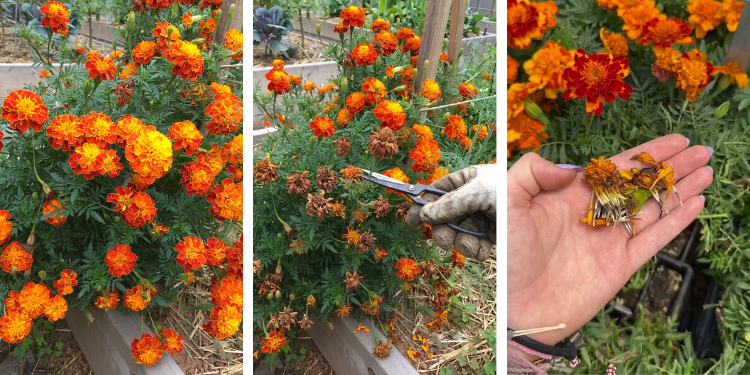
The Spent Bloom: The colorful petals will look shriveled, papery, and brown, often resembling a wet paintbrush after a rainstorm. If you look closely beneath the faded petals, the green base (the calyx) will appear noticeably swollen, elongated, and hard to the touch—this is the seed capsule forming.
How to Deadhead Marigolds Correctly: Step-by-Step
Many gardeners make the mistake of simply tugging on the dead petals, pulling them away while leaving the green base node intact on the plant.
This solves the visual problem but leaves the seed-producing factory running. True deadheading requires a clean, structural cut.
Harvesting the Gold: What to Do With the Spent Blooms
One of the greatest joys of growing marigolds is that their lifecycle offers incredible value even in death. Instead of tossing your deadheaded flower heads into the yard waste bin, you can harvest them to fuel future garden projects.
1. Collect Seeds for Next Spring
Marigolds are among the easiest plants in the world to grow from seed. If you have a particularly beautiful, vigorous plant, let a few spent blooms dry completely right on the stem in late summer.
Snip them off, pull open the swollen green base, and you will find a dense bundle of long, slender, two-toned black and white seeds that look like tiny paintbrushes.
Spread them on a paper towel to dry for a week, store them in a paper envelope, and you will have hundreds of free plants ready for next spring.
2. Create a Pest-Repelling Soil Amendment
Marigolds contain natural chemical compounds called alpha-terthienyls, which are highly toxic to destructive root-knot nematodes – microscopic worms that attack the root systems of tomatoes, potatoes, and peppers.
Collect your summer deadhead scraps, chop them finely, and bury them directly into your vegetable garden beds.
As the foliage decomposes, it releases these protective compounds, cleaning and conditioning the soil naturally.
Fueling the Second Wave: Post-Deadheading Care
Deadheading acts as the trigger for new growth, but to sustain a heavy, secondary bloom cycle throughout the late summer heat, your marigolds require a little foundational fuel.
-
Watering Etiquette: Always water marigolds at the base of the plant using a drip hose or watering can, rather than spraying them from above with a sprinkler. Keeping the foliage and heavy blossoms dry is the easiest way to prevent powdery mildew and flower rot, ensuring your fresh buds open cleanly.
-
The Low-Nitrogen Feeding Trick: If you want maximum flowers, avoid standard all-purpose garden fertilizers that are high in nitrogen (the first number in the N-P-K sequence). High nitrogen causes the plant to produce massive amounts of lush green leaves, but very few actual flowers. Instead, feed your marigolds once every two weeks with a liquid, phosphorus-rich “bloom booster” fertilizer (such as a 5-10-5 or 10-30-10 mix) to stimulate non-stop bud development.
By taking a few minutes each week to perform a clean, structural deadheading sweep, you disrupt the marigold’s internal clock.
You actively prevent the plant from retiring into seed production, locking it instead into a continuous loop of radiant, head-turning summer color that will bright up your landscape all the way to the first frost of autumn.