Succulents are one of the most versatile, low-maintenance, and visually stunning plants you can grow.
Their unique textures, shapes, and vibrant colors make them the perfect addition to any garden, whether indoors or outdoors.
If you’re looking to create a colorful and unique succulent garden, this guide will take you through everything you need to know—from selecting the right succulents to arranging and maintaining your garden.
Why Choose Succulents for Your Garden?
Succulents offer several advantages that make them ideal for any gardener, from beginners to experts:
- Drought-Resistant: Succulents store water in their leaves, making them perfect for dry climates.
- Low Maintenance: Require minimal watering and care.
- Aesthetic Appeal: Come in a variety of colors, shapes, and sizes to add visual interest.
- Versatile Planting Options: Can be grown in containers, vertical gardens, rock beds, or even indoor arrangements.
- Great for Small Spaces: Perfect for apartments, balconies, and compact gardens.
Now, let’s explore how to create a stunning succulent garden that stands out!
Step 1: Choosing the Right Succulents for a Colorful Display
To achieve a vibrant and diverse succulent garden, it’s essential to select a mix of colorful and uniquely shaped plants.
Here are some of the best succulents to include:
Colorful Succulents
- Echeveria ‘Perle von Nurnberg’ – A stunning succulent with soft purple and pink hues.
- Graptoveria ‘Fred Ives’ – Displays a mix of pink, purple, and orange tones.
- Sedum ‘Blue Pearl’ – Features rich blue-green leaves with a dusty finish.
- Crassula ovata ‘Hummel’s Sunset’ (Golden Jade Plant) – Turns golden yellow with red edges in sunlight.
- Kalanchoe luciae (Paddle Plant/Flapjack Plant) – Deep red margins develop under bright sunlight.
- Aeonium ‘Sunburst’ – Displays a striking mix of green, white, and pink hues.
Unique Textured Succulents
- Haworthia fasciata (Zebra Plant) – Features striped, spiky leaves for contrast.
- Senecio rowleyanus (String of Pearls) – Perfect for cascading displays.
- Sedum morganianum (Burro’s Tail) – Drapes beautifully over containers.
- Lithops (Living Stones) – Mimic pebbles, adding an intriguing element.
- Euphorbia lactea ‘White Ghost’ – A rare, creamy-white succulent with a ghostly appearance.
Step 2: Designing Your Succulent Garden Layout
Before planting, it’s important to plan your layout for a balanced and visually appealing arrangement.
1. Choose a Garden Type
There are several ways to display your succulents:
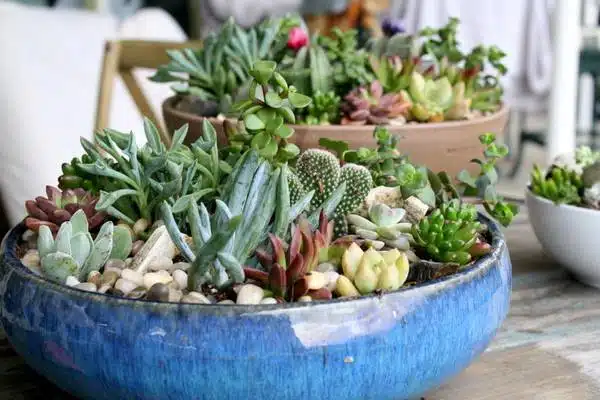
- Rock Garden: Use natural stones and gravel to mimic their native environment.
- Container Garden: Ideal for patios, balconies, and small spaces.
- Vertical Garden: Hang succulents in wall planters or pallet gardens.
- Fairy Garden: Create a whimsical, miniature landscape using succulents and decorative elements.
- Terrarium Garden: A great indoor option using glass containers and sand layers.
2. Create Contrast With Color and Shape
- Mix warm-toned succulents (reds, oranges, and yellows) with cool-toned ones (blues, purples, and greens) for a striking effect.
- Combine compact rosettes (Echeveria, Sempervivum) with trailing succulents (String of Pearls, Burro’s Tail) for depth.
- Use tall succulents (Aloe, Euphorbia) as focal points surrounded by smaller varieties.
3. Play with Layers and Heights
- Use different levels in containers or garden beds to create dimension.
- Arrange larger succulents at the back and smaller ones in the front for visibility.
- Consider raised planters for a dramatic display.
Step 3: Soil, Drainage, and Planting Tips
1. Choose Well-Draining Soil
Succulents need fast-draining soil to prevent root rot. Use:
- A cactus/succulent mix OR
- A DIY blend of potting soil + sand + perlite (1:1:1 ratio).
2. Select the Right Containers
- Ensure pots have drainage holes to prevent water accumulation.
- Use terracotta or ceramic pots to help wick away moisture.
- Consider shallow planters for grouping multiple succulents.
3. Planting Tips
- Space plants appropriately (about 2 inches apart) to allow growth.
- Loosen the root ball before planting to encourage root expansion.
- Add a top layer of gravel or decorative pebbles for aesthetics and moisture control.
Step 4: Caring for Your Succulent Garden
1. Watering
- Water deeply but infrequently (about once every 7-14 days).
- Allow soil to dry out completely between watering.
- Adjust frequency in winter (reduce watering to once a month).
2. Sunlight & Temperature
- Most succulents thrive in 4-6 hours of bright, indirect sunlight per day.
- Gradually introduce them to full sun to prevent sunburn.
- Protect from extreme frost (below 40°F/4°C) by moving indoors if necessary.
3. Fertilizing
- Use a diluted succulent fertilizer (half-strength) once a month during the growing season (spring & summer).
- Avoid over-fertilizing, which can lead to leggy growth.
4. Pest Prevention
- Watch out for mealybugs, aphids, and spider mites.
- Use neem oil or a mild soap spray for natural pest control.
- Keep airflow around plants to prevent fungal issues.
Step 5: Adding Decorative Elements to Enhance Uniqueness
To make your succulent garden stand out, consider adding:
- Decorative Stones & Pebbles – Use colorful or polished rocks for a stylish touch.
- Driftwood or Logs – Incorporate rustic elements for a natural look.
- Glass Terrariums – For modern and sleek indoor displays.
- Fairy Garden Accessories – Tiny bridges, figurines, or miniature houses for a magical touch.
- Hanging Planters & Wall Art – Vertical succulent gardens create a striking effect.
Final Thoughts
Creating a colorful and unique succulent garden is easy and enjoyable with the right plant selection, layout, and care routine.
Whether you want a small tabletop arrangement or a large outdoor succulent display, these tips will help you design a stunning garden that thrives with minimal effort.
Are You Ready to Start Your Succulent Garden?
With a little creativity and planning, you can transform any space into a vibrant, low-maintenance succulent paradise. Let us know in the comments which succulents you’re excited to grow! 🌵✨
Frequently Asked Questions (FAQs)
1. Can I grow succulents indoors?
Yes! Just ensure they receive bright indirect sunlight and are planted in well-draining soil.
2. How often should I water my succulents?
Water only when the soil is completely dry, typically once every 7-14 days.
3. Can I mix succulents with other plants?
Yes, but ensure companion plants have similar water and light requirements.
4. What is the best time to repot succulents?
Spring and early summer are ideal for repotting and propagation.
Now, go ahead and create your dream succulent garden!