
Walk into a bathroom where steam from hot showers regularly lingers on tiles and mirrors, and you are witnessing the primary challenge of bathroom maintenance: trapped moisture.
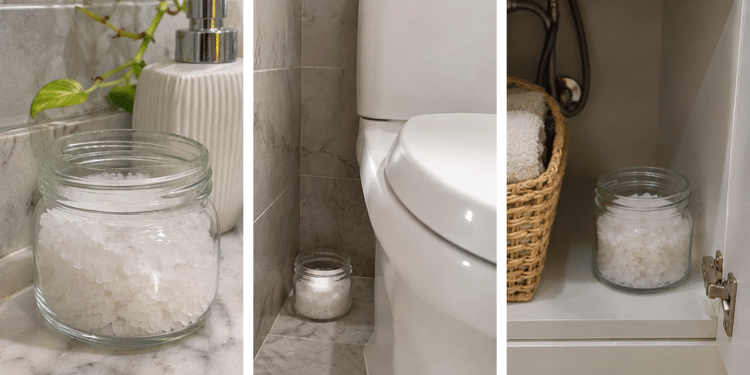
While modern homes rely on exhaust fans and chemical dehumidifiers to keep bathrooms dry, an old-fashioned, budget-friendly domestic ritual has resurfaced across eco-friendly cleaning and home care circles: placing small dishes or breathable jars of coarse salt in the corners of the bathroom.
At first glance, putting kitchen salt on a bathroom floor or shelf seems like an unusual habit—one frequently associated with traditional folk purification or Feng Shui energy cleansing.
However, viewing this practice through the lenses of physical chemistry, thermodynamics, and indoor air microbiology reveals a straightforward scientific function: coarse sodium chloride acts as a natural, passive hygroscopic desiccant that helps pull excess ambient moisture and odor-carrying vapor out of stagnant bathroom corners.
Here is an evidence-based look at the chemistry behind placing coarse salt in bathroom corners, the specific benefits it offers, how it compares to commercial moisture absorbers, and a step-by-step protocol for using it effectively.
The Physical Chemistry: How Coarse Salt Absorbs Bathroom Moisture
To understand why a small bowl of salt alters the micro-environment in a bathroom corner, it helps to examine the molecular behavior of sodium chloride in humid air.
1. Hygroscopic Action and Deliquescence
Sodium chloride is naturally hygroscopic, meaning its crystalline surface attracts and binds water vapor molecules directly from the surrounding air.
When indoor relative humidity exceeds roughly 75%—a threshold routinely crossed in bathrooms during and immediately after warm showers—salt crystals undergo a physical phase transition known as deliquescence.
At this critical relative humidity threshold, the salt absorbs so much atmospheric moisture that it gradually dissolves into a concentrated liquid brine solution inside the container.
2. Why Bathroom Corners Trap Stagnant Humidity
Even in bathrooms equipped with ceiling exhaust fans, air circulation follows the path of least resistance—typically moving straight from the door gap toward the central ceiling vent.
Room corners, areas behind the toilet tank, and spaces tucked beneath vanity cabinets become aerodynamic dead zones.
Warm, moisture-laden air settles into these stagnant pockets and condenses against cooler porcelain and tile surfaces. Placing open containers of coarse salt directly in these corners targets localized pockets of trapped humidity before condensation can feed fungal spores.
3. Odor Trapping Through Moisture Reduction
Unpleasant bathroom odors—such as musty mildew smells and volatile sulfur or ammonia compounds—travel primarily suspended in airborne water vapor.
As coarse salt pulls moisture out of the corner air, it simultaneously traps water-soluble odor molecules within the forming brine, leaving the space smelling fresher without synthetic air fresheners.
4 Main Reasons People Place Coarse Salt in Bathroom Corners
1. Reducing Mold and Mildew Growth in Grout Corners
Mold spores (Aspergillus, Penicillium, and Cladosporium) require sustained surface moisture to germinate and colonize silicone caulking and tile grout.
By lowering localized humidity in stagnant floor corners and behind the toilet, coarse salt helps keep vulnerable grout lines drier between regular cleanings.
2. Eliminating Musty Damp Odors Without Synthetic Fragrances
Plug-in air fresheners and aerosol sprays mask bathroom odors by releasing synthetic phthalates and volatile organic compounds (VOCs) into small, poorly ventilated rooms.
Coarse salt provides a completely odorless, non-toxic alternative that addresses the damp air driving musty smells.
3. Protecting Bathroom Cabinetry and Baseboards from Warping
In older bathrooms with wooden vanities, painted MDF baseboards, or closet doors, persistent corner humidity causes wood fibers to swell, peel, and warp over time. Tucking small containers of salt into lower vanity corners helps buffer humidity spikes and protect woodwork.
4. Upgrading with Essential Oils for Natural Aromatherapy
Because coarse salt crystals possess a textured, high-surface-area structure, they act as an ideal passive carrier for pure essential oils.
Adding 10 to 15 drops of tea tree, eucalyptus, or lavender oil to the salt adds natural antimicrobial vapors and a clean, spa-like aroma whenever bathroom steam warms the air.
Bathroom Moisture & Odor Control Methods Compared
| Method | Moisture Absorption Capacity | Odor Control Mechanism | Chemical & Air Safety | Ongoing Cost & Maintenance |
| Coarse Salt in Corners | Moderate (Activates above 75% RH) | Traps water-soluble odor vapor | 100% Non-toxic & fume-free | Very low (approx 0.50$ month; replace when wet) |
| Calcium Chloride Tubs (e.g., DampRid) | Very High (Activates at lower humidity) | High (Absorbs large water volumes) | Safe if undisturbed (Corrosive brine if spilled) | Moderate (4.00 – 7.00$ per disposable tub) |
| Baking Soda Dish | Low (Forms surface crust quickly) | High (Chemically buffers acidic odors) | 100% Non-toxic | Very low (approx 1.00$ month) |
| Electric Dehumidifier | Extremely High (Extracts liters per day) | Moderate (Prevents dampness) | Safe (Requires electrical outlet safety) | High upfront cost + continuous electricity |
Step-by-Step: How to Set Up Coarse Salt in Your Bathroom
Follow this practical setup protocol to maximize moisture absorption while preventing messy brine spills on bathroom floors:
Important Limitations and Safety Precautions
While placing coarse salt in bathroom corners is an effective supplementary habit, understanding its physical boundaries prevents frustration or floor damage:
-
Not a Replacement for Exhaust Fans: Coarse salt works best in small bathrooms, half-baths without windows, and tight corners. It cannot absorb gallons of shower steam on its own; always run an exhaust fan or crack a window for 15 to 20 minutes after hot showers.
-
Protect Stone and Metal Surfaces: As salt undergoes deliquescence, liquid brine can occasionally creep over shallow dish edges. Never place open salt bowls directly on natural marble, travertine, or unsealed wood, as concentrated salt water etches stone and strips wood finishes. Always use deep-walled glass or glazed ceramic dishes.
-
Keep Out of Reach of Pets: Cats and dogs may lick exposed salt crystals out of curiosity, which can cause gastrointestinal upset or sodium toxicity. Place containers behind closed vanity doors or on elevated shelves in pet-friendly homes.
Placing coarse salt in the corners of your bathroom is a simple, zero-waste habit grounded in basic hygroscopic chemistry—helping control stagnant corner humidity, reduce musty odors, and keep your bathroom fresher between cleanings.