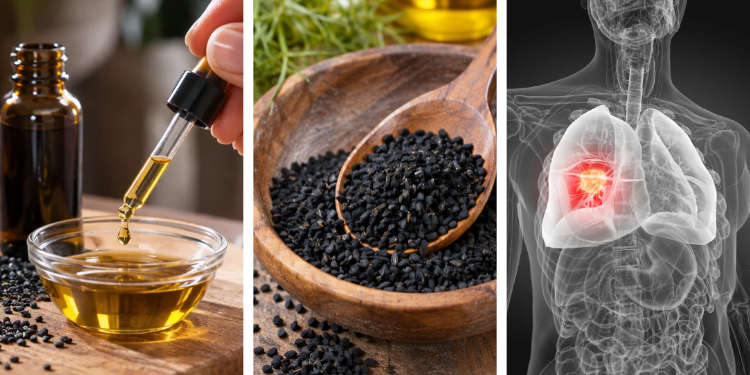
In recent years, viral social media posts, natural health blogs, and video headlines have circulated an extraordinary claim: that black seed oil (or its active component) can “destroy up to 80% of cancer cells in just 48 to 72 hours.”
Derived from the seeds of Nigella sativa, an annual flowering plant native to Eastern Europe, the Middle East, and Western Asia, black seed oil has a rich history spanning thousands of years in traditional medicine systems like Ayurveda, Unani, and traditional Islamic healing.
However, when ancient herbal remedies are paired with precise statistical claims like “80% cell reduction in 72 hours,” it creates high expectations for patients seeking alternative or integrative treatments.
To evaluate this claim accurately, it is essential to examine where this 80% figure comes from, what scientific studies actually showed in the laboratory, and why there is a massive difference between killing cultured cells in a dish and curing cancer in a living human body.
The Origin of the Claim: In Vitro Laboratory Studies
The claim that black seed oil or its extracts can wipe out roughly 80% of cancer cells within 72 hours is not made up out of whole cloth; rather, it represents a selective reading of preliminary laboratory (in vitro) cell culture experiments.
Over the past two decades, academic researchers across the globe—including notable studies at Thomas Jefferson University, the University of Windsor, and various international medical institutes—have tested extracts of Nigella sativa against isolated human cancer cell lines in glass petri dishes.
What the Laboratory Experiments Actually Found:
-
Targeted Cancer Cell Lines: Researchers applied isolated thymoquinone (TQ)—the main bioactive phytochemical in black seed oil—or concentrated alcoholic extracts of the seed directly onto cultured human cancer cells, including pancreatic, colon, lung, prostate, and head and neck squamous cell carcinoma lines.
-
High-Dose Cytotoxicity: At specific high concentrations (typically between 40 to 80 uM of pure thymoquinone) and over exposure times of 48 to 72 hours, researchers observed a dramatic drop in cell viability—often reaching 70% to 80 % cell growth inhibition or cell death compared to untreated control dishes.
-
Sparing Healthy Host Cells: In several of these dish assays, the isolated extract exhibited a degree of selectivity, causing significantly more damage to malignant cells than to surrounding non-cancerous control cells.
While these results are scientifically intriguing and provide a rationale for further research, taking numbers from a 72-hour petri dish assay and representing them as a human treatment success is a major scientific misinterpretation.
The Chemistry: What Makes Thymoquinone Bioactive?
To understand why Nigella sativa exhibits biological activity under a microscope, it helps to examine its active chemical constituents. Cold-pressed black seed oil contains a mixture of fatty acids, essential oils, and specialized phytochemicals:
1. Thymoquinone (TQ)
Thymoquinone is a natural benzoquinone compound that accounts for a large portion of black seed oil’s bioactivity. In laboratory models, TQ acts as a powerful antioxidant, anti-inflammatory agent, and pro-apoptotic molecule.
2. Mechanisms of Action Observed in Cells
In test tubes, pure thymoquinone targets multiple signaling pathways that cancer cells rely on for survival:
-
Induction of Apoptosis: TQ disrupts the outer mitochondrial membrane of cancer cells, causing them to release cytochrome c and activate caspase enzymes, effectively triggering the cell’s internal self-destruct program.
-
Downregulation of NF-kB: Nuclear factor kappa B (NF-kB) is a protein complex that controls DNA transcription and promotes cancer cell survival, inflammation, and resistance to therapy. TQ has been shown to block NF-kB signaling in cultured cells.
-
Inhibition of Angiogenesis: In laboratory tissue models, TQ inhibits vascular endothelial growth factor (VEGF), helping block the signal cancer cells use to grow new blood vessels to feed a tumor.
The Medical Reality: Petri Dishes vs. Living Human Bodies
The central flaw in viral headlines about black seed oil is the assumption that what happens inside a laboratory glass dish (in vitro) will automatically happen inside a human body (in vivo).
Many substances can obliterate cancer cells in a petri dish—including household bleach, rubbing alcohol, and extreme heat—but that does not make them safe or effective internal treatments for human cancer.
| Feature | In Vitro (Laboratory Petri Dish) | In Vivo (Living Human Body) |
| Exposure Method | Pure, concentrated extract poured directly onto isolated cells | Drunk as an oil or taken orally; broken down by stomach acid and liver enzymes |
| Active Concentration | High, constant micro-molar doses applied for 72 straight hours | Highly diluted; low bioavailability in bloodstream and distant tissues |
| Metabolic Obstacles | None (no liver breakdown, kidney clearance, or tissue barriers) | Rapid liver metabolism (first-pass effect) and excretion |
| Tumor Microenvironment | Simple 2D layer of single-type cells | Complex 3D structure with dense connective tissue, blood supply, and immune interactions |
| Clinical Standard | Preliminary discovery phase | Requires rigorous Phase I, II, and III human clinical trials |
The Bioavailability Problem
Raw black seed oil contains varying, relatively small percentages of thymoquinone (often less than 1% to 2% by weight). When a person swallows a teaspoon of black seed oil, the active TQ is metabolized rapidly by the digestive system and liver.
Reaching the high, concentrated micro-molar levels of TQ used in that 72-hour petri dish study inside a human organ would require consuming massive amounts of raw oil—doses that would cause severe gastrointestinal distress and potential toxicity long before reaching therapeutic levels in a tumor.
What Human Research Actually Shows
While laboratory research on thymoquinone is extensive, human clinical research specifically evaluating black seed oil as a primary cancer treatment remains in its infancy.
-
Early Phase I and Small Pilot Studies: Small exploratory human trials have looked at black seed extracts as an adjuvant (supportive) therapy alongside conventional treatments, such as evaluating its ability to reduce side effects from chemotherapy or improve oxidative stress markers.
-
No Completed Phase III Trials for Cancer Cures: There are currently no completed, peer-reviewed Phase III clinical trials proving that black seed oil or thymoquinone can cure, shrink, or replace standard cancer therapies in human patients.
Potential Risks and Medication Interactions
Using unverified natural supplements in high doses during active cancer care carries real medical risks:
-
Interference with Chemotherapy and Radiation: High-dose antioxidants can sometimes interfere with the oxidative mechanisms used by certain chemotherapy drugs and radiation therapy to destroy cancer cells.
-
Cytochrome P450 Enzyme Interaction: Thymoquinone can alter the activity of CYP450 liver enzymes. This can change how quickly the body metabolizes prescribed medications—including targeted oncology drugs, blood thinners, and immunosuppressants—leading to accidental under-dosing or toxic over-dosing.
-
Bleeding Risks: Black seed oil possesses mild anti-platelet and blood-thinning properties. Taking large amounts before surgery or alongside prescription anticoagulants increases the risk of excessive bleeding.
Summary: What the Evidence Says
Does black seed oil contain bioactive compounds like thymoquinone that show anti-cancer activity under a microscope? Yes. Laboratory studies confirm that concentrated TQ can inhibit tumor cell signaling pathways and trigger programmed cell death in isolated dishes.
Can black seed oil destroy 80% of cancer cells in a human patient in 72 hours? No. That claim takes a specific in vitro test-tube measurement and inaccurately presents it as a human medical reality.
Black seed oil remains a valuable dietary supplement with established antioxidant and anti-inflammatory benefits, but it is not a substitute for proven, evidence-based medical oncology.
Always consult your medical team before adding high-dose botanical oils or supplements to a cancer care routine to ensure safety and avoid dangerous drug interactions.