Hydrangeas are among the most beautiful flowering shrubs in the garden, producing spectacular clusters of pink, blue, purple, and white blooms throughout summer.
But as November arrives, these colorful plants begin preparing for winter. Their leaves turn yellow or brown, flowers fade, and growth slows as temperatures drop.
Many gardeners assume hydrangeas no longer need attention once flowering ends. However, what you do with your hydrangeas in November can make a big difference in how well they survive winter and bloom next year.
The biggest mistake is pruning at the wrong time. Some hydrangeas have already formed the flower buds that will produce next summer’s blooms, and cutting those stems now could remove an entire season of flowers.
Fortunately, preparing hydrangeas for winter doesn’t require complicated gardening techniques.
Here are seven important things to do with your hydrangeas in November to help them return healthy and full of flowers next year.
1. Don’t Prune Your Hydrangeas Too Early
November is not the time to give every hydrangea a major haircut.
Some varieties, particularly bigleaf hydrangeas (Hydrangea macrophylla) and oakleaf hydrangeas (Hydrangea quercifolia), produce flower buds on older stems during the previous growing season.
These buds remain on the plant throughout winter and open the following year.
If you cut back the branches in November, you may accidentally remove next summer’s flowers.
What to do: Leave healthy stems alone and remove only broken, dead, or clearly diseased branches.
If you’re unsure which hydrangea variety you have, it’s usually safest to postpone pruning until you can identify it.
Panicle and smooth hydrangeas generally bloom on new growth and can be pruned during dormancy, but late winter or early spring is often a convenient time.
November tip: Never assume all hydrangeas should be cut back in autumn. Their flowering habits determine when pruning is appropriate.
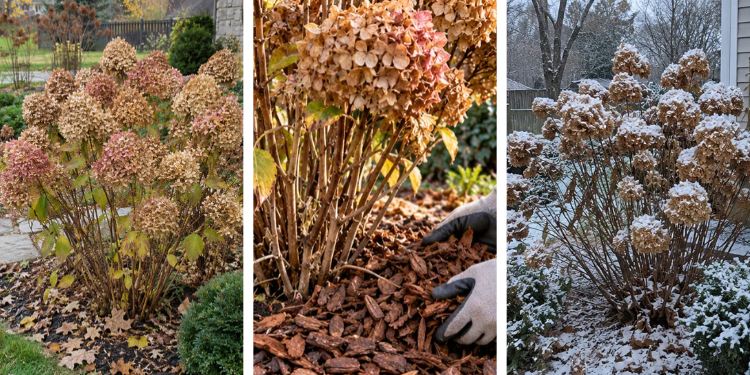
2. Leave the Dried Flower Heads for Winter Protection
Those faded hydrangea flowers may look finished, but they can still serve a purpose.
Dried flower heads add attractive structure to winter gardens, especially when covered with frost or snow.
Leaving them in place also helps gardeners avoid accidentally cutting into stems that contain next year’s flower buds.
Although the dried flowers themselves don’t provide reliable frost protection, keeping the stems intact is particularly important for old-wood-blooming varieties.
What to do: Allow healthy, dried flower heads to remain on the plant throughout winter.
If you prefer a tidier appearance, remove individual flower heads carefully without cutting back healthy stems or visible buds.
Save more extensive pruning until the correct season for your hydrangea variety.
November tip: A hydrangea covered in dried flowers isn’t necessarily neglected. Leaving the blooms in place can be a sensible part of winter care.
3. Add Mulch to Protect the Roots
Hydrangeas have relatively shallow root systems that benefit from protection against temperature fluctuations.
As November temperatures fall, the soil begins cooling, and repeated freezing and thawing can stress exposed roots.
A layer of organic mulch helps moderate soil temperatures and retain moisture.
It can also improve soil structure as it gradually decomposes.
What to do: Spread approximately 2–3 inches of shredded leaves, pine bark, or wood chips over the soil around your hydrangea.
Extend the mulch across the root zone, but keep it a few inches away from the main stems.
Avoid piling mulch directly against the crown, where trapped moisture can encourage decay.
In particularly cold climates, additional winter protection may be useful for vulnerable plants.
November tip: Mulch protects the root zone, but it doesn’t guarantee that flower buds on exposed branches will survive severe winter cold.
4. Water Deeply Before the Ground Freezes
Many gardeners stop watering their shrubs as soon as autumn arrives.
However, hydrangeas can still need moisture during November, particularly if the weather has been unusually dry.
Although deciduous hydrangeas are entering dormancy, their roots benefit from adequate soil moisture before the ground freezes.
Newly planted hydrangeas are especially vulnerable to drying out because their root systems aren’t fully established.
What to do: Check the soil several inches below the surface.
If it feels dry and there hasn’t been meaningful rainfall, water deeply around the root zone.
Allow the water to soak into the soil rather than applying small amounts every day.
Reduce watering when regular rainfall provides sufficient moisture, and avoid saturating poorly drained soil.
November tip: Hydrangeas don’t need constantly wet soil during winter. The goal is to prevent prolonged drought before freezing temperatures arrive.
5. Clean Up Fallen Leaves and Diseased Plant Material
November is an excellent time to tidy the area around your hydrangeas.
As leaves fall, they may carry fungal pathogens responsible for leaf spots and other diseases.
Leaving heavily infected foliage around the plant can contribute to recurring problems under favorable conditions.
However, healthy fallen leaves can still be useful as garden mulch when shredded and applied appropriately.
What to do: Remove leaves showing significant spotting, mildew, or other disease symptoms.
Collect diseased debris and dispose of it according to local gardening recommendations.
You can also remove dead weeds and unwanted plant material around the shrub.
Avoid aggressively digging or cultivating the soil because hydrangeas have shallow roots that are easily damaged.
November tip: Good garden sanitation can reduce some disease problems, but not every spotted leaf means your hydrangea is seriously unhealthy.
6. Protect Flower Buds From Harsh Winter Weather
If you grow bigleaf or mountain hydrangeas, winter bud protection may be especially important.
Many traditional varieties bloom primarily on old wood, meaning their flower buds must survive winter to produce flowers the following summer.
In colder climates, severe freezes can damage these buds even when the plant’s roots and lower stems survive.
This explains why some hydrangeas produce beautiful green leaves every year but very few flowers.
What to do: In areas with harsh winters, consider installing a loose burlap screen or wire enclosure around vulnerable shrubs.
Fill or surround the enclosure with dry, loose insulating material when sustained freezing weather begins, while avoiding tightly packed wet material against the stems.
Provide airflow and remove protection gradually when severe cold has passed.
Plants in sheltered locations may need less protection than those exposed to strong winter winds.
November tip: Reblooming hydrangeas can produce some flowers on new growth, but protecting their old-wood buds may still improve early-season blooming.
7. Stop Fertilizing and Let Your Hydrangeas Rest
Hydrangeas don’t need heavy feeding in November.
As daylight decreases and temperatures fall, the plants naturally slow their growth and prepare for dormancy.
Applying nitrogen-rich fertilizer late in the season may encourage tender growth in mild conditions.
This new growth may not have enough time to harden before freezing weather arrives.
Excessive fertilizer also won’t guarantee more flowers next year.
What to do: Stop routine fertilizing as your hydrangeas enter dormancy.
Avoid adding strong liquid fertilizers or large amounts of manure in an attempt to encourage spring flowering.
If your plants struggled during summer, consider testing the soil before making nutrient adjustments next year.
Hydrangeas generally benefit more from appropriate light, moisture, and pruning than from excessive feeding.
November tip: If your hydrangea didn’t bloom this year, incorrect pruning, winter bud damage, or insufficient sunlight may be responsible—not necessarily a lack of fertilizer.
Know Your Hydrangea Type Before Pruning
One of the most important things you can do for better blooms is identify the type of hydrangea growing in your garden.
Different varieties produce flowers on different types of growth.
- Bigleaf Hydrangea (Hydrangea macrophylla): Many varieties bloom on old wood, so avoid heavy autumn pruning. Some reblooming cultivars also flower on new growth.
- Mountain Hydrangea (Hydrangea serrata): Often blooms on old wood, although some cultivars rebloom. Protect healthy stems and buds during winter.
- Oakleaf Hydrangea (Hydrangea quercifolia): Blooms on old wood. November pruning can remove next year’s flower buds.
- Panicle Hydrangea (Hydrangea paniculata): Blooms on new growth. Pruning is generally best done during dormancy, often in late winter or early spring.
- Smooth Hydrangea (Hydrangea arborescens): Blooms on new growth and can be pruned during dormancy. Heavy pruning isn’t necessary for every cultivar.
The safest rule: If you don’t know what type of hydrangea you have, avoid cutting healthy branches in November.
Hydrangeas may look quiet in November, but they’re already preparing for another growing season.
The most important November secret is simple: don’t cut away next year’s flowers before they’ve had a chance to bloom.
Give your hydrangeas the right care now, and you’ll be helping them return with healthy foliage and gorgeous flowers when the warmer months arrive.