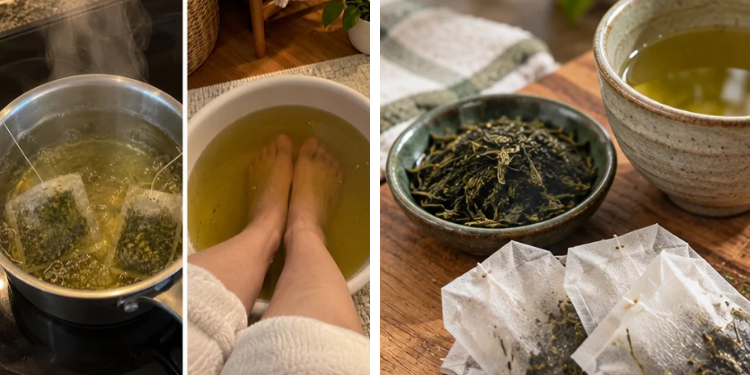
From luxurious day spas to traditional home wellness routines, foot baths have long been used to soothe tired muscles, relieve stress, and soften rough skin after a long day on your feet.
While Epsom salt and essential oil soaks are familiar staples, a growing natural wellness practice has gained widespread interest: soaking your feet in warm green tea.
Steeping feet in brewed green tea (Camellia sinensis) is far more than an relaxing self-care ritual. Rich in bioactive polyphenols, catechins, and natural organic acids, green tea provides target bio-chemical benefits for foot hygiene, skin inflammation, and foot odor.
In recent years, clinical researchers have turned their attention to green tea foot baths, conducting formal trials to test their effectiveness against persistent foot conditions like athlete’s foot (tinea pedis) and bacterial odor.
Here is a comprehensive breakdown of why people soak their feet in green tea, the biological mechanisms behind its action, and what the clinical research reveals.
The Phytochemistry: Why Green Tea Benefits Foot Health
Unlike herbal teas made from chamomile or mint, green tea is derived directly from unfermented Camellia sinensis leaves. This minimal processing preserves high concentrations of active botanical compounds:
1. Epigallocatechin Gallate (EGCG)
EGCG is the primary and most potent catechin in green tea. It is a powerful polyphenol known for its robust anti-inflammatory, antioxidant, and antimicrobial properties.
When applied topically, EGCG penetrates the stratum corneum (the outermost layer of skin), suppressing inflammatory cytokines and inhibiting bacterial growth.
2. Plant Tannins (Astringent Action)
Green tea contains high levels of tannins, polyphenolic biomolecules that bind to and precipitate proteins. Topically, tannins exert an astringent effect on human skin.
They shrink micro-pores, constrict superficial blood vessels, and reduce hyperhidrosis (excessive foot sweating) by temporarily tightening sweat duct openings.
3. Polyphenolic Deodorizing Compounds
Foot odor (bromhidrosis) is not caused directly by sweat itself, but by sweat-loving bacteria (such as Brevibacterium and Staphylococcus epidermidis) breaking down amino acids and dead skin into volatile organic compounds like isovaleric acid.
Green tea polyphenols actively inhibit the bacterial enzymes responsible for generating these malodorous compounds.
4 Main Reasons People Recommend Green Tea Foot Soaks
1. Neutralizing Severe Foot Odor Naturally
Because tannins restrict excessive perspiration and EGCG neutralizes odor-causing bacteria, daily green tea foot soaks offer a double-action defense against persistent foot odor without relying on synthetic aluminum-based antiperspirants.
2. Soothing Fungal Irritation and Itching
Fungal infections like athlete’s foot cause red, peeling, and intensely itchy skin between toes. Green tea’s natural antifungal properties inhibit fungal spore germination, offering natural symptomatic relief from burning and itching.
3. Softening Calluses and Rough Cracked Heels
Warm water combined with the mild acidic profile of tea polyphenols helps break down dead keratenized skin cells.
Soaking feet for 15 to 20 minutes softens stubborn heel calluses, making them easy to gently exfoliate with a pumice stone afterward.
4. Reducing Foot Swelling and Inflammation
After standing or walking for long hours, gravity causes fluid accumulation in the ankles and feet (pedal edema).
Warm green tea increases localized blood flow, while EGCG calms tissue inflammation, relaxing sore joints and arch muscles.
What Clinical Trials Found
While herbal remedies are often dismissed as mere folk medicine, green tea foot soaks have been evaluated in formal clinical settings with compelling results.
1. The Japanese Study on Athlete’s Foot (Tinea Pedis)
A notable clinical trial conducted in Japan examined the antifungal efficacy of green tea polyphenols on elderly patients suffering from interdigital athlete’s foot caused by Trichophyton rubrum (the primary fungus responsible for foot infections).
-
Study Design: Patients soaked their feet daily in a concentrated green tea extract solution or a control placebo bath over several weeks.
-
Results: Clinical evaluations showed a significant reduction in fungal colonies, skin scaling, and redness in the green tea group. Researchers concluded that the catechin EGCG directly damages the cell membranes of T. rubrum, inhibiting fungal hyphae growth without causing skin irritation.
2. Clinical Research on Bacterial Odor Reduction
In another dermatological study evaluating plant-derived astringents for palmoplantar hyperhidrosis and odor control, green tea baths demonstrated a marked decrease in skin surface bacterial counts.
Researchers noted that the tannin content reduced sweat production by up to 30% during post-soak testing windows, effectively starving odor-causing bacteria of the moisture needed to thrive.
Foot Bath Ingredients Comparison
| Soak Type | Active Mechanism | Best For | Sweat Reduction | Antifungal Strength |
| Green Tea Soak | Catechins (EGCG) & Tannins | Odor, sweating, & mild fungal relief | High (Astringent tannins) | Moderate to High (Clinically studied) |
| Epsom Salt Soak | Magnesium Sulfate | Muscle soreness & swelling relief | Low | Low |
| Apple Cider Vinegar | Acetic Acid (5%) | Heavy calluses & fungal infections | Moderate | High |
| Baking Soda Soak | Alkaline pH balance | Odor neutralization | Low | Low to Moderate |
Step-by-Step: How to Prepare a Green Tea Foot Soak at Home
To replicate clinical levels of polyphenol concentration at home, follow this simple preparation guide:
Guidelines and Frequency
-
For Foot Odor & Sweating: Soak feet 3 to 4 times per week for two weeks until sweating and odor subside, then reduce to once weekly for maintenance.
-
For General Relaxation: Enjoy a warm green tea foot soak 1 to 2 times a week as part of your evening self-care routine.
Soaking your feet in green tea is a simple, pleasant, and clinically backed habit that combines natural relaxation with proven antibacterial and antifungal benefits for healthier, fresher feet.