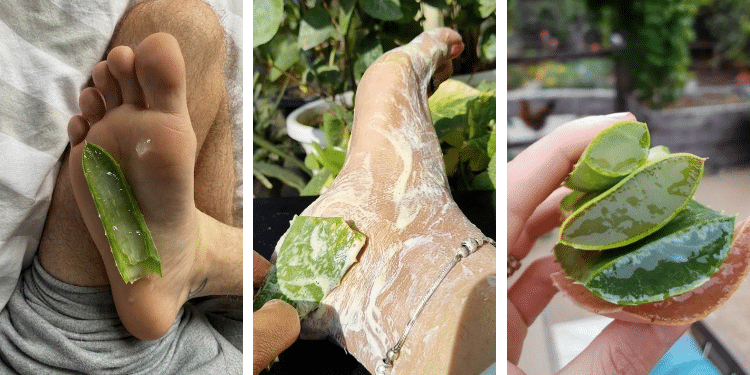
Our feet endure tremendous daily strain. Carrying our body weight through thousands of steps, trapped inside restrictive footwear, the skin on the soles of our feet undergoes constant friction, pressure, and dehydration.
Yet, foot care is often the most neglected aspect of daily personal grooming.
While heavy foot creams and petroleum jelly are traditional go-to solutions for dry heels, an increasing number of natural wellness enthusiasts are turning to a simpler botanical remedy: applying pure aloe vera gel to the feet immediately before sleep.
Extracted from the thick, succulent leaves of Aloe barbadensis Miller, aloe vera gel is comprised of roughly 99% water alongside a dense matrix of vitamins, minerals, amino acids, and active enzymes.
Applying this lightweight gel to your feet overnight allows these bioactive compounds to work undisturbed during your body’s natural nocturnal repair cycle.
The Phytochemistry of Aloe Vera Gel
To understand why aloe vera works so effectively on calloused foot tissue, it helps to examine its unique biochemical profile.
Unlike dense oils that sit primarily on the surface of the skin, aloe vera gel possesses rapid dermal penetration capabilities thanks to a specific polysaccharide called lignin.
-
Glucomannan & Acemannan: Key polysaccharides that stimulate fibroblast activity (cells responsible for producing collagen and elastin), accelerating the repair of micro-cracks on the heels.
-
Salicylic Acid & Anthraquinones: Naturally occurring compounds that act as gentle keratolytics, softening hardened callouses and exerting natural antibacterial and antifungal effects.
-
Vitamins C, E, & Zinc: Antioxidants that neutralize free radical damage caused by daytime friction and environmental stressors.
-
Bradykinase: An enzyme that helps reduce excessive skin inflammation and swelling when applied topically.
6 Noticeable Benefits of Overnight Aloe Vera Foot Application
When left to absorb uninterrupted for 6 to 8 hours under cotton socks, aloe vera gel produces several distinct physiological changes in the skin and underlying tissues of your feet.
1. Deep Hydration Without Heavy Grease
The skin on the soles of the feet contains no sebaceous (oil) glands – it relies entirely on sweat glands for moisture.
Consequently, soles dry out quickly. Aloe vera delivers deep cellular hydration without leaving a greasy residue on your bedsheets.
Lignin helps carry moisture deep into the epidermal layers, restoring elasticity to dry, leathery soles.
2. Softening of Hardened Callouses and Cracked Heels
Heel fissures occur when dry skin under heavy pressure loses its flexibility and cracks. The combination of glucomannan (which boosts collagen synthesis) and natural salicylic acid gently loosens dead skin cells overnight.
Within a week of consistent application, deep heel cracks begin to soften, fill in, and smooth out.
3. Relief from Daytime Foot Fatigue and Swelling
Standing or walking all day causes blood and fluid to pool in the lower extremities (peripheral edema). Aloe vera contains bradykinase and magnesium lactate, compounds known to soothe localized inflammation.
Paired with a brief evening massage, rubbing aloe vera into tired arches and heels encourages lymphatic drainage and relaxes overworked plantar fascia tissues.
4. Natural Odor Control and Antifungal Protection
Dark, moist shoes create a prime environment for bacterial and fungal growth (such as tinea pedis, or athlete’s foot).
Aloe vera contains six natural antiseptic agents: lupeol, salicylic acid, urea nitrogen, cinnamonic acid, phenols, and sulfur.
Applying gel overnight helps neutralize odor-causing bacteria and prevents minor fungal spores from colonizing the webbed spaces between toes.
5. Cooling Sensation that Promotes Restful Sleep
Aloe vera has a natural cooling effect upon application. This temperature drop activates thermal receptors in the skin, sending calming signals to the nervous system.
For individuals who suffer from “hot feet” at night or restless legs, this cooling sensation provides an immediate physical trigger that helps relax the body for sleep.
6. Soothing Irritation from Tight Shoes or Blisters
If your day involved breaking in new shoes or enduring friction hot-spots, aloe vera acts as an immediate soothing agent.
Its glycoprotein content speeds tissue recovery and reduces redness, preventing minor friction spots from developing into painful water blisters.
Aloe Vera Foot Care vs. Traditional Foot Products
| Comparison Factor | Pure Aloe Vera Gel | Petroleum Jelly / Mineral Oil | Heavy Commercial Foot Creams |
| Absorption Depth | Deep (enhanced by lignin) | Surface-level barrier only | Variable (often surface-level) |
| Greasiness | Zero (dries smooth) | Extremely high / staining | High |
| Keratolytic Action | Natural (salicylic acid) | None | Synthetic (urea or lactic acid) |
| Antimicrobial Properties | High (sulfur, phenols, lupeol) | None | Requires added chemical preservatives |
| Pore Clogging Potential | Non-comedogenic | High occlusive barrier | Moderate to High |
The Step-by-Step Nighttime Aloe Vera Protocol
To maximize the therapeutic benefits of overnight aloe vera foot treatments, follow this simple 4-step evening routine:
What to Expect: Timeline of Results
-
After Night 1: Your feet will feel noticeably cooler, calmer, and free from morning stiffness. The skin will feel soft rather than greasy.
-
After 7 Days: Rough callouses around the big toe and heel margins begin to soften significantly. Flaking skin and minor cracks look visibly hydrated and less pronounced.
-
After 3 Weeks: Skin elasticity on the soles is largely restored, deep fissures heal, and general foot odors are noticeably reduced.
Incorporating a 3-minute aloe vera massage into your nightly bedtime routine is a low-cost, natural habit that turns sleep into an active recovery window for your feet.