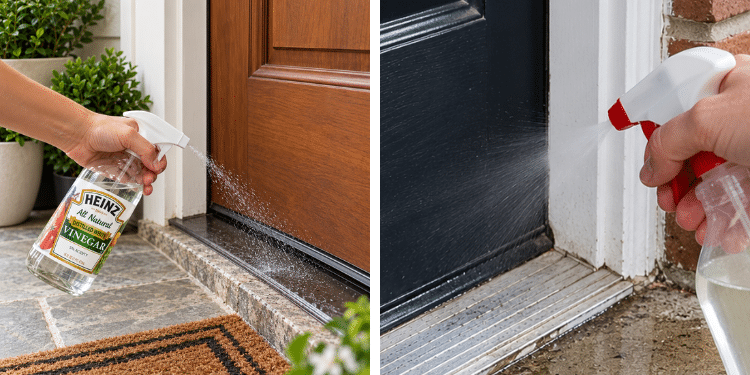

If you pay close attention to the entryways, porch steps, and door frames of homes in your neighborhood, you might occasionally spot a homeowner lightly misting a clear liquid around their front door threshold.
While it might look like a simple cleaning task, spraying distilled white vinegar at your home’s main entrance is an old, highly effective household tradition that has gained immense popularity among advocates of eco-friendly, non-toxic home care.
Your front door acts as the primary transition zone between the outdoor environment and your indoor living space. It is an entry point not just for family and guests, but also for crawling insects, airborne odors, dirt, and unwanted microbes.
By utilizing the chemical properties of acetic acid, spraying vinegar at your entrance creates an all-natural, budget-friendly barrier that repels pests, eliminates lingering odors, cleans door hardware, and cleanses the entryway environment without relying on toxic synthetic pesticides or artificial aerosol sprays.
The Chemistry: Why Vinegar Works at the Doorway
To understand why a simple spray of white vinegar works so well at home entrances, it helps to examine the active chemistry of distilled white vinegar.
1. Acetic Acid Disrupts Insect Scent Trails
Standard household white vinegar contains approximately 5% acetic acid dissolved in water. To humans, acetic acid has a sharp, sour scent that quickly dissipates as it dries.
However, to crawling insects—most notably ants, spiders, and cockroaches—acetic acid acts as a powerful chemical disruptor.
-
Erasing Ant Pheromone Pathways: Ants communicate and navigate by leaving invisible chemical scent trails (pheromones) along floorboards and door sweeps. When a worker ant finds a food source inside your kitchen, it leaves a trail for thousands of others to follow. Spraying vinegar along the threshold completely dissolves these lipid-based pheromone trails, confusing incoming scout ants and forcing them to retreat.
-
Olfactory Deterrent for Spiders and Crawling Bugs: Spiders and other crawling pests possess delicate chemical sensory organs on their legs and mouthparts. Walking across a surface treated with acetic acid causes intense sensory irritation, discouraging them from crossing the doorway threshold.
2. Acidic Neutralization of Organic Odors
Entryways frequently trap stubborn odors from wet shoes, muddy boots, dog paws, and damp doormats.
Rather than masking these smells with heavy synthetic perfumes that contain phthalates and volatile organic compounds (VOCs), acetic acid chemically binds to and neutralizes alkaline odor-causing compounds, breaking down the bacteria responsible for stale entryway smells.
4 Main Reasons People Spray Vinegar at Their Front Door
1. Non-Toxic Pest Defense for High-Risk Entry Points
Traditional chemical barrier sprays often contain synthetic pyrethroids or organophosphates that linger on floor surfaces.
For households with young children who play on the floor, or curious pets who sniff and lick door sills, these chemical sprays pose potential toxicity risks.
Vinegar provides a 100% food-safe, non-toxic alternative. Spraying the door sweep, threshold, and baseboard corners regularly prevents seasonal ant invasions and spider webs around the front porch without introducing dangerous toxins into your home.
2. Cleaning and Sanitizing Door Hardware and Glass
The front door handle, lock keyway, and glass side panels are among the highest-touch surfaces in any house, accumulating oils, fingerprints, and daily grime from incoming visitors.
Because vinegar is a mild acid, it cuts through greasy hand oils, dissolves water mineral spots on glass storm doors, and sanitizes door handles naturally, leaving your entryway gleaming and streak-free.
Entryway Barrier Comparison Matrix
| Method | Primary Active Agent | Pest Prevention Efficacy | Pet & Child Safety | Cost per Application | Environmental Impact |
| White Vinegar Spray | Acetic Acid (5%) | High (Erases scent trails & deters spiders) | 100% Non-Toxic & Safe | 0.05$ | 100% Biodegradable |
| Chemical Bug Sprays | Synthetic Pyrethroids | Very High (Kills on contact) | Toxic (Requires ventilation & caution) | 2.00 – 5.00$ | Persistent chemical runoff |
| Peppermint Oil Spray | Menthol Terpenes | High (Strong olfactory barrier) | Safe (Keep away from cat ingestion) | 0.30 – 0.50$ | Eco-friendly plant oil |
| Bleach Solution | Sodium Hypochlorite | Moderate (Disinfects, weak pest barrier) | Hazardous fumes & damages finishes | 0.10 – 0.25$ | Corrosive to door hardware |
3. Eliminating Mold and Mildew on Porch Frames
Shaded front porches and covered entryways often accumulate ambient humidity, creating an ideal breeding ground for green algae, black mold, and mildew along wooden door frames and concrete steps.
Vinegar’s low pH (2.5) penetrates porous surfaces like wood and grout, killing mold spores at their root structure and preventing recurring mildew stains on your front porch.
4. Cultural Symbolism: Cleansing the Home Environment
In many folk traditions across European, Latin American, and Mediterranean cultures, vinegar has long been used as a symbolic “space-cleansing” agent.
Spraying or washing the front threshold with vinegar was believed to cleanse the home of lingering negative energy, refresh the atmosphere for incoming guests, and welcome health and clarity into the living space.
Step-by-Step: How to Prepare and Spray Your Entryway
Setting up a vinegar doorway routine takes less than three minutes:
Important Precautions for Homeowners
-
Avoid Natural Stone Thresholds: Do not use vinegar on entryways made of unsealed marble, granite, limestone, or bluestone. The acetic acid can etch and dull polished natural stone surfaces over time. (Use a mild dish soap solution for stone entryways instead).
-
Mind Unsealed Metal Finishings: While vinegar is completely safe on painted wood, vinyl, and glass, avoid soaking unsealed iron or cheap metal hinges, as acid can accelerate surface oxidation if left wet.
Spraying vinegar at your home’s entrance is a simple, budget-friendly, and chemical-free habit that keeps entryways fresh, clean, and protected from unwanted pests completely naturally.