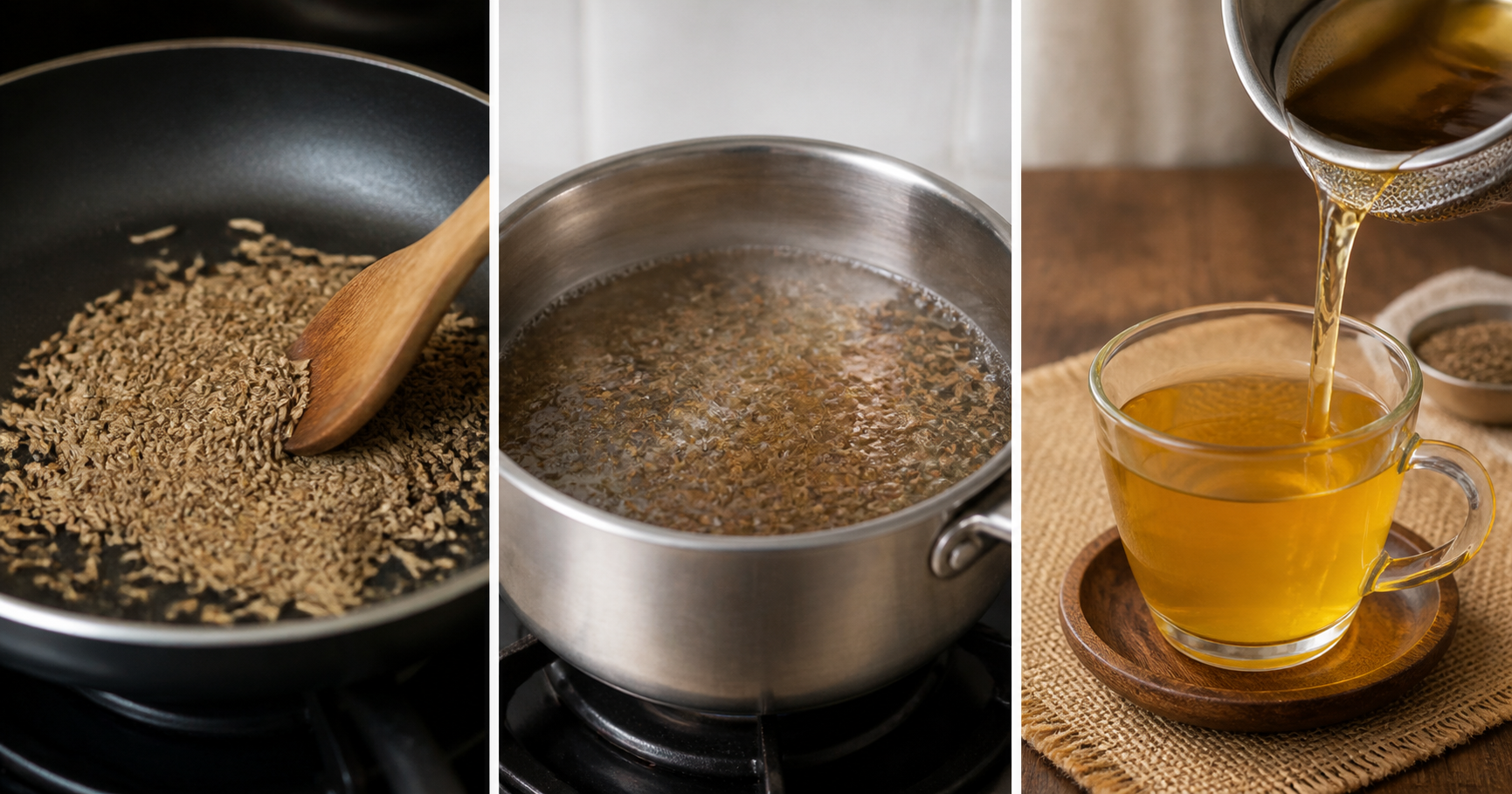
After a filling dinner, some people reach for peppermint tea. Others put a small pot of water on the stove, add cumin seeds, and let their earthy, slightly peppery aroma drift through the kitchen. This simple drink has long been served after meals in parts of South Asia and the Middle East, where cumin is a familiar cooking spice as well as a traditional digestive aid.
There’s no special equipment or hard-to-find ingredient involved: just cumin seeds, water, and a few quiet minutes. The drink is not a cure for indigestion, and the science behind cumin water is limited. Still, its gentle flavor, warmth, and long-standing place at the table help explain why many people enjoy it as an after-meal ritual.
Why cumin water has a place after dinner
Cumin, or Cuminum cyminum, is the narrow, ridged seed commonly used in curries, soups, stews, and spice blends. Heating the seeds releases fragrant oils that give them their distinctive warm, savory smell. Simmering them in water makes a mild infusion that is easy to sip after a meal.
In traditional food cultures, cumin has often been associated with digestion. Modern research has examined cumin in different forms, including extracts and supplements, but that is not the same as proving that a homemade cup of cumin-seed water settles the stomach. The drink’s appeal is more modest: it’s warm, caffeine-free, lightly flavored, and can be a pleasant alternative to another cup of coffee or a sugary dessert.
For some people, a warm drink after eating is comforting in its own right. The aroma can also make a simple cup of water feel like a deliberate pause at the end of a meal—one that encourages slower sipping rather than rushing back into the evening.
What people may appreciate about the drink
1. A soothing, warm finish
A warm beverage can feel comforting after a substantial meal, especially on a cold evening. That comfort is subjective, but it’s a perfectly reasonable reason to enjoy cumin water. Think of it as a gentle food tradition, not a treatment that is guaranteed to relieve bloating or heartburn.
2. Flavor without caffeine or much sweetness
Plain cumin water has a savory, earthy taste and contains no caffeine. If you usually want something to sip after dinner, it gives you another option besides coffee, soda, or sweetened tea. The flavor is subtle enough for many people, though a very strong brew can taste bitter or almost smoky.
3. An easy way to make hydration more appealing
Some people find plain water uninteresting, and a lightly flavored infusion can make it easier to drink. The amount of cumin used for a typical cup adds little to the drink’s overall substance; the main benefit here is simply having water in a form you enjoy. Cumin water should not be treated as a “detox,” fat-burning drink, or replacement for prescribed care.
How to make a simple cup
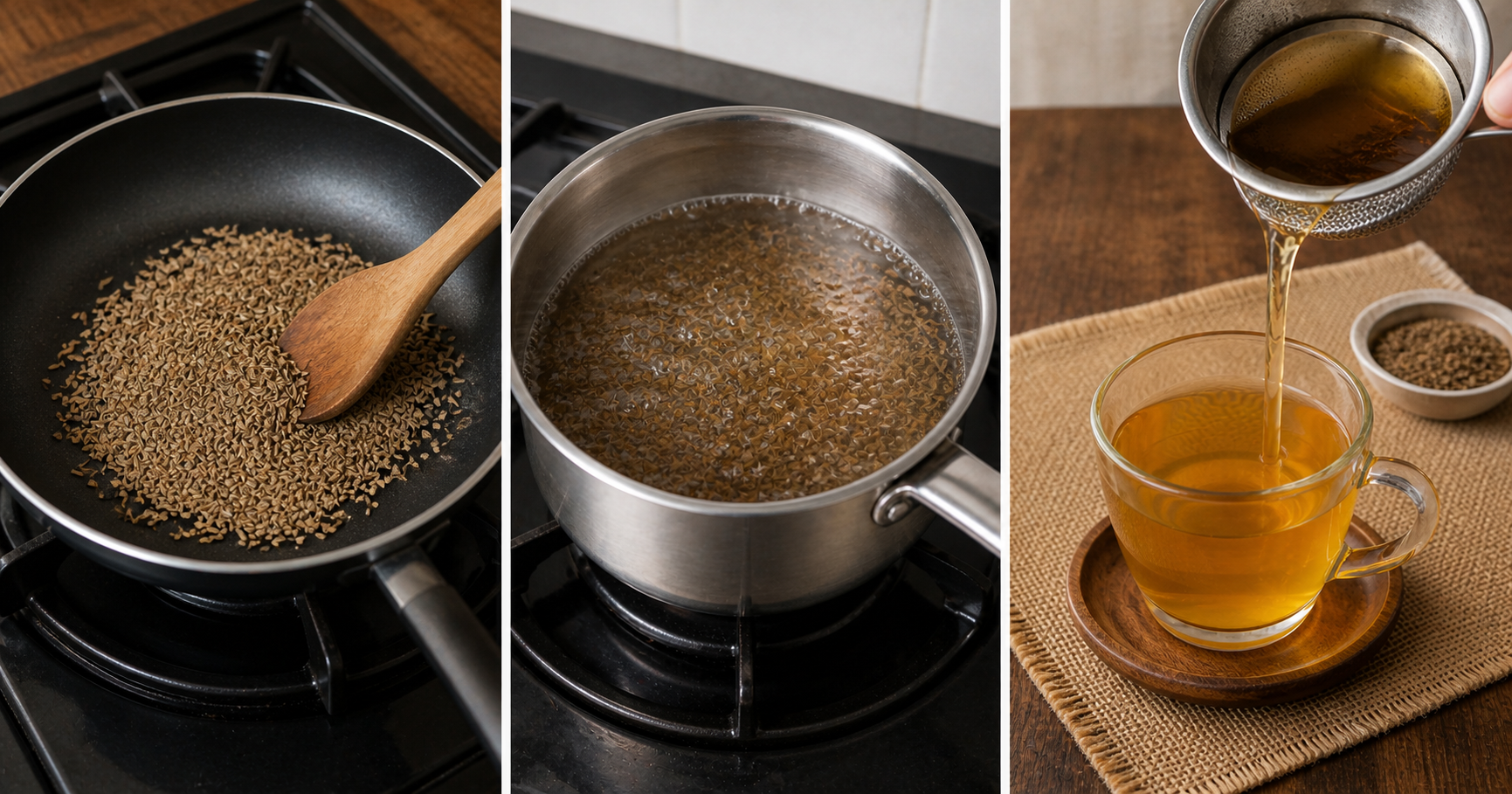
You can prepare cumin water in just a few minutes. Start with whole seeds rather than ground cumin; whole seeds are easy to strain and tend to make a cleaner-tasting infusion.
-
- Measure the ingredients: Use 1 teaspoon of whole cumin seeds for 2 cups of water.
-
- Warm the seeds: In a small saucepan, toast the seeds over low heat for about 30 seconds, stirring or shaking the pan. Stop when they smell fragrant; don’t let them darken or scorch.
-
- Add water: Pour in 2 cups of water and bring it to a gentle boil.
-
- Simmer: Lower the heat and simmer for 5 to 10 minutes. A shorter simmer makes a lighter drink; a longer one produces a more pronounced flavor.
-
- Strain and serve: Pour the liquid through a fine strainer into a mug. Sip it warm, or let it cool and refrigerate it for later.
This makes about two modest servings. If you’re trying cumin water for the first time, begin with a lightly brewed cup. You can adjust the amount of seed or simmering time to suit your taste, rather than making the first batch especially strong.
Small adjustments for a better-tasting brew
Toasting is optional, but it brings out cumin’s aroma. If you prefer a milder drink, skip that step and simply simmer the seeds in water. Crushing them lightly with the back of a spoon before simmering can deepen the flavor, though it may leave a few more particles in the finished cup.
A slice of fresh ginger can add a little heat, while a squeeze of lemon gives the drink a brighter edge. Try one addition at a time so the cumin remains noticeable. Honey is another option if you like a touch of sweetness, but the drink doesn’t need it.
-
- For a lighter cup: Use ½ teaspoon of seeds per 2 cups of water and simmer briefly.
-
- For a fuller aroma: Toast the seeds gently and simmer for closer to 10 minutes.
-
- For a batch: Double the recipe, cool it promptly, and keep it covered in the refrigerator. Reheat only the portion you plan to drink.
When to keep the ritual simple
Cumin is a common culinary spice, and the small quantity used in this recipe is similar to what might be used in cooking. But a food infusion is different from taking concentrated cumin supplements, which may have stronger effects and are worth discussing with a clinician or pharmacist if you use regular medications or manage a health condition.
Pay attention to how your own body responds. If cumin seems to worsen reflux, nausea, or another symptom, there’s no reason to keep drinking it. Anyone with persistent or severe digestive discomfort should seek medical advice rather than relying on a home drink to explain or treat the problem.
For everyone else, cumin water can be as simple as it sounds: a fragrant cup made from a pantry spice, enjoyed slowly after a meal. Its strongest claim may not be that it fixes digestion, but that it turns an ordinary glass of water into a comforting little ritual.