
If you have ever opened the antique dresser drawers of an experienced home organizer or explored a traditional linen chest, you might have noticed a subtle, warming spicy aroma escape from the folds of neatly stacked cotton sheets and wool sweaters.
Tucked quietly in the corners are often small, handmade fabric sachets packed with whole cloves (Syzygium aromaticum).
While modern commercial stores line their aisles with artificial plug-in warmers and toxic aerosol sprays, putting whole cloves in a small fabric sachet is an enduring, time-tested home care tradition.
By combining the natural barrier-forming properties of whole spices with breathable, natural fibers, this simple drawer trick protects your garments from pests, eliminates musty humidity, and keeps your wardrobe smelling fresh for months without a single drop of synthetic chemical fragrance.
The Chemistry: Why Whole Cloves Protect Wardrobes
To understand why this old-fashioned trick remains so effective, it helps to examine the biochemical profile hidden inside whole cloves.
1. Eugenol as a Natural Insect Repellent
The dominant chemical constituent in whole cloves is eugenol, an aromatic essential oil compound that typically makes up 70% of the spice’s total volatile oil content. Eugenol is a powerful natural insect repellent.
Common textile pests—such as web-spinning clothes moths (Tineola bisselliella), silverfish, and carpet beetles—rely on their delicate antennae to navigate and locate organic protein fibers like wool, silk, cashmere, and leather.
The intense vapor of eugenol overwhelms their olfactory receptors, driving them away from dark, undisturbed clothing drawers and preventing them from laying eggs on your favorite garments.
2. Slow-Release Essential Oil Diffusion via Fabric Sachets
When whole cloves are left completely exposed in open air, their essential oils evaporate quickly. When enclosed inside a porous fabric sachet (such as unbleached cotton, linen, or muslin), the fabric acts as a controlled semi-permeable membrane.
The weave allows the volatile eugenol vapors to diffuse slowly and evenly into the surrounding drawer space over several months, maximizing the lifespan of the aromatic oils.
4 Main Reasons People Put Cloves in Drawer Sachets
1. Protecting Natural Fibers from Moths and Silverfish
Synthetic fabrics like polyester and nylon are rarely touched by insects, but natural animal proteins (wool, cashmere, alpaca, silk, and feathers) are prime targets for hungry moth larvae.
Placing a clove sachet in every drawer containing sweaters, winter coats, or wool scarves creates an invisible aromatic shield, keeping your seasonal wardrobe entirely safe without the harsh, toxic smell of traditional naphthalene mothballs.
2. Eliminating Stale Drawer and Humidity Odors
Enclosed dressers and vintage wooden furniture frequently lack adequate air circulation, causing fabrics to develop a stale, musty smell over time—particularly during humid summer months.
The warm, spicy notes of clove neutralize organic odor molecules at the source. Instead of masking bad smells with artificial perfumes, clove sachets impart a clean, classic, timber-spice freshness to every shirt and pair of socks.
3. Non-Toxic Alternative to Commercial Air Fresheners
Many commercial drawer liners and scented paper sheets contain volatile organic compounds (VOCs), phthalates, and synthetic fixatives that can irritate sensitive skin or trigger respiratory discomfort. Whole cloves are a 100% natural, plant-based, and biodegradable botanical remedy.
4. Calming Aromatherapy for Sleepwear
The warm, earthy scent of cloves is known in aromatherapy for its grounding and comforting properties. Tucking a clove sachet into your pajama drawer or undergarment bin adds a subtle, soothing aroma to your nightly routine.
Wardrobe Protection Methods Compared
| Method | Primary Active Compound | Target Pests Prevented | Fabric Safety | Lifespan |
| Clove Fabric Sachet | Eugenol | Clothes moths, silverfish, beetles | 100% Safe (no chemical transfer) | 3 – 6 Months |
| Traditional Mothballs | Naphthalene / Paradichlorobenzene | Moths and larvae | Toxic (Leaves chemical residue) | 3 – 4 Months |
| Cedar Blocks / Chips | Cedrol terpenes | Moths (weak repellent) | Safe (loses scent quickly) | 1 – 2 Months |
| Commercial Scented Liners | Synthetic phthalates & fragrances | None (purely cosmetic) | May stain delicate silk items | 1-2 Months |
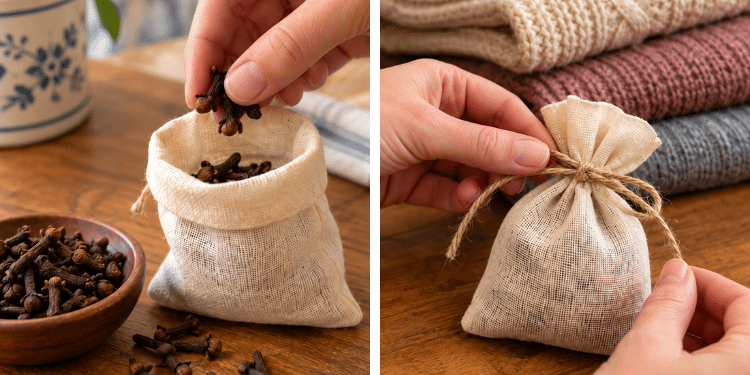
Step-by-Step: How to Make a Clove Drawer Sachet
Creating your own traditional wardrobe sachets takes less than five minutes:
Pro-Tips for Long-Lasting Wardrobe Care
-
Pair with Dried Lavender: For a balanced and highly effective anti-moth blend, mix equal parts whole cloves and dried lavender buds inside your fabric sachets. The combination of eugenol and linalool provides broad-spectrum pest protection with a fresh floral-spice scent.
-
Protect Delicate Silks: While whole cloves will not stain fabrics, direct contact between raw essential oils and delicate white silk should be avoided. Ensure your clove sachet is securely tied in breathable cloth before placing it in direct contact with garments.