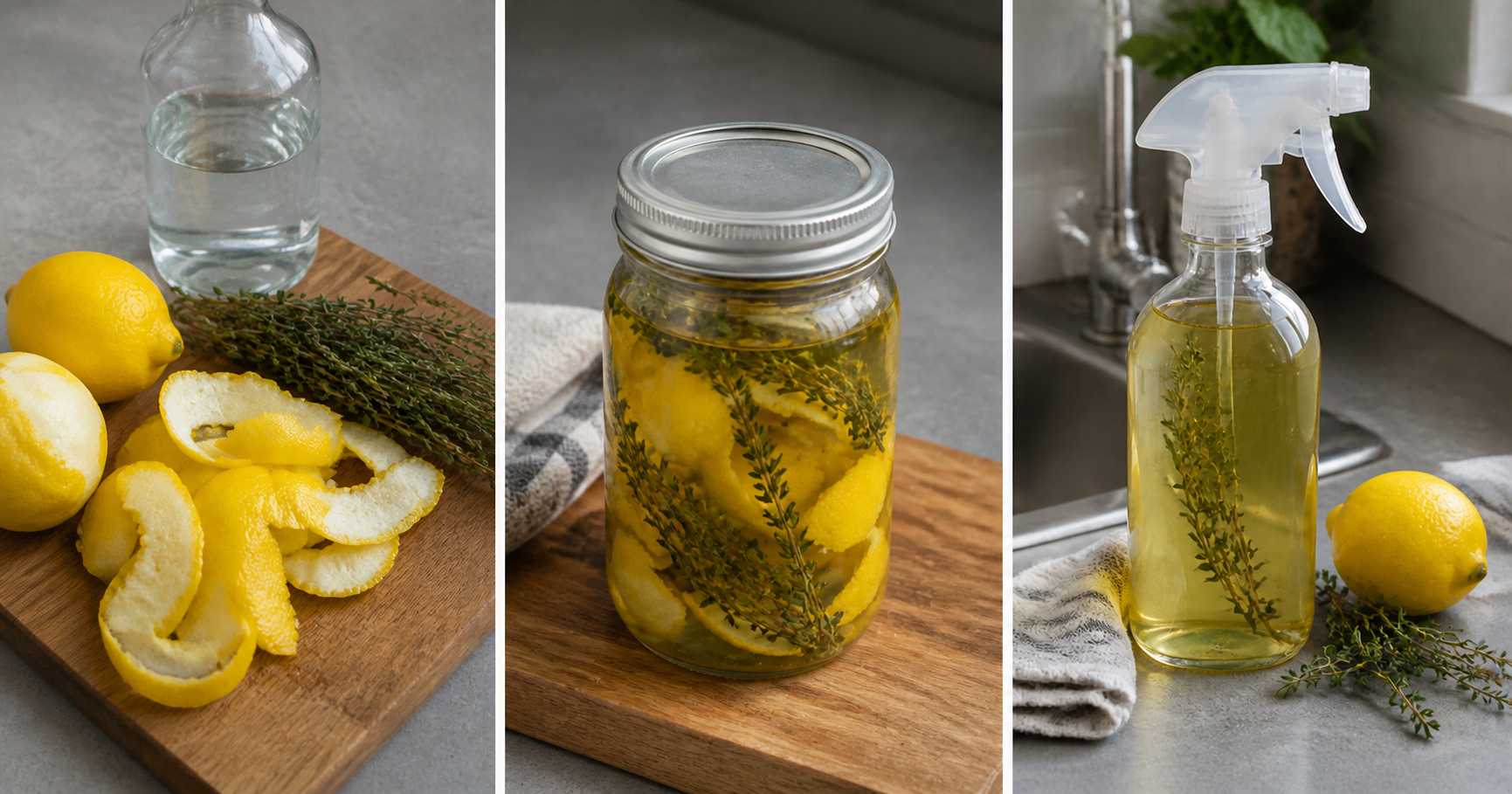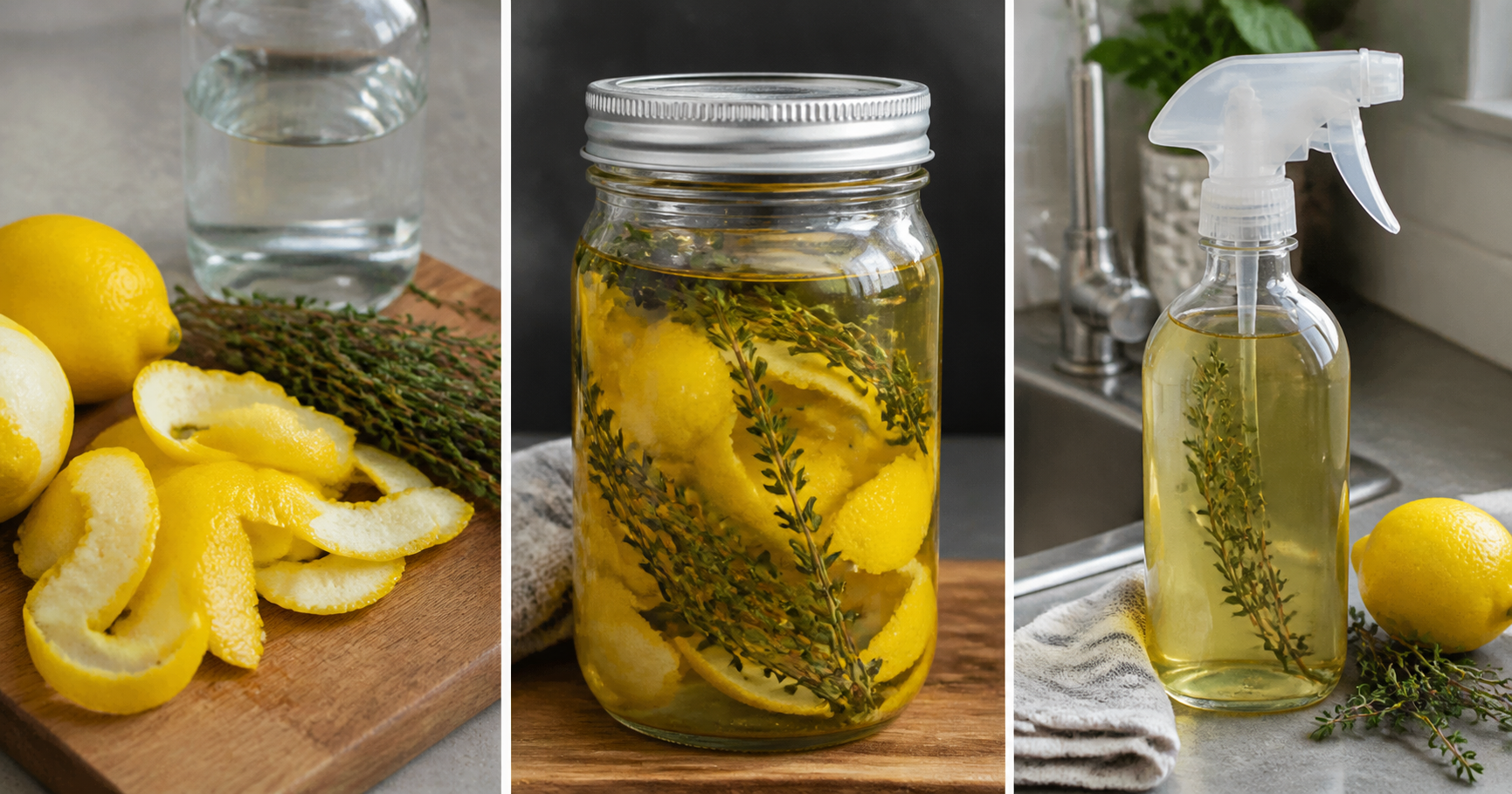
A jar of lemon peels and thyme steeping in vinegar looks more like something from a country pantry than a cleaning cupboard. Yet after a week or two, that humble mixture becomes a pleasantly scented helper for everyday jobs such as wiping down a sink, freshening a trash can, or loosening the chalky marks left by hard water.
The appeal is simple: vinegar is inexpensive, lemon peels make use of kitchen scraps, and thyme adds a clean, herbal note. The result is not a cure-all or a substitute for a registered disinfectant, but it can be a useful homemade cleaner when you know what it’s suited for—and what surfaces should be kept away from vinegar.
Why lemon peels and thyme make a useful pair
Vinegar is acidic, which helps dissolve mineral deposits and soap residue. That makes it handy around certain sinks and fixtures, especially where hard water leaves a faint, cloudy film. It can also help loosen ordinary grime during a routine wipe-down.
Lemon peel brings a fresh citrus aroma, while thyme contributes a warm, green, savory scent. The peels contain aromatic oils, though they don’t dissolve evenly into vinegar, and an infused cleaner won’t have the concentrated strength of lemon essential oil. Think of the ingredients as a way to make a basic vinegar cleaner more pleasant to use—not as a guarantee of extra cleaning or germ-killing power.
Thyme is sometimes associated with thymol, a compound used in some commercial products. But a kitchen infusion is not a measured or tested thymol cleaner. Don’t rely on this mixture to disinfect surfaces, particularly after handling raw meat or when someone in the household is ill.
How to make the infusion at home
Save peels from one or two lemons, removing any seeds or bits of fruit. A few sprigs of thyme are enough; fresh or dried both work. If using fresh herbs, rinse them and let them dry thoroughly before adding them to the jar. Extra water on the ingredients can make the mixture less predictable.
A simple jar recipe
-
- Put the lemon peels and thyme in a clean glass jar.
-
- Pour in plain white vinegar until the ingredients are fully covered. A standard household white vinegar with 5% acidity is a practical choice.
-
- Close the jar and leave it in a cool, dark cupboard for about one to two weeks. Give it an occasional gentle swirl.
-
- Strain the liquid through a fine strainer, then transfer it to a labeled spray bottle.
-
- For everyday wiping, dilute the infused vinegar with an equal amount of water. Use it undiluted only for a compatible task where the full-strength vinegar is appropriate.
Use a glass jar for the steeping stage, and label the finished bottle so no one mistakes it for a drink or food ingredient. The infusion doesn’t need to be made in a large batch; a small jar is easy to use up and leaves room to experiment with the amount of thyme next time.
Where this homemade cleaner earns its keep
1. Everyday wipe-downs
Diluted infusion can be used on many washable, vinegar-safe surfaces, such as some stainless-steel sinks, certain plastic bins, and washable tile. Spray a cloth rather than drenching the surface, wipe, and follow with a clean damp cloth if you want to remove any lingering vinegar scent.
2. Hard-water marks and soap film
For a washable surface that can tolerate acid, dampen a cloth with the mixture and let it sit briefly on the cloudy residue before wiping. A little patience often works better than scrubbing hard. Rinse the area afterward, particularly if it will come into contact with food or dishes.
3. Bins and other household odors
A light wipe inside an empty, washable trash or recycling bin can help lift sticky residue and leave a fresher scent. Let the bin dry before replacing the liner. This is an odor-freshening and cleaning step, not a way to sanitize a bin that needs disinfection.
For a first try, test the diluted mixture on a small, hidden spot and wait to see how the surface responds. That quick check is especially useful for older finishes or items whose care instructions aren’t handy.
Surfaces that should stay vinegar-free
Acid can etch or dull stone, so don’t use this cleaner on marble, limestone, travertine, or other acid-sensitive natural stone. Be cautious with granite, too: sealers and finishes vary, and a stone-care product made for the particular surface is the safer choice. Skip vinegar on waxed surfaces and delicate finishes unless the manufacturer says it is suitable.
It’s also wise to avoid using it as a general wood cleaner, on electronic screens, or on grout that may be vulnerable to repeated acidic cleaning. When in doubt, check the care instructions rather than assuming a natural ingredient is gentle on every material.
Never mix vinegar with bleach. The combination can release dangerous chlorine gas. Use one cleaner at a time, and rinse the area well before switching products.
Small adjustments that make the batch better
If the aroma is too sharp, dilute the finished infusion more heavily or let the cleaned surface air out. More lemon peel does not necessarily mean a stronger cleaner, but it can make the scent more noticeable. A few sprigs of thyme usually add enough herbal character without overwhelming the citrus.
Use the mixture as a surface cleaner, not as a produce wash or a substitute for dish soap. Avoid spraying it near eyes, and don’t use it on a surface where a lingering acidic residue could affect food. Store the bottle labeled and out of reach of children and pets, and make a fresh small batch when you need more rather than treating an old jar as a permanent supply.
There’s something satisfying about turning leftover peels into a useful household staple. With a little steeping time and a sensible eye for surface compatibility, lemon-and-thyme vinegar can make ordinary cleaning feel a bit more fragrant—and a little less wasteful.