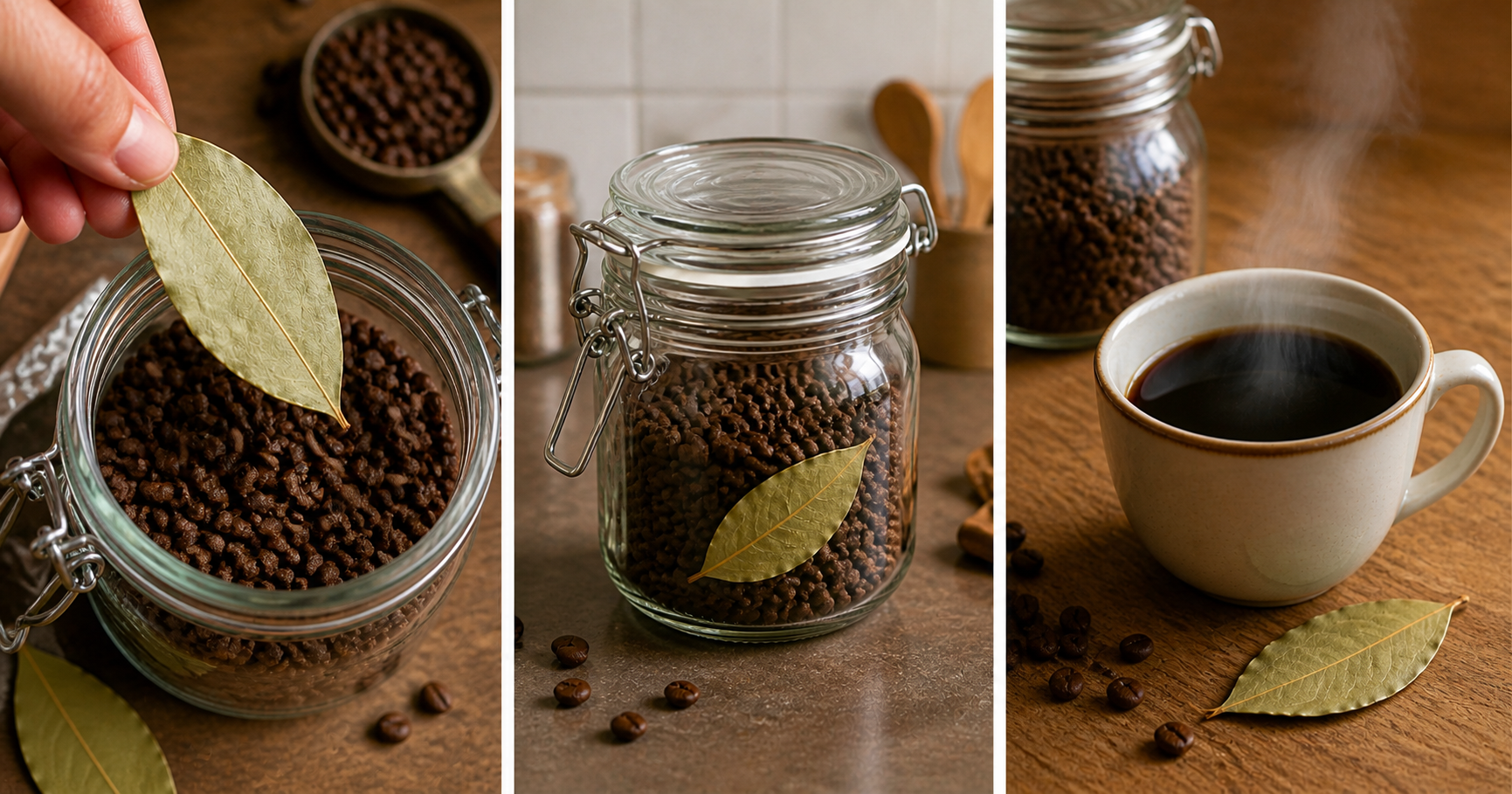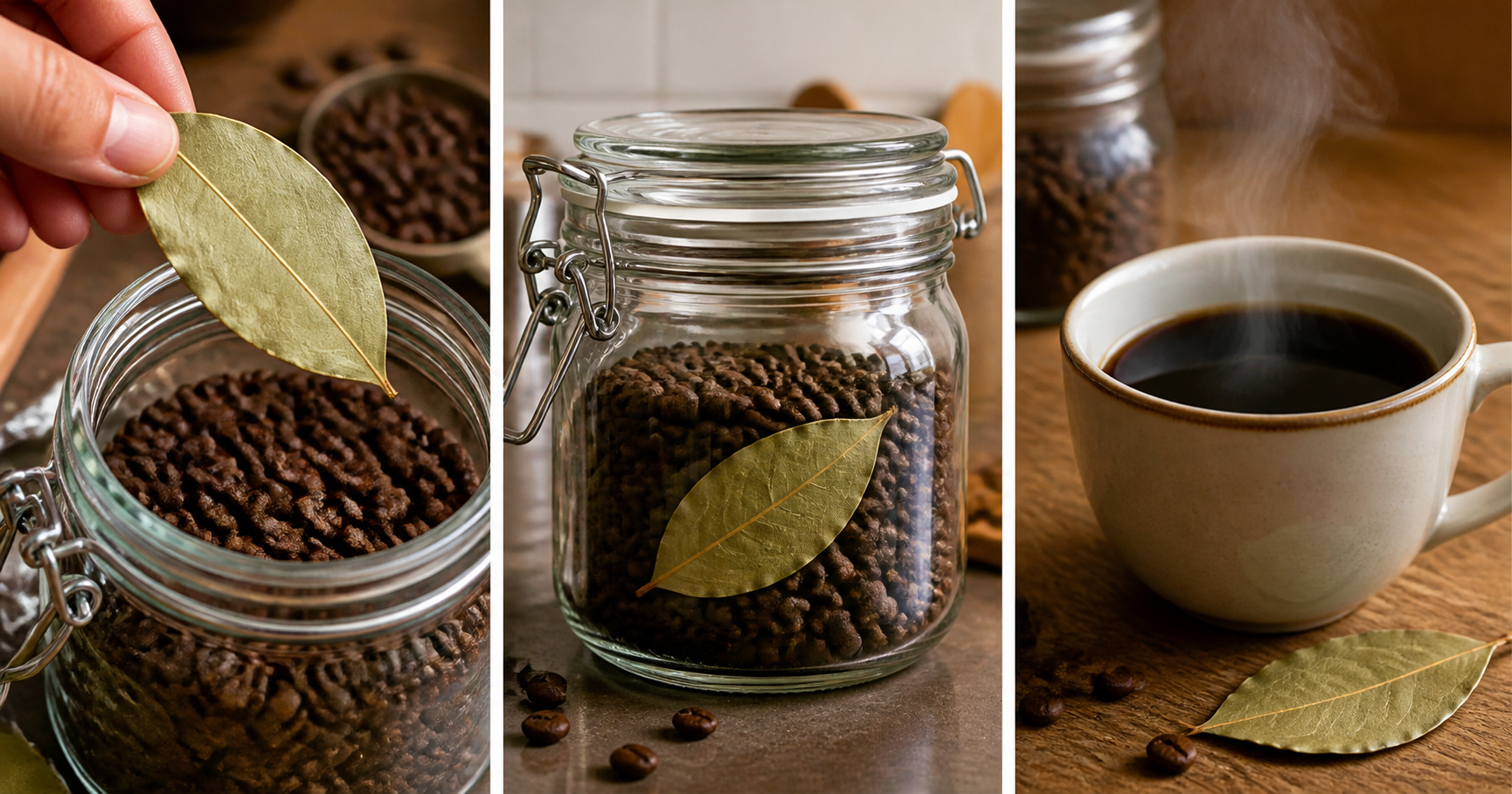
A bay leaf tucked into a coffee jar sounds like the kind of old-fashioned kitchen trick that might have come from a grandparent’s pantry.
The idea is simple: add a dry leaf to the container and let its herbal aroma help keep the coffee fresh—or discourage pantry bugs from taking an interest.
There is a little more to the habit than a magic ingredient, though. Bay leaves have a strong scent and a long history in household cooking, but they are not a proven coffee preservative or a dependable pest-control method.
Used thoughtfully, the trick can be a pleasant pantry experiment; used in place of good storage, it is unlikely to solve much.
Why people put bay leaves in coffee
Bay leaves contain aromatic oils that give them their distinctive warm, slightly camphor-like smell. Because some insects avoid certain strong plant odors, people have traditionally placed bay leaves in cupboards, flour containers, rice bins, and other pantry spaces.
The coffee-jar version follows the same logic: the scent may make the storage spot less appealing to a wandering pest.
It is important to keep the claim in proportion. Research on plant oils and insect behavior does not establish that one whole bay leaf will protect a jar of coffee in an ordinary kitchen. A leaf may add fragrance, but it cannot reliably prevent an infestation, and it will not kill insects already in the pantry.
Other home cooks are less interested in pests than in aroma. They hope the leaf will lend coffee a subtle, spicy note. That may happen if the coffee is exposed to the leaf’s scent, but the result is unpredictable—and coffee’s own fragrance is easy to overpower. If you enjoy experimenting, treat it as a flavor trial, not a guaranteed upgrade.
What the leaf may—and may not—do
1. Add a gentle pantry scent
A dry bay leaf can lend a faint herbal aroma to a closed container, especially if the coffee is stored for a while. Whether you notice it in the brewed cup depends on the leaf, the coffee, the container, and how sensitive you are to aromas. Start with a small amount rather than expecting a dramatic change.
2. Offer a modest deterrent, not a barrier
The scent may discourage some insects from lingering nearby, but a bay leaf should be considered a minor pantry measure at most. A tightly sealed container, clean shelves, and prompt attention to spilled grounds do far more to keep coffee and other dry goods protected.
3. Preserve coffee only indirectly
Bay leaves do not keep coffee fresh in the way an airtight container does. Coffee gradually loses aroma when exposed to air, heat, light, and moisture. If a jar has a loose lid or sits beside the stove, adding a leaf will not address the main causes of stale coffee.
How to try the bay-leaf coffee-jar trick
-
- Choose the right leaf. Use one clean, fully dried culinary bay leaf. Avoid fresh leaves, which add moisture, and do not use ornamental leaves or plants unless you know they are food-safe.
-
- Check the jar. Wash and dry the container completely before filling it. Any lingering water can cause problems for dry coffee.
-
- Add the coffee and leaf. Place the leaf on top of the beans or grounds, or tuck it along the side. One leaf is plenty for a small household container; more may make the aroma too noticeable.
-
- Seal and store well. Close the lid firmly and keep the jar in a cool, dry cupboard away from sunlight, the oven, and the sink.
-
- Smell and taste before repeating. After several days, check whether you like the scent. If the coffee tastes herbal or the leaf’s aroma is distracting, remove it and return to plain storage.
For the clearest comparison, divide the same coffee between two clean jars, adding a bay leaf to just one. Brew each after a few days. This makes it easier to tell whether the leaf changes the aroma to your liking rather than relying on memory.
Better ways to keep coffee fresh
Freshness depends more on storage habits than on added ingredients. Whole beans generally hold their aroma longer than ground coffee because less of the coffee’s surface is exposed to air. Buy an amount you can use while it still tastes lively, and keep it in a clean, dry, airtight container.
-
- Store coffee away from heat, direct sunlight, and damp areas.
-
- Close the original bag tightly if it has a good resealable valve, or transfer it to an airtight container.
-
- Use a dry scoop; never reach into the jar with a wet spoon.
-
- Keep the container clean, especially when refilling it. Old grounds and oily residue can dull the flavor of a fresh batch.
Refrigeration is usually unnecessary for everyday coffee storage. Repeatedly taking a cold container in and out can introduce condensation, and coffee can pick up nearby odors. A cool cupboard is generally simpler and better suited to the daily routine.
When a pantry pest problem needs more than a leaf
If you spot tiny beetles, moths, webbing, or damaged packaging, inspect nearby dry goods rather than relying on fragrance. Check flour, cereal, rice, nuts, spices, pet food, and unopened packages, since pantry pests can arrive in products from the store and spread from there.
Discard infested items, vacuum shelf corners and cracks, and wipe the shelves clean before restocking.
Store susceptible foods in tightly sealed containers. A bay leaf can remain as a traditional extra if you enjoy the scent, but it should not be treated as the solution.
The charm of the coffee-jar trick is its simplicity: one familiar kitchen ingredient, tucked into a place where it might add a little fragrance or discourage a curious insect. Try it if you like the aroma, but let a snug lid and sensible storage do the real work of keeping your coffee at its best.