October brings noticeable changes to your home, and your spider plant can feel them too. As the days become shorter, temperatures begin dropping, and indoor heating starts running, the growing conditions your plant enjoyed throughout summer can change significantly.
Yellowing leaves, brown tips, slower growth, and drooping foliage can all become more noticeable as winter approaches.
Here’s what your spider plant really needs in October to stay healthy, green, and ready for the colder months ahead.
1. Water Less Often, but Don’t Let the Plant Become Completely Dry
One of the biggest changes your spider plant needs in October is an adjustment to its watering routine. During spring and summer, longer days and warmer temperatures encourage active growth, which means the plant may use water relatively quickly.
As autumn progresses, growth often slows, and the potting mix can remain moist for longer periods. Continuing to water on a strict summer schedule may leave the roots sitting in overly wet soil.
Spider plants have thick, fleshy roots that can store some moisture, making them relatively forgiving if you occasionally forget to water.
Before watering, check the top 1–2 inches of soil. If the surface is still moist, wait a little longer. When the upper portion feels dry, water thoroughly until excess moisture drains from the bottom of the pot.
October note: Your spider plant may need less frequent watering in October than it did during July or August. This is normal and doesn’t mean the plant is unhealthy.
What You Should Stop Doing
Stop watering your spider plant automatically every few days without checking the soil. A fixed schedule doesn’t account for changes in temperature, sunlight, pot size, or humidity.
Also, avoid letting the pot sit in a saucer filled with water. Constantly saturated roots can eventually develop problems, even in a relatively resilient houseplant.
2. Move Your Spider Plant Closer to Better Light
Spider plants are often described as low-light houseplants, but they generally grow best in bright, indirect light.
During summer, a location several feet away from a window may provide enough light. By October, shorter days and the lower angle of the sun can make that same spot noticeably darker.
If your spider plant has stopped producing new leaves or looks less vigorous, consider moving it closer to a bright window.
An east-facing window can be a good choice because it provides gentle morning sunlight. Bright, filtered light from other window orientations can also work well.
Avoid suddenly exposing a plant accustomed to shade to intense direct sunlight, which may scorch the foliage.
Light note: Spider plants can survive in relatively low light, but they may grow more slowly and produce fewer plantlets when light is insufficient.
What You Should Stop Doing
Stop assuming that because spider plants tolerate low light, they prefer dark corners.
If your plant has been sitting in a dim location throughout summer, October is a good time to find it a brighter position.
You can also rotate the pot occasionally to encourage more balanced growth.
3. Stop Fertilizing Heavily as Growth Slows
October is generally not the time to encourage rapid new growth with extra fertilizer.
During spring and summer, spider plants may benefit from occasional feeding while actively producing leaves and plantlets. However, as daylight decreases, their growth often slows naturally.
Continuing to fertilize heavily during this period can contribute to a buildup of soluble salts in the potting mix, potentially stressing the roots and contributing to brown leaf tips.
If your spider plant relies mainly on natural daylight, reducing or pausing fertilizer during the darker months is often appropriate.
Plants growing under strong supplemental lighting may continue actively growing and have different nutrient requirements.
October feeding note: A spider plant that produces fewer new leaves in autumn isn’t necessarily lacking nutrients. Slower growth is often a normal response to reduced light.
What You Should Stop Doing
Stop using fertilizer as the automatic solution for yellow leaves, brown tips, or slow growth.
Before feeding, check whether the plant is receiving enough light, whether the soil drains properly, and whether your watering routine needs adjusting.
For many spider plants, fertilizer can wait until active growth resumes in spring.
4. Protect It From Cold Drafts and Heating Vents
Spider plants prefer relatively stable indoor temperatures, and October can introduce sudden environmental changes.
A plant positioned beside an open window may experience cold drafts during chilly nights. Similarly, a spider plant sitting directly above a radiator or beside a heating vent may be exposed to hot, dry air.
Both situations can stress the foliage.
If your spider plant spent summer outdoors, bring it inside before temperatures become too cold. Inspect the leaves and soil carefully for pests before placing it near your other houseplants.
A comfortable indoor environment with good airflow and moderate temperatures is generally ideal.
Temperature note: Spider plants can tolerate occasional cooler conditions, but prolonged exposure to temperatures below approximately 50°F (10°C) can cause stress, particularly when the soil is wet.
What You Should Stop Doing
Stop moving your spider plant between extremely different temperatures.
Avoid placing it directly against cold window glass at night or beside a radiator that blows hot air over the leaves.
Consistency is usually more beneficial than constantly changing the plant’s location.
5. Pay Attention to Humidity and Brown Leaf Tips
Brown tips are one of the most common complaints about spider plants, and they often become more noticeable during autumn and winter.
Once indoor heating begins, the air inside your home may become considerably drier. Low humidity can contribute to crispy leaf tips, especially when combined with inconsistent watering.
However, humidity isn’t the only possible cause.
Spider plants can also develop brown tips because of mineral buildup, excessive fertilizer, or sensitivity to certain substances in tap water.
If your plant repeatedly develops brown tips despite otherwise healthy growth, consider evaluating your water quality and fertilizer use.
Brown-tip note: Spider plants may be sensitive to fluoride and accumulated salts in some water supplies. If tip burn is persistent, trying rainwater, distilled water, or another suitable low-mineral water source may help.
A room humidifier can be useful if indoor air is very dry, but you don’t need to keep the foliage constantly wet.
What You Should Stop Doing
Stop misting your spider plant repeatedly and expecting it to solve every brown-tip problem.
Misting temporarily wets the foliage but usually doesn’t provide a lasting increase in room humidity.
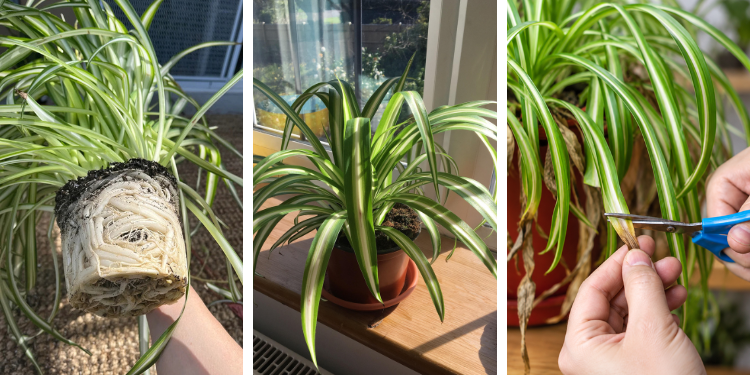
If the tips are already brown, you can trim the damaged portions with clean scissors, following the natural shape of the leaves.
Just remember that trimming improves appearance without correcting the underlying cause.
6. Clean the Leaves and Check for Hidden Pests
October is a good time to give your spider plant a gentle cleaning.
Its long, arching leaves can collect dust, especially when windows remain closed more often during cooler weather.
A buildup of dust can reduce the amount of light reaching the leaf surface, which is particularly undesirable during autumn when natural light is already decreasing.
Use a soft, damp cloth to gently wipe the leaves, or rinse the foliage carefully with lukewarm water if the plant is easy to handle.
Allow excess moisture to drain and let the foliage dry in a location with good airflow.
While cleaning, inspect the undersides of leaves and the center of the plant for pests.
Spider mites, mealybugs, and scale insects can occasionally affect spider plants, particularly when indoor conditions become warm and dry.
Pest note: Fine webbing, pale speckling, sticky residue, or cotton-like white patches can indicate pest activity. Identifying problems early makes treatment much easier.
What You Should Stop Doing
Stop ignoring the undersides of leaves simply because the upper foliage looks healthy.
Also, avoid applying oils, mayonnaise, or homemade leaf-shine mixtures to make the leaves glossy. Clean water is usually all you need.
7. Check the Roots, but Don’t Repot Without a Reason
Spider plants are known for producing thick, fleshy roots that can eventually fill their containers.
A slightly crowded root system isn’t necessarily a problem, and spider plants don’t need to be repotted every autumn.
However, if roots are pushing through drainage holes, the pot is becoming distorted, or water runs straight through because the container is packed with roots, it may be time to consider repotting.
October isn’t always the ideal month for routine repotting because growth may be slowing. If the plant is healthy, waiting until spring is often perfectly reasonable.
If repotting is necessary, choose a container only slightly larger than the previous one and use a well-draining houseplant potting mix.
Repotting note: Don’t move a small spider plant into a very large pot. Excess soil can remain wet for too long, increasing the risk of root problems.
What You Should Stop Doing
Stop assuming that every spider plant needs a bigger pot each year.
Repot according to the condition of the roots and growing medium, not simply because the calendar says it’s time.
What Should You Do With Spider Plant Babies in October?
One of the most attractive features of spider plants is their ability to produce small plantlets, often called spiderettes or babies, on long arching stems.
If your plant produced several babies during summer, October can be a good time to inspect them.
Plantlets that already have small root bumps or visible roots can often be propagated successfully.
You can place a small pot of moist potting mix beneath an attached plantlet and gently secure its base against the soil. Once roots establish, separate it from the parent plant.
Alternatively, you can remove a sufficiently developed plantlet and root it in water or a suitable growing medium.
Propagation note: Spider plant babies may root more slowly in October because daylight is decreasing. Provide bright, indirect light and moderate warmth to encourage establishment.
If the plantlets are very small and your parent plant is healthy, there’s no urgency to remove them. They can remain attached until conditions are more favorable.
Why Is Your Spider Plant Turning Yellow in October?
Yellow leaves can have several causes, and the correct solution depends on what’s happening around the plant.
If only an occasional older leaf turns yellow, it may simply be reaching the end of its natural lifespan.
However, widespread yellowing can indicate excessive watering, poor drainage, insufficient light, or root stress.
If the soil remains constantly wet and the leaves begin turning yellow or soft, investigate the roots and watering routine.
If the plant is growing in a very dark location, insufficient light may also be contributing.
Yellow-leaf note: Don’t diagnose your spider plant based on leaf color alone. Always check the soil moisture, drainage, and environmental conditions before making major changes.
Remove completely yellow or dead leaves with clean scissors, cutting near the base without damaging healthy foliage.
Should You Cut Back Your Spider Plant in October?
Spider plants don’t require heavy seasonal pruning.
Unlike outdoor perennials that die back during autumn, spider plants remain evergreen indoors when growing conditions are suitable.
You can remove damaged leaves, trim brown tips, and cut away old flower stalks if desired.
However, there’s no need to cut the entire plant back simply because winter is approaching.
Healthy green leaves are still important for photosynthesis, even when growth slows.
Pruning note: Avoid removing large amounts of healthy foliage unnecessarily. Light cleanup is usually enough to keep your spider plant looking attractive.
Spider plants are wonderfully forgiving houseplants, but October is a time when small mistakes can become more noticeable.
Shorter days, cooler temperatures, and drier indoor air all influence how your plant grows and uses water.