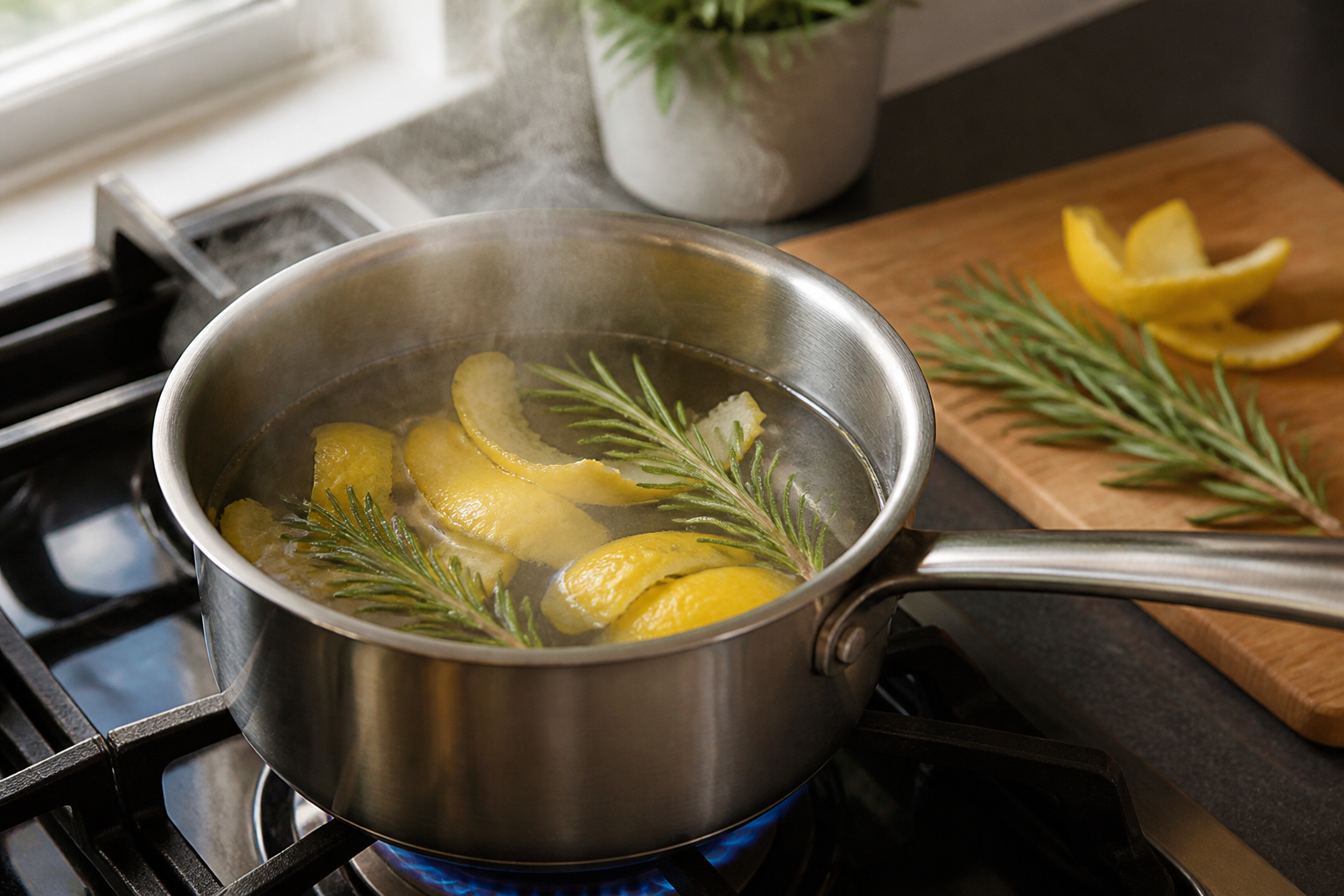
A house can smell lived-in without smelling unpleasant—but after cooking fish, warming leftovers, or simply closing the windows on a rainy day, stale odors sometimes linger. Before reaching for a heavily scented spray, try a small saucepan of water, fresh rosemary, and lemon peels. As the mixture gently simmers, it releases a clean, herbal-citrus fragrance that can make a kitchen or nearby room feel more inviting.
This is a simple way to add a pleasant scent, not a substitute for cleaning or ventilation. It takes only a few minutes to prepare, uses ingredients you may already have, and is easy to adjust to your taste. Here’s how to make it safely, what to expect, and how to get the most from this old-fashioned kitchen trick.
What a Rosemary and Lemon Peel Simmer Pot Is
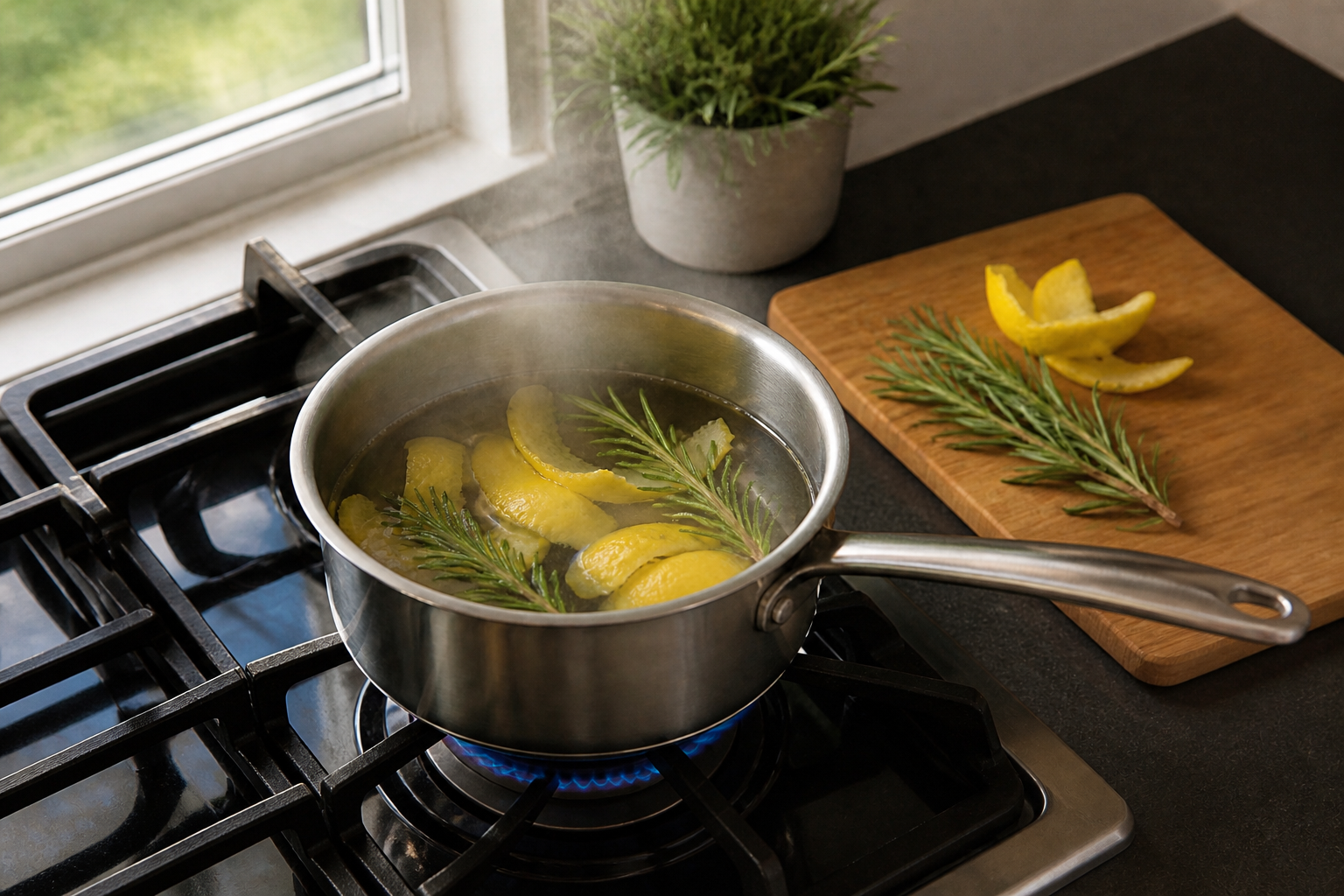
A simmer pot—sometimes called stovetop potpourri—is a pan of water warmed gently with fragrant ingredients. For this version, rosemary contributes a fresh, woodsy, slightly pine-like scent, while lemon peel adds a bright citrus note. Together, they create a fragrance that feels crisp without needing a manufactured air freshener.
The key is low heat. You’re not making a strong boil or trying to extract a remedy; you’re simply warming the ingredients so their natural aroma can drift through the room. The finished mixture is for fragrance only, not for drinking or cooking.
When This Simple Home Fragrance Is Useful
A rosemary and lemon peel simmer pot is handy after preparing aromatic foods, when company is expected, or when you want a pleasant background scent on a cool afternoon. It can also make use of peels left over from cooking or juicing, as long as they’re clean and fresh.
It may make a room smell fresher, but it won’t remove the source of an odor. If a kitchen smells like yesterday’s dinner, take out the trash, wash the pan, and open a window when practical. The simmer pot can add a pleasant scent while you take those steps; it shouldn’t be used to cover up smoke, gas, mold, or another persistent problem.
How to Simmer Rosemary With Lemon Peels
What You’ll Need
Use a small or medium saucepan, 4 cups of water, 2 or 3 fresh rosemary sprigs, and the peel of 1 lemon. A vegetable peeler makes it easy to remove broad strips of zest. If you use a knife, take care to avoid cutting yourself, and don’t worry if a little white pith remains.
Fresh rosemary gives a noticeable aroma, but dried rosemary can work in a pinch. Start with about 1 teaspoon of dried leaves; they’re concentrated and can shed into the water, so you may want to place them in a reusable tea infuser.
Simple Step-by-Step Instructions
1. Rinse the ingredients. Wash the lemon before peeling it, and rinse the rosemary under cool water. This removes everyday dirt and residue from the surfaces.
2. Add everything to the pan. Pour 4 cups of water into the saucepan, then add the lemon peel and rosemary sprigs. There’s no need to chop the rosemary, though bending the sprigs gently can help release their aroma.
3. Warm it gradually. Set the pan over medium heat until the water just begins to steam or show small bubbles. Then turn the burner to low. Aim for a gentle simmer, not a rolling boil.
4. Keep an eye on the water. Let the mixture simmer for about 30 minutes to start. If you’d like the scent to continue, check the pan regularly and add more water as needed. Keep the ingredients covered with water so the pan doesn’t boil dry.
5. Turn off the heat when you’re finished. Let the pan cool before handling or cleaning it. Discard the contents once the aroma fades or the mixture has been used for the day.
Adjust the Fragrance to Suit Your Home
If you prefer a mild scent, use fewer rosemary sprigs or simmer the mixture for a shorter time. For a brighter citrus note, add another strip or two of peel. You can also add a cinnamon stick for a warmer aroma, but try the basic combination first so you can tell what you like.
There’s no need to use a large quantity of ingredients. A small pan is often enough for a kitchen or adjoining living area, while a bigger space may need more time or a second batch. Keep expectations modest: the fragrance is usually most noticeable near the stove and may not carry evenly throughout a large house.
What to Expect—and What Not to Expect
The scent should be light and temporary. It may linger for a while after you turn off the burner, but it won’t behave like a long-lasting room spray. The effect depends on the size of the room, air circulation, the amount of water, and how aromatic your rosemary and lemon are.
This is a fragrance trick, not an air purifier, disinfectant, or medical treatment. It won’t remove allergens or make indoor air safe after smoke or chemical exposure. For everyday cooking odors, good ventilation and cleaning remain the practical first steps.
Safety and Storage Tips
Never leave a simmer pot unattended. Keep the handle turned inward, place the pan on a stable burner, and keep children and pets away from hot water and steam. Check the water level often; if the pan gets low, turn off the heat before adding more water to avoid splashing.
Some people are sensitive to fragrances, including those from herbs and citrus. If the scent irritates your eyes or breathing, or seems to bother someone else in the home, turn off the burner and air out the room. Use ordinary kitchen ventilation, and avoid simmering the mixture in a closed room.
Don’t leave the cooled mixture sitting out for extended periods. If you want to save unused ingredients before simmering, refrigerate them in a covered container and use them soon. Once the pot has been simmered, it’s simplest to discard the contents when you’re done rather than storing the warm mixture for another day.
A Small, Easy Way to Freshen the Kitchen
Simmering rosemary with lemon peels is a straightforward way to bring a clean, herbal-citrus scent into your home with ingredients that are easy to find. Keep the heat low, stay nearby, and use the fragrance alongside sensible cleaning and ventilation. A few simple ingredients won’t solve every odor, but they can make an ordinary afternoon in the kitchen feel a little more welcoming.